Thursday, August 12, 2010

Waylon Jennings - Mental Revenge - 1966

First Blessing of a Newly Ordained Priest


h/t to J.P. Sonnen

Rosary to Halt Construction of NYC Mosque

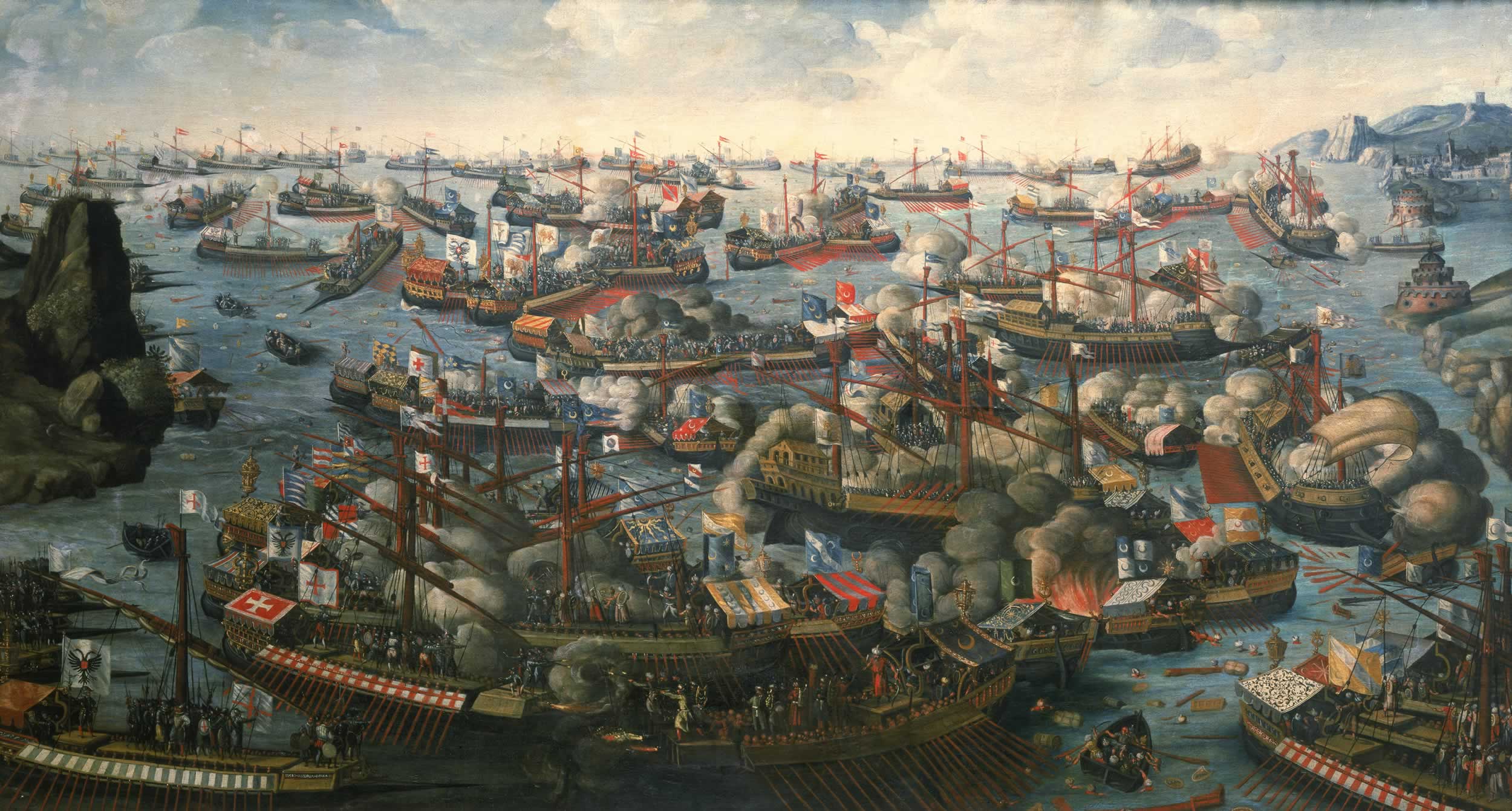
File:Battle of Lepanto 1571.jpg

From Pyro7480

http://www.fatima.org/essentials/requests/images/rosary02.jpg"Pope St. Pius V trusted in the power of Our Lady's intercession through the Holy Rosary to save Christendom. He asked Christians everywhere to pray the Rosary for the victory of the united Christian fleet against the Mohammedan Turks. On 7 October 1571, at the Battle of Lepanto, the Turkish fleet was defeated, and the Catholic Church now celebrates the feast of Our Lady of Rosary every year on October 7.

After World War II, Fr. Petrus Pavlicek of Austria led a Rosary Crusade to save his country from communist domination. In 1955, the Soviet forces occupying their zone of Austria pulled out.

Our Lady's powerful intercession can stop a lesser but none the less important planned cause- the construction of 13-story Mohammedan center/mosque 2 blocks away from Ground Zero in New York City.

Please pray the Rosary on the feast of the Assumption with the intention that this mosque isn't built.
August 15 is also the 90th anniversary of the "Miracle on the Vistula," when the outnumbered Polish army drove back the invading Bolshevik army. Many of the Polish soldiers saw a vision of Our Lady during the battle."

Lay Eucharistic ministers not entitled to position, Archbishop Burke clarifies

http://www.catholicnewsagency.com/images/8_12_2010_BURKE_CNA.jpg.- The rights of girls and Catholic lay faithful to carry out certain roles on the altar are not prescribed as "rights" within the Church, according to the Church's top legal authority, Archbishop Raymond Burke. The statement came in a clarification he wrote about the consequences of the reintroduction of the Latin Rite Mass by Pope Benedict.

The Catholic Church of Germany recently printed a commentary on the application of Benedict XVI's 2007 motu proprio, "Summorum Pontificum," which made Pope St. Pius V's Latin Rite Mass more widely available. In the preface of the volume, printed for the third anniversary of the motu proprio, Archbishop Raymond Burke clarified some confusion about the legislation's practical use.

Archbishop Burke is the prefect of the Apostolic Signatura, which is often described as the supreme court of the Catholic Church.

According to Vatican Radio, the archbishop explained in the preface that due to the motu proprio's papal origins, it is not just an act of legislation brought about as a "favor" to a specific group for the celebration of the extraordinary form of the Roman Rite, the Mass in Latin, but one that applies to the entire Church.

Archbishop Burke wrote, "it is about a law whose finality is the protection and promotion of the life of all the mystical body of Christ and the maximum expression of this life, that is to say, the Sacred Liturgy."

It implies an obligation of the Church "to preserve liturgical tradition and maintain the legitimate celebration of both forms of the Roman Rite, that preceding the Second Vatican Council and that which followed it," he said.

Archbishop Burke pointed out that the Holy Father himself explained that for the communion of the Church in the past and the future, "universally accepted uses of uninterrupted apostolic tradition" must be observed.

This, he he pointed out should be done "not only to avoid errors, but also to transmit the integrity of the faith, so that the law of the prayer of the Church might correspond to her law of faith."

The American archbishop went on to point out that certain elements may need to be clarified in this regard. For example, he wrote, among the "rights" of the baptized, assistance by "persons of the feminine sex" at the altar is not included. Additionally, serving as a lector or as an extraordinary distribution of communion is not a right of the laity, he noted.

As such, out of respect for the integrity of the liturgical discipline within the Roman Missal of 1962, these more modern modifications are not observed in the extraordinary form.

This clarification comes just a week after L'Osservatore Romano writer Lucetta Scaraffia published an article on the altar server pilgrimage to the Vatican which drew thousands of boys and girls alike. She drew some attention as she proposed that the introduction of girls into the position of serving at the altar "meant the end of every attribution of impurity to their sex ... it meant a different attention to the liturgy and an approach to the faith in bringing it near to their very hearts."

Archbishop Burke clarified, however, that the reality of the matter is that neither the presence of girls at the altar, nor the participation of lay faithful "belong to the fundamental rights of the baptized."

Catholic Government

August 15 - The Feast of Mary's Assumption

by: Marcellino D'Ambrosio

This discussion of the Catholic Doctrine of Mary's Assumption, defined by Pope Pius XII as a dogma of faith, originally appeared as an article on the Feast of the Assumption of Mary in Our Sunday Visitor.

http://www.crossroadsinitiative.com/pics/Dr_DAmbrosio_Casual.jpgI once asked a college theology class if anyone could explain the doctrine of the Assumption of Mary.  A student replied, “yeah, that’s the teaching whereby the Catholic Church ‘assumes’ that Mary is in heaven.”

There’s a bit more to the dogma of the Assumption than that.  The Church does not just “assume” that any canonized saint in is in heaven.  Rather, it authoritatively declares that a person is in glory and should therefore be honored in liturgy and imitated in life.   Our church calendar is filled with saints' days.

Assumption of the Virgin Mary, The Catholic Church,
 Mary and the SaintsBut why a particular day for each saint?  The first evidence for this goes back to 155AD, to a bishop named Polycarp.  The account of his martyrdom notes that after his execution, the faithful collected his bones, more precious than gold, and put them in a place of honor where every year they gathered to celebrate the anniversary of his death as a sort of “birthday” into eternal life.   Celebrating Mass in the catacombs over the relics of the martyrs' led to the practice of putting relics in the main altar of every church.  Eventually saints who did not die a martyrs death were also commemorated on their heavenly “birthday” and their relics were accorded great honor.

From very early times, August 15 has been observed as the “birthday” of our Blessed Lady.  On this greatest of all Marian feasts we celebrate the greatest moment of her life – being permanently re-united with her son and sharing his glory.

Coronation of Mary, Assumption of Mary, Catholic 
ChurchAll the saints experience the “beatific vision” upon their entry into heaven, and we celebrate this on every saint’s day.  But there is something unique about Mary’s day.  The Catholic Church teaches authoritatively that it is not just Mary’s soul that was admitted to God’s glory, but that at the end of her earthly life, Mary’s body as well as her soul was assumed into heaven by the loving power of God.

There is no eyewitness account of this actual event recorded in the Bible.  Come to think of it, though, no one witnessed the actual resurrection of Jesus either.   The evidence was an empty tomb and eyewitness reports that the Risen Lord had appeared to them.

Interesting parallel here.  There is a tomb at the foot of the Mt. of Olives where ancient tradition says that Mary was laid.  But there is nothing inside.  There are no relics, as with other saints.  And credible apparitions of Mary, though not recorded in the New Testament, have been recorded from the 3rd century till today.

Mary is not equal to Christ, of course.  Jesus, though possessing a complete human nature, is the Eternal Word made flesh.  Mary is only a creature.

Assumption of Mary, Catholic Church, Coronation of Mary But she is a unique creature, the highest of all creatures.  This is not just because she was born without the handicap of original sin.  Eve and Adam were born free of sin as well, but it did not stop them from sinning as soon as they had the chance.  Mary instead chose, with the help of God’s grace,  to preserve her God-given purity throughout the whole of her life. 

The bodily corruption of death was not God’s original plan.  It came into the world through sin, as St. Paul says “the sting of death is sin” (I Cor 15:56).  So it is fitting that she who knew no sin should know no decay and no delay in enjoying the full fruits of her son’s work.  It is fitting that she who stood by Christ under the cross should stand by him bodily at the right hand of the Father.  “The Queen stands at your right hand, in gold of Ophir” (Ps 45).  Enoch and Elijah, who the Old Testament says were assumed into heaven, were surely great in God’s eyes.  But they do not begin to compare with the immaculate mother of His Son.

Mary, Queen of Heaven Assumption, CoronationWe too, one day, insofar as we accept God’s grace, will stand at His right hand.  But Paul says that “all will come to life again, but each one in proper order” (I Cor 15:23).  The Redeemer, of course, blazes the resurrection trail.  But who is to be first among his disciples?  The one who is last is first, the Lord’s humble handmaid who did no more than say yes, and keep saying yes, and whose soul magnified not herself, but the Lord. 

Alex Klucik, 19, Dies in Ave Maria Car Accident

From the Ave Herald via Free Republic:

"Matthew "Alex" Klucik, the oldest of seven children, was killed early Monday when his car left the road north of Emerson Park shortly after midnight and overturned in a canal. Mr. Klucik, 19, graduated from the Donahue Academy in May and was enrolled as a freshman at Ave Maria University this fall..."


Dawn Eden's Critique of Christopher West's Presentation of Pope John Paul's Theology of the Body - Her Master's Thesis Now Available Free

From Dawn Eden:

Following Cardinal Justin Rigali's homily at the Theology of the Body urging that the "rich content" of John Paul II's Wednesday catecheses "be mined and proclaimed," I have decided to make my master's thesis, "Towards a 'Climate of Chastity': Bringing Catechesis on the Theology of the Body into the Hermeneutic of Continuity," available to all, free of charge. The thesis critiques the presentation of John Paul II's theology of the body that has been popularized by Christopher West and the Theology of the Body Institute, which was founded to promote West's presentation.

Catholic News Agency has generously agreed to host the thesis on its Web site so that the paper may be downloaded for free. The link for downloading the thesis may be found at the end of CNA's interview with me. That article also has space for comments, if you would like to add your own thoughts to the discussion.

"The 80-page, heavily footnoted thesis is a critique of Christopher West's presentation that reveals the substance behind recent criticisms of his approach, contains new information (including how the fathers of Vatican II condemned the Jungian phallic interpretation of the Easter Candle ritual), and makes positive suggestions for improving instruction on the TOB." - Dawn Eden
The version of my thesis available from CNA is a brand new revision that includes a new preface in which I answer some criticisms that have arisen since I first made the work available. In addition, since some West fans have claimed I do not give his teachings sufficient context, I have included additional examples from his work.

I would like to take this opportunity to thank everyone who has encouraged me in my research, as well as everyone who has shown their support by donating to support my doctoral studies. (As I have previously noted, my goal is to become a professor of moral theology at a small Catholic college.) If you have benefited from my thesis and would like to support my studies, you may click here to donate.

Thanks also to those who have written me with any kind of feedback on my thesis, whether supportive or not. Submitting my work for public discussion has been a great learning experience. If you would like to contact me, I invite you to do so via my feedback form. Also, I am grateful for any and all "knee-mail"--that is, prayer. I am sending it heaven-ward daily for everyone who reads my thesis, and for everyone involved in the TOB discussion.

"...Having followed West’s work for some years, I had hoped he might take a more reflective and irenic approach, particularly given the ever-more urgent need to evangelize a culture in which the family and human life itself are under assault. That is why, for my master’s thesis, I decided to assess his presentation and prominent critiques. My goal was to offer positive correctives that would help catechists give a fuller, deeper, and more accurate presentation of Church teachings on marriage and sex.

In an unexpected development, after I submitted my thesis, the TOB Institute announced that West, after consulting with its board, “agreed” to take a six-month sabbatical “to attend to family needs, and to reflect more deeply on fraternal and spiritual guidance he has received in order to continue developing his methodology and praxis as it relates to the promulgation of the Theology of the Body.”3

It now appears that, at the least, he recognizes a need to consider changes to his presentation of the TOB—though whether he will in fact make such changes, and revise his published works accordingly, remains to be seen..."


h/t to Diane

President Bush surprises the troops - USO Dallas/Fort Worth's Photos


More:


    Wednesday, August 11, 2010

    'Kyrie': Missa Papae Marcelli * Palestrina / Tallis Scholars 1980

    Just ate this

    One True Religion


    "We're not here to be subtle or popular :)"

    American Bar Association Backs Same-Sex Marriage

    San Francisco (AP) - The country's largest lawyers' group has backed a resolution calling on all state legislatures to let same-sex couples get married.

    The American Bar Association voted at its annual meeting Tuesday in San Francisco to support the measure sponsored by the New York State Bar Association.

    New York State Bar Association President Stephen P. Younger says the resolution passed overwhelmingly, with only one speaker voicing opposition during debate.

    The ABA's approval comes days after a federal judge in San Francisco struck down California's voter-approved same-sex marriage ban. Younger says the timing of the ABA's vote is a coincidence...

    The Truth About Men & Church: On the Importance of Fathers to Churchgoing By Robbie Low

     http://cache1.asset-cache.net/xc/50557552.jpg?v=1&c=IWSAsset&k=2&d=E41C9FE5C4AA0A1459E2F525F971E2B78FA34245E332BEF83B083C22B435AB54B01E70F2B3269972

    From Fisheaters:

    By Robbie Low


    Most of us, I suspect, are not great students of "the small print." We employ lawyers and accountants because we recognize that carefully constructed small print may contain disclaimers, definitions, and information that effectively drive a coach and horses through our assumptions about the general argument and make utterly null and void the common understanding that we thought we had. Allow me to introduce you to a piece of very small print.

    Not many will have whiled away the long winter evenings by reading "The demographic characteristics of the linguistic and religious groups in Switzerland" by Werner Haug and Phillipe Warner of the Federal Statistical Office, Neuchatel. It appears in Volume 2 of Population Studies No. 31, a book titled The Demographic Characteristics of National Minorities in Certain European States, edited by Werner Haug and others, published by the Council of Europe Directorate General III, Social Cohesion, Strasbourg, January 2000. Phew!

    All this information is readily obtainable because Switzerland always asks a person’s religion, language, and nationality on its decennial census. Now for the really interesting bit.


    The Critical Factor

    In 1994 the Swiss carried out an extra survey that the researchers for our masters in Europe (I write from England) were happy to record. The question was asked to determine whether a person’s religion carried through to the next generation, and if so, why, or if not, why not. The result is dynamite. There is one critical factor. It is overwhelming, and it is this: It is the religious practice of the father of the family that, above all, determines the future attendance at or absence from church of the children.

    If both father and mother attend regularly, 33 percent of their children will end up as regular churchgoers, and 41 percent will end up attending irregularly. Only a quarter of their children will end up not practicing at all. If the father is irregular and mother regular, only 3 percent of the children will subsequently become regulars themselves, while a further 59 percent will become irregulars. Thirty-eight percent will be lost.

    If the father is non-practicing and mother regular, only 2 percent of children will become regular worshippers, and 37 percent will attend irregularly. Over 60 percent of their children will be lost completely to the church.

    Let us look at the figures the other way round. What happens if the father is regular but the mother irregular or non-practicing? Extraordinarily, the percentage of children becoming regular goes up from 33 percent to 38 percent with the irregular mother and to 44 percent with the non-practicing, as if loyalty to father’s commitment grows in proportion to mother’s laxity, indifference, or hostility.

    Before mothers despair, there is some consolation for faithful moms. Where the mother is less regular than the father but attends occasionally, her presence ensures that only a quarter of her children will never attend at all.

    Even when the father is an irregular attender there are some extraordinary effects. An irregular father and a non-practicing mother will yield 25 percent of their children as regular attenders in their future life and a further 23 percent as irregulars. This is twelve times the yield where the roles are reversed.

    Where neither parent practices, to nobody’s very great surprise, only 4 percent of children will become regular attenders and 15 percent irregulars. Eighty percent will be lost to the faith.

    While mother’s regularity, on its own, has scarcely any long-term effect on children’s regularity (except the marginally negative one it has in some circumstances), it does help prevent children from drifting away entirely. Faithful mothers produce irregular attenders. Non-practicing mothers change the irregulars into non-attenders. But mothers have even their beneficial influence only in complementarity with the practice of the father.


    Father’s Influence

    In short, if a father does not go to church, no matter how faithful his wife’s devotions, only one child in 50 will become a regular worshipper. If a father does go regularly, regardless of the practice of the mother, between two-thirds and three-quarters of their children will become churchgoers (regular and irregular). If a father goes but irregularly to church, regardless of his wife’s devotion, between a half and two-thirds of their offspring will find themselves coming to church regularly or occasionally.

    A non-practicing mother with a regular father will see a minimum of two-thirds of her children ending up at church. In contrast, a non-practicing father with a regular mother will see two-thirds of his children never darken the church door. If his wife is similarly negligent that figure rises to 80 percent!

    The results are shocking, but they should not be surprising. They are about as politically incorrect as it is possible to be; but they simply confirm what psychologists, criminologists, educationalists, and traditional Christians know. You cannot buck the biology of the created order. Father’s influence, from the determination of a child’s sex by the implantation of his seed to the funerary rites surrounding his passing, is out of all proportion to his allotted, and severely diminished role, in Western liberal society.

    A mother’s role will always remain primary in terms of intimacy, care, and nurture. (The toughest man may well sport a tattoo dedicated to the love of his mother, without the slightest embarrassment or sentimentality). No father can replace that relationship. But it is equally true that when a child begins to move into that period of differentiation from home and engagement with the world "out there," he (and she) looks increasingly to the father for his role model. Where the father is indifferent, inadequate, or just plain absent, that task of differentiation and engagement is much harder. When children see that church is a "women and children" thing, they will respond accordingly—by not going to church, or going much less.

    Curiously, both adult women as well as men will conclude subconsciously that Dad’s absence indicates that going to church is not really a "grown-up" activity. In terms of commitment, a mother’s role may be to encourage and confirm, but it is not primary to her adult offspring’s decision. Mothers’ choices have dramatically less effect upon children than their fathers’, and without him she has little effect on the primary lifestyle choices her offspring make in their religious observances.

    Her major influence is not on regular attendance at all but on keeping her irregular children from lapsing altogether. This is, needless to say, a vital work, but even then, without the input of the father (regular or irregular), the proportion of regulars to lapsed goes from 60/40 to 40/60.


    Of Huge Import

    The findings may be for Switzerland, but from conversations with English clergy and American friends, I doubt we would get very different findings from similar surveys here or in the United States. Indeed, I believe some English studies have found much the same thing. The figures are of huge import to our evangelization and its underlying theology.

    First, we (English and Americans both) are ministering in a society that is increasingly unfaithful in spiritual and physical relationships. There is a huge number of single-parent families and a complexity of step-relationships or, worse, itinerant male figures in the household, whose primary interest can almost never be someone else’s child.

    The absentee father, whoever’s "fault" the divorce was and however faithful he might be to his church, is unlikely to spend the brief permitted weekend "quality" time with his child in church. A young lad in my congregation had to choose between his loyalty to the faith and spending Sunday with Dad, now 40 miles away, fishing or playing soccer. Some choice for a lad of eleven: earthly father versus heavenly Father, with all the crossed ties of love and loyalties that choice involves. With that agonizing maturity forced on children by our "failures," he reasoned that his heavenly Father would understand his absence better than his dad.

    Sociologically and demographically the current trends are severely against the church’s mission if fatherhood is in decline. Those children who do maintain attendance, in spite of their father’s absence, albeit predominantly sporadically, may instinctively understand the community of nurture that is the motherhood of the Church. But they will inevitably look to fill that yawning gap in their spiritual lives, the experience of fatherhood that is derived from the true fatherhood of God. Here they will find little comfort in the liberalizing churches that dominate the English scene and the mainline scene in the United States.

    Second, we are ministering in churches that accepted fatherlessness as a norm, and even an ideal. Emasculated Liturgy, gender-free Bibles, and a fatherless flock are increasingly on offer. In response, these churches’ decline has, unsurprisingly, accelerated. To minister to a fatherless society, these churches, in their unwisdom, have produced their own single-parent family parish model in the woman priest.

    The idea of this politically contrived iconic destruction and biblically disobedient initiative was that it would make the Church relevant to the society in which it ministered. Women priests would make women feel empowered and thereby drawn in. (As more women signed up as publicly opposed to the innovation than ever were in favor, this argument was always a triumph of propaganda over reality.) Men would be attracted by the feminine and motherly aspect of the new ministry. (As the driving force of the movement, feminism, has little time for either femininity or motherhood, this was what Sheridan called "the lie direct.")

    And children—our children—would come flocking into the new feminized Church, attracted by the safe, nurturing, non-judgmental environment a church freed of its "masculine hegemony" would offer. (As the core doctrines of feminism regarding infants are among the most hostile of any philosophy—and even women who weren’t totally sold on its heresies often had to put their primary motherhood responsibilities on the back burner to answer the call—children were never likely to be major beneficiaries.)


    The Churches Are Losing

    Nor are these conclusions a matter of simple disagreement between warring parties in a divided church. The figures are in and will continue to come in. The churches are losing men and, if the Swiss figures are correct, are therefore losing children. You cannot feminize the church and keep the men, and you cannot keep the children if you do not keep the men.

    In the Church of England, the ratio of men to women in the pre-1990s was 45 percent to 55 percent. In line with the Free Churches (which in England include the Methodists and Presbyterians) and others that have preceded us down the feminist route, we are now approaching the 37 percent/63 percent split. As these latter figures are percentages of a now much smaller total, an even more alarming picture emerges. Of the 300,000 who left the Church of England during the "Decade of Evangelism" some 200,000 must have been men.

    It will come as no surprise to learn, in the light of the Swiss evidence, that even on official figures, children’s attendance in the Church of England dropped by 50 percent over the Decade of Evangelism. According to reliable independent projections, it might actually have dropped down by two-thirds by the year 2000. (Relevant statistics abruptly ceased being announced in 1996, when the 50 percent drop was achieved.)

    And what have we seen in the societies to which the churches are supposed to be witnessing? In the secular world, a fatherless society, or significant rejection of traditional fatherhood, has produced rapid and dreadful results. The disintegration of the family follows hard upon the amorality and emotional anarchy that flow from the neutering, devaluing, or exclusion of the loving and protective authority of the father.

    Young men, whose basic biology does not lead them in the direction of civilization, emerge into a society that, in less than 40 years, has gone from certainty and encouragement about their maleness to a scarcely disguised contempt for and confusion about their role and vocation. This is exhibited in everything from the educational system, which from the 1960s onward has been used as a tool of social engineering, to the entertainment world, where the portrayal of decent honorable men turns up about as often as snow in summer.

    In the absence of fatherhood, it is scarcely surprising that there is an alarming rise in the feral male. This is most noticeable in street communities, where co-operatives of criminality seek to establish brutally and directly that respect, ritual, and pack order so essential to male identity. But it is not absent from the manicured lawns of suburban England, where dysfunctional "families" produce equally alarming casualty rates and children with an inability to make and sustain deep or enduring relationships between male and female.


    The Churches’ Collapse

    One might have hoped, with such an abundance of evidence at hand, that the churches would have been more confident in biblical teaching, which has always stood against the destructive forces of materialistic paganism which feminism represents. Alas, not. Their collapse in the face of this well-organized and plausible heresy may be officially dated from the moment they approved the ordination of women—1992 for the Church of England—but the preparation for it began much earlier.

    One does not need to go very far through the procedures by which the Church of England selects its clergy or through its theological training to realize that it offers little place for genuine masculinity. The constant pressure for "flexibility," "sensitivity," "inclusivity," and "collaborative ministry" is telling. There is nothing wrong with these concepts in themselves, but as they are taught and insisted upon, they bear no relation to what a man (the un-neutered man) understands them to mean.

    Men are perfectly capable of being all these things without being wet, spineless, feeble-minded, or compromised, which is how these terms translate in the teaching. They will not produce men of faith or fathers of the faith communities. They will certainly not produce icons of Christ and charismatic apostles. They are very successful at producing malleable creatures of the institution, unburdened by authenticity or conviction and incapable of leading and challenging. Men, in short, who would not stand up in a draft.

    Curiously enough, this new feminized man does not seem to be quite as attractive to the feminists as they had led us to believe. He does not seem to hold the attention of children (much less boys who might want to follow him into the priesthood). He is frankly repellent to ordinary blokes. But a priest who is comfortable with his masculinity and maturing in his fatherhood (domestic and/or pastoral) will be a natural magnet in a confused and disordered society and Church.

    Other faith communities, like Muslims and Orthodox Jews, have no doubt about this and would not dream of emasculating their faith. Churches in countries under persecution have no truck with the corrosive errors of feminism. Why would they? These are expensive luxuries for comfortable and decadent churches. The persecuted need to know urgently what works and what will endure. They need their men.

    A church that is conspiring against the blessings of patriarchy not only disfigures the icon of the First Person of the Trinity, effects disobedience to the example and teaching of the Second Person of the Trinity, and rejects the Pentecostal action of the Third Person of the Trinity but, more significantly for our society, flies in the face of the sociological evidence!

    No father—no family—no faith. Winning and keeping men is essential to the community of faith and vital to the work of all mothers and the future salvation of our children. 


     Robbie Low is vicar of St. Peter’s, Bushey Heath, a parish in the Church of England, and a member of the editorial board of the magazine New Directions, published by Forward in Faith, in which a version of this article first appeared. For more on the subject of men, women, and church attendance, see Leon Podles’s "Missing Fathers of the Church" in the January/February 2001 issue.


    Photo 1: Life
    Photo 2: A30yoyo

    Archbishop Burke on altar girls and EMHCs in the Extraordinary Form

     https://blogger.googleusercontent.com/img/b/R29vZ2xl/AVvXsEiDEHeonGpq0RJ6SumkiOeZyrZWvFyjuPDGUqmVOMwz55wYMrc-G78o_bFvEW-tP9KPwGuBy33ymtLzrenBo5J_SwTbWhhObKTq-Bree91oAE7rnL3zAEflr2lc9riX7vCMhB7lDuZlNTti/s1600/ICRSS2010-6.jpg
     Photo: NLM

    Father Z:   "I picked up from Il blog degli amici di Papa Ratzinger that H.E. Most Rev. Raymond Burke (Prefect of the Ap. Segnatura) wrote a preface to a canonical study in German of Summorum Pontificum by Fr. Gero P. Weishaupt.

    In his preface, Archbp. Burke says, inter alia, that neither altar girls nor Extraordinary Ministers of Holy Communion are admissible in the Extraordinary Form of the Roman Rite because the integrity of the Rite must be respected..."


    Mars ain't the kind of place to raise your kids


    Sharing a laugh with Elton John backstage before his performance.

    Tuesday, August 10, 2010

    Mormons Try Rebranding: “We’re Just Like You!”


    Jim Edwards

    The Mormons are embracing their inner Mad Men with an extensive TV ad campaign that rebrands the Church of the Latter Day Saints as “normal” (video below). Lots of churches use advertising, of course, and there’s nothing wrong with that, but the uncomfortable subtext here for people of faith is that good brand management often succeeds where the good book on its own fails.

    The Mormon repositioning is an admission that a central part of its faith — the two years of required missionary work that often consists of knocking on strangers’ doors to share the good news — has ruined the church’s corporate image, per the Star Tribune:
    In a recent study by the Pew Forum on Religion & Public Life, respondents were asked to give a single-word description of Mormonism. Three of the top four responses were negative: “Bigamy” (No. 1), “cult” (No. 3) and “different” (No. 4). “Family” was No. 2.
    Marketing experts have determined that many people find this door-to-door tactic off-putting at best, irritating at worst. So, say hello to the “new” Mormon: bubbly, friendly, someone who loves to do the same things you do and, best of all, is willing to approach you on your terms.
    Normalcy is a key part of the campaign’s theme, according to Ron Wilson, the LDS’s brand manager:
    “We want to help people understand that we are not who they think we are,” said Ron Wilson, the church official overseeing the campaign. “We’re no different than you. In fact, we might be your next-door neighbor...”
    If you’re interested in the actual tenets of Mormon history and belief — the magic underwear, the intolerance, the frauds of its founder, and the church’s retrospective baptism of the dead — you’re probably better off watching PBS’s fascinating four-hour history of the church, which covers all sides of those issues.

    St. Lawrence

    From Orbis Catholicus:

    San Lorenzo Fuori Le Mura.

    San Lorenzo Fuori Le Mura.

    "The body of St. Lawrence was placed atop this stone immediately after he was burnt alive. 

    You can see the impression left from his body, according to tradition." 

    Giovanni Palestrina - Tu es Petrus

    Freedom of Speech


    Michael Voris: "So why is it that so many faithful Catholic media outlets pay so little attention to the politics and corruption and rotten things happening inside the Church? That's a fair question, and it's one that everyone needs to think about it.

    Could it be that many of these media types in the faithful camp are somewhat hamstrung, they have their hands tied, and are unable to say what really needs to be talked about? Could it be that they enjoy friendly relations with various powerful people in the Church and don't want those relationships damaged?..." (continued in video)

    Five Myths About the Rapture


    Carl E. Olson

    (Inside Catholic) About ten years ago, I mentioned to a Catholic friend that I was starting to work on a book critiquing the Left Behind novels. I explained that it would thoroughly examine premillennial dispensationalism, the unique apocalyptic belief system presented, in fictional format, within those books. Premillennial dispensationalism teaches that the "Rapture" and the Second Coming are two events separated by a time of tribulation and that there will be a future millennial reign of Christ on earth. "Why?" she asked, obviously bewildered. "No one really takes that stuff seriously."

    That revealing remark merely reinforced my desire to write Will Catholics Be "Left Behind"? (Ignatius, 2003). Other conversations brought home the same point. Far too many people -- including a significant number of Catholics -- don’t recognize the attraction and power of this Fundamentalist phenomenon. Nor do they appear to appreciate how much curiosity exists about the "end times," the book of Revelation, and the "pretribulation Rapture" -- the belief that Christians will be taken up from earth prior to a time of tribulation and the Second Coming. In the course of writing articles, giving talks, and writing the book, I’ve encountered a number of questions and comments -- almost all from Catholics -- that indicate how much confusion exists about matters of eschatology (theology of the end times), not to mention ecclesiology, historical theology, and the interpretation of Scripture. The five myths I present here summarize many of those questions.

    MYTH 1: "The Left Behind books represent a fringe belief system that very few people take seriously."

    Exactly how many copies of the Left Behind books must be sold before the theology they propagate can be taken seriously? Sixty-five million? That’s actually where sales stand right now, making the 16 novels the biggest-selling series of Christian fiction ever. Then there are the movies, CDs, children’s books, devotionals, greeting cards, and a host of other products, along with a Web site that attracts hundreds of thousands of fans every month.

    But that’s only part of the larger picture. The biggest-selling work of non-fiction (other than the Bible) since 1970 is dispensationalist Hal Lindsey’s The Late Great Planet Earth (Bantam, 1970), which sold more than 40 million copies and established the blueprint for a number of other popular, self-described "Bible prophecy" experts (including Tim LaHaye, creator and coauthor of the Left Behind series). LaHaye’s first work of "Bible prophecy" was The Beginning of the End (Tyndale, 1972), essentially a carbon copy of Lindsey’s mega-seller. In the years that followed, Lindsey and LaHaye, along with authors such as Salem Kirban, David Wilkinson, Dave Hunt, Grant Jeffrey, John Walvoord, and others, produced a string of best-selling books warning of the rapidly approaching pretribulation Rapture, the Antichrist, and the tribulation.

    The success of these books and of the dispensationalist system isn’t "fringe." Far from it -- they’re actually quite main- stream, influencing even nominal Christians and non-Christians. It reflects a trend that has been steadily growing for several decades. While Lutherans, Methodists, and Episcopalians dwindle in number and influence, Fundamentalist and conservative Evangelical groups continue to form and grow vigorously, making their mark increasingly in the secular realm. Many of these Fundamentalists -- including "non-denominational" Christians, "Bible-believing" Christians, "born-again" Christians, Baptists, and Assembly of God members -- are antagonistic toward the Catholic Church and her teachings, and a majority of them believe in some form of dispensationalism.

    Harvard historian Paul Boyer, author of When Time Shall Be No More: Prophecy Belief in Modern American Culture (Harvard University Press, 1998), estimates that 30 to 40 percent of Americans believe in "Bible prophecy" and hold to eschatological beliefs such as those taught in the Left Behind novels. Admittedly, such numbers are difficult, if not impossible, to verify with any real accuracy. Still, it can be safely said that tens of millions of Americans believe in a pretribulation Rapture and would readily accept the Left Behind books as a fairly accurate, fictionalized depiction of the fast-approaching end of the world.

    MYTH 2: "Catholic beliefs about the end times are quite similar to those of Fundamentalists such as Tim LaHaye."

    Studying dispensationalism (as in studying almost any theological system) is like exploring an iceberg -- the vast majority lies beneath the surface, out of sight and unnoticed by the casual observer. On the surface, dispensationalists and Catholics appear to agree about the Second Coming, a future Antichrist, and an impending trial and time of apostasy. And, in fact, common beliefs about aspects of these teachings do exist. Although it comes as a surprise to many Fundamentalists, the Catholic Church clearly believes in the Second Coming, "a final trial," and a "supreme religious deception... of the Antichrist" (Catechism of the Catholic Church [CCC], 675).

    As noteworthy as these agreements are, the differences between premillennial dispensationalism and Catholic doctrine are even more striking. Stripped to their bare essentials, these include three premises about the past and present, and two beliefs about the future.

    The first dispensationalist premise is that Jesus Christ failed to establish the kingdom for the Jews during His first coming. Dispensationalists believe that Christ offered a material and earthly kingdom, but the Jews rejected Him. John Nelson Darby (1800-1882), the ex-Anglican priest who formed the dispensationalist system, wrote, "The Lord, having been rejected by the Jewish people, is become wholly a heavenly person." This dualistic notion was echoed and articulated by Darby’s disciples, including Cyrus I. Scofield (editor of the Scofield Reference Bible), Lewis Sperry Chafer, and many of the popularizers of the system. Leading dispensationalist theologian Charles C. Ryrie, in his systematic Basic Theology, gives this convoluted explanation: "Throughout his earthly ministry Jesus’ Davidic kingship was offered to Israel (Matthew 2:2 and 27:11; John 12:13), but He was rejected.... Because the King was rejected, the messianic, Davidic kingdom was (from a human viewpoint) postponed. Though He never ceases to be King and, of course, is King today as always, Christ is never designated as King of the Church.... Though Christ is a King today, He does not rule as King. This awaits His second coming. Then the Davidic kingdom will be realized" (Matthew 25:31; Revelation 19:15 and 20).

    This supposed failure leads to the second premise that the Church is a "parenthetical" insert into history. Put another way, the Church was created out of necessity when the Jews rejected Christ. Lewis Sperry Chafer (1871-1952), whose eight-volume Systematic Theology is the dispensationalist Summa, wrote, "The present age of the Church is an intercalation into the revealed calendar or program of God as that program was foreseen by the prophets of old. Such, indeed, is the precise nature of the present age." The Church is not, in dispensationalist theology, the new Israel spoken of by St. Paul (see Galatians 6:16) but is utterly separate from Old Testament Israel. So long as the "Church age" continues, the Old Testament promises made to Israel are on hold, waiting to be fulfilled.

    The third premise, so vital to dispensationalism, is the existence of two people of God: the Jews (the "earthly" people) and the Christians (the "heavenly" people). This is the language and theological vision established by Darby and taken up by leading dispensationalists ever since. In Rapture Under Attack (Multnomah, 1998), LaHaye notes that the pretribulational dispensationalist view is the "only view that distinguishes between Israel and the church," and then remarks that "the confusion of Israel and the church is one of the major reasons for confusion in prophecy as a whole.... Pre-Tribulationism is the only position which clearly outlines the program of the church."

    As LaHaye’s statement indicates, these premises result in the belief of the pretribulation Rapture. This event is necessary because the heavenly people (Christians) must eventually be taken from the earthly stage so that the prophetic timeline can be "restarted" and God’s work with the earthly people (Jews) resumed. That work will involve seven years of tribulation, which dispensationalists believe will be a period of God’s chastisement on the Jewish people, resulting in the vast majority of Jews being killed, but also in the conversion of those remaining.

    This, finally, leads to the second belief about the future: an earthly, millennial kingdom established by Christ for the Jews. Based on passages such as Revelation 20 and Ezekiel 40-48, this includes the claim that animal sacrifices will be renewed in a rebuilt Temple. Some dispensationalists think these sacrifices will be symbolic; others believe they will have salvific value, befitting a theocratic government.

    All five of these points are incompatible with Catholic doctrine. Christ did not offer an earthly kingdom, nor did He fail, nor was He rejected by all of the Jews; His mother, the apostles, and the disciples were all Jews who accepted Him as the Messiah. The Church is not a sort of "Plan B," but is, according to the Catechism, the "goal of all things," reflecting the Catholic recognition of how intimately Christ has joined Himself to the Church (cf. Ephesians 5). The Old Covenant is fulfilled in the New, and there is only "one People of God of the New Covenant, which transcends all the natural or human limits of nations, cultures, races, and sexes: ‘For by one Spirit we were all baptized into one body’" (CCC 1267).

    Flowing from incorrect, flawed premises, the idea of a pretribulation Rapture is foreign to Catholic theology. Based largely on St. Augustine’s City of God, the millennium has long been understood (if not formally defined) to be the Church age -- a time when the King rules, even though the Kingdom has not been fully revealed (cf. CCC 567, 669).

    MYTH 3: "The Rapture is a biblical and orthodox belief."

    LaHaye declares, in Rapture Under Attack, that "virtually all Christians who take the Bible literally expect to be raptured before the Lord comes in power to this earth." This would have been news to Christians -- both Catholic and Protestant -- living prior to the 18th century, since the concept of a pretribulation Rapture was unheard of prior to that time. Vague notions had been considered by the Puritan preachers Increase (1639-1723) and Cotton Mather (1663-1728), and the late 18th-century Baptist minister Morgan Edwards, but it was John Nelson Darby who solidified the belief in the 1830s and placed it into a larger theological framework.

    This historical background leaves the dispensationalist with two options: claim the pretribulation Rapture is biblical but went undiscovered for 1,800 years, or argue that it has been the belief of "true Christians" ever since Christ walked the earth. Ryrie, in his apologetic Dispensationalism Today (Moody, 1965), makes a case for the former by stating: "The fact that the church taught something in the first century does not make it true, and likewise if the church did not teach something until the twentieth century, it is not necessarily false." LaHaye and others argue for the latter, pointing to passages such as 1 Thessalonians 4:15-18, 1 Corinthians 15:51-53, and Matthew 24 as clear evidence for the pretribulation Rapture (those passages make several appearances, for instance, in the Left Behind novels).

    1 Thessalonians 4:16-17 is especially vital to the dispensationalist:

    For the Lord himself will descend from heaven with a cry of command, with the archangel’s call, and with the sound of the trumpet of God. And the dead in Christ will rise first; then we who are alive, who are left, shall be caught up together with them in the clouds to meet the Lord in the air; and so we shall always be with the Lord.
    There are three problems with claiming this passage refers to the Rapture. First, neither it nor the entire book of 1 Thessalonians mentions Christ returning two more times, or makes any reference to such a distinction. Second, dispensationalists believe the Rapture will be a secret and silent event, yet this passage describes a very loud and public event. This is all the more problematic because dispensationalists insist that they interpret Scripture "plainly" and "literally," allowing for symbolism only when such is the obvious intent of the author. Finally, dispensationalists teach that all other New Testament references to Christ coming in the clouds (Matthew 24:30 and 26:64; Mark 14:62; Revelation 1:7) refer to His Second Coming but inexplicably deny that that is the case here.

    1 Corinthians 15 and its reference to "the twinkling of an eye" is often used as a proof text but is equally unconvincing. The point of the passage is that Christians will be glorified at the Second Coming, not that they’ll be secretly whisked off the planet prior to the tribulation. It describes an event that will occur at "the last trumpet" and states that "the trumpet will sound, and the dead will be raised imperishable, and we shall be changed" (1 Corinthians 15:52).

    Yet LaHaye and Left Behind coauthor Jerry B. Jenkins, reflecting the common dispensationalist interpretation, claim in Are We Living in the End Times? (Tyndale, 1999) that Matthew 24:29-31 describes the Second Coming, which will include "a great sound of a trumpet" (Matthew 24:31). So how can 1 Corinthians 15, which speaks of "the last trumpet," refer to the Rapture when there is yet another trumpet to be sounded, several years later, at the Second Coming?

    Some dispensationalists have admitted, at least in a backhanded fashion, the recent roots of the pretribulation Rapture. In an article titled "The Origin of the Pre-Trib Rapture" (Biblical Perspectives, March/April 1989), LaHaye’s colleague at the Pre-Trib Research Institute, Thomas D. Ice, writes that "a certain theological climate needed to be created before premillennialism would restore the Biblical doctrine of the pre-trib Rapture." He continues: "Sufficient development did not take place until after the French Revolution. The factor of the Rapture has been clearly known by the church all along; therefore the issue is the timing of the event. Since neither pre- nor post-tribs have a proof text for the time of the Rapture... then it is clear that this issue is the product of a deduction from one’s overall system of theology, both for pre- and post-tribbers." In fact, the Rapture as dispensationalists conceive of it was never part of the early or medieval Church’s theology but is the modern creation of Darby less than 200 years ago.

    MYTH 4: "The early Church Fathers believed in the Rapture and the millennial kingdom on earth."

    This clever argument, used by Ryrie, LaHaye, Lindsey, and others, is effective in persuading those with little knowledge of historical theology or the beliefs of the early Church. True, several early Christian writers -- notably Papias, Justin Martyr, Irenaeus, Tertullian, Hippolytus, Methodius, Commodianus, and Lactanitus -- were premillennialists who believed that Christ’s Second Coming would lead to a visible, earthly reign. But the premillennialism they embraced was quite different from that taught by modern dispensationalists.

    Catholic scholars acknowledge that some of the Fathers were influenced by the Jewish belief in an earthly Messianic kingdom, while others embraced millennarianism as a reaction to the Gnostic antagonism toward the material realm. But the Catholic Church does not look to one Church Father in isolation -- or even a select group of Fathers -- and claim their teachings are infallible or definitive. Rather, the Church views their writings as valuable guides providing insights and perspectives that assist the Magisterium -- the teaching office of the Church -- in defining, clarifying, and defending Church doctrine.

    Those early premillennialists did not hold to distinctively modern and dispensationalist beliefs, especially not the belief in a pretribulation Rapture and the radical distinction between an earthly and a heavenly people of God; such beliefs didn’t come about until many centuries later. The early Church Fathers, whether premillennialist or otherwise, believed that the Church was the New Israel and that Christians -- consisting of both Jews and Gentiles (cf. Romans 10:12) -- had replaced the Jews as God’s chosen people.

    In attempting to prove the validity of their beliefs by appealing to early Church Fathers, dispensationalists always ignore the Church Fathers’ unanimous teachings about the nature of the Eucharist, the authority and nature of the Church, and a host of other distinctively Catholic beliefs. They also conveniently blur the lines between the historical premillennialism of certain early Church writers and the dispensational premillennialism of Darby and his disciples.

    MYTH 5: "The Left Behind books are harmless entertainment that encourage Christians in their faith and help them better understand the Book of Revelation."

    Even when presented with the faulty theological premises underlying dispensationalism, some Catholics still insist that the Left Behind series is just good fun -- a light read with a sound moral message. Some, however, go even further and claim the books have changed their lives, provided answers about the end of the world, and made sense of the Bible, particularly the Book of Revelation. Responding to my book, a Catholic reader wrote, "I personally believe that the dispensationalists have done Catholics a favor by alerting them to the serious times we live in and by encouraging them to search out the Scriptures." She never makes mention of Catholic scholarship or magisterial documents.

    Another Catholic reader of the series told me, "You condemn these books because they are successful." In fact, I’ve strongly critiqued the Left Behind books because they’re written by a noted Fundamentalist (with serious animus toward the Catholic Church) in order to propagate a theology that is incorrect, misleading, and contrary to historic Christianity.

    One message of LaHaye’s that comes across clearly in books such as Are We Living in the End Times?, Rapture Under Attack, and Revelation Unveiled is that the Catholic Church is apostate, Catholicism is "Babylonian mysticism" and an "idolatrous religion," and Catholics worship Mary, knowing little about the real Jesus Christ. It’s difficult to overstate the dislike -- even hatred -- LaHaye has for the Catholic Church or to exaggerate the ridiculous character of his attacks. He condemns the use of candles in Catholic churches, insists there’s hardly any difference between Hinduism and Catholicism, and emphatically declares that the Catholic Church killed at least 40 million people during the "dark ages."

    When I asked LaHaye, via e-mail, why he never refers to Catholic sources or official documents in his writings, he replied:

    Because I think that for centuries the Catholic Church has presented church history in a manner protective of "Mother church." ...I have seen more concern on the part of your church for Hindus, Buddhists, and other pagan religions than they do [sic] for those who love Jesus Christ as He is presented in the Bible and are committed to making Him known to the lost so they will not be Left Behind.
    In other words, the Catholic Church is simply wrong and doesn’t deserve a fair hearing. LaHaye has not only revealed himself to be an anti-Catholic polemicist but a theologian with a seriously skewed view of God’s salvific work. In a newspaper interview, LaHaye said, "We’ve [himself and Jenkins] created a series of books about the greatest cosmic event that will happen in the history of the world." What is that "greatest cosmic event"? The Incarnation? The Cross? The Resurrection? No, the Rapture -- a modern, man-made belief based on a distorted Christology and an anemic ecclesiology.

    But don’t the books help people understand the Bible? According to contemporary Christian music star Michael W. Smith, "Left Behind has brought understanding and clarity to [the Book of] Revelation, a book of the Bible usually seen as confusing and dark." This echoes LaHaye’s assertion that St. John’s Apocalypse "gives a detailed description of the future." But a perusal of dispensationalist interpretations of the Book of Revelation written over the last several decades suggests otherwise. Dispensationalists disagree about nearly every major element of the book, including the identity of the Whore of Babylon (i.e., a reformed Roman Empire, the Catholic Church, Iraq, the United States), the mark of the Beast (i.e., computer chips, bar codes, social security numbers, laser technology), and numerous other entities, personages, nations, and events.

    More importantly, dispensationalists give little attention to the rich Old Testament allusions or the first-century context of the Book of Revelation. To the contrary, Hal Lindsey proffers in There’s a New World Coming (Vision House, 1973) that "Revelation is written in such a way that its meaning becomes clear with the unfolding of current world events." Considering that none of Lindsey’s interpretations of the book’s prophetic utterances has come to pass over the past 30 years -- including his conviction that the Rapture would occur in the 1980s -- one can only wonder at Lindsey’s unflagging confidence. Futurists such as dispensationalists have always been prone to read current events into the Book of Revelation’s mysterious passages, and prophetic speculators of the past connected it to the French Revolution, the Civil War, World Wars I and II, and the founding of the modern Israeli state in 1948. More recent events supposedly shedding light on St. John’s vision include the Cold War, the Persian Gulf War, and the conflict with terrorism and Iraq.

    The appeal of the pretribulational Rapture is understandable. The idea that those living today are "the generation" who will see Christ’s return is attractive and intoxicating. "My prophetic studies have convinced me," LaHaye writes, in Rapture Under Attack, "that we Christians living today have more evidence to believe we are the generation of His coming than any generation before us." It’s no surprise that many people want to hear that they won’t have to die. Such promises of escape from suffering, illness, pain, and potential martyrdom are tempting, but they aren’t an option for Catholics. Each of us will endure suffering, and the Church will, one day, have to endure a final, great trial: "The Church will enter the glory of the kingdom only through this final Passover, when she will follow her Lord in his death and Resurrection" (CCC 677). The pretribulation Rapture, dispensationalism, and the Left Behind books, in the end, are long on promises and short on biblical, historical, and theological evidence.

    Chicken Window


    Some Catholics Fear Girls Are Scaring Boys Away

    From Associated Content:

    "August 2010 was the next designated time for Coetus Internationalis Ministrantium to organize its famous event, affectionately nicknamed the International Pilgrimage of Altar Servers, which happens every five years.
    The Vatican's L'Osservatore Romano estimated in the weekly news release for August 4, 2010 that over 53,000 altar servers gathered in St. Peter's Square to meet and listen to Pope Benedict XVI. This year was unlike previous events. This year, the girls outnumbered the boys 60 to 40..."

    h/t to Thomas