
Tuesday, August 3, 2010


Prayer Request From Father Trigilio
From Fr. Trigilio:
 "Sorry for the brief hiatus from the blogoshere. I was in Erie all last week to visit my mom and to preach the Days of Prayer Novena for the discalced Carmelite nuns (also in Erie). My mom was admitted to the hospital yesterday to have an EKG. She had an MRI and CAT scan last month which came back negative for stroke (Deo gratias). However, she has been having dizzy spells and has fallen several times. Her doctors suspect that is is her meds for blood pressure, cholesterol, diabetes and glaucoma. All this week she has been fatigued, so the ECG was done to see if she has a heart murmur.
 Needless to say, I appreciate any and all prayers for my mother. She buried three of her five children and then her loving husband of 39 years. Then four of her six siblings died in just a sequence of several months.
Being the head nurse of the Trauma Center / Emergency Room for more than 40 years did large damage to her spine, so she is also on cortisone shots to help alleviate some of the chronic pain she experiences in addition to her other ailments. While home last week, she fell at the Novena and hit her head. I am stationed more than 300 miles away in another diocese.
 I visited Father Bob Levis (who also lives in Erie). He is in a nursing home. Needs a walker to get around since his nasty fall at Christmas time which gave him a cuncushion. Since then, he fell a few more times. Fr. Bob turned 89 this summer and is still very much alive but has been grounded for health reasons. Hence, you won't see him on EWTN as much or at conferecences, workshops or conventions but know he is still very much among the living but in need of your prayers. He has never been so confined and constrained from getting around. He has been independent 88 years and now he needs assisted living.
Thank you and God bless you and Mary keep you"
"Sorry for the brief hiatus from the blogoshere. I was in Erie all last week to visit my mom and to preach the Days of Prayer Novena for the discalced Carmelite nuns (also in Erie). My mom was admitted to the hospital yesterday to have an EKG. She had an MRI and CAT scan last month which came back negative for stroke (Deo gratias). However, she has been having dizzy spells and has fallen several times. Her doctors suspect that is is her meds for blood pressure, cholesterol, diabetes and glaucoma. All this week she has been fatigued, so the ECG was done to see if she has a heart murmur. Needless to say, I appreciate any and all prayers for my mother. She buried three of her five children and then her loving husband of 39 years. Then four of her six siblings died in just a sequence of several months.
Being the head nurse of the Trauma Center / Emergency Room for more than 40 years did large damage to her spine, so she is also on cortisone shots to help alleviate some of the chronic pain she experiences in addition to her other ailments. While home last week, she fell at the Novena and hit her head. I am stationed more than 300 miles away in another diocese.
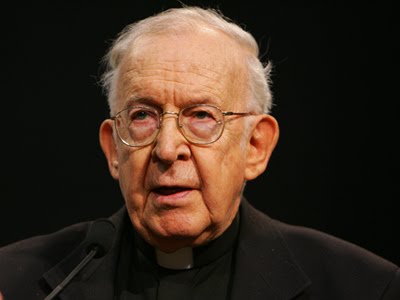 I visited Father Bob Levis (who also lives in Erie). He is in a nursing home. Needs a walker to get around since his nasty fall at Christmas time which gave him a cuncushion. Since then, he fell a few more times. Fr. Bob turned 89 this summer and is still very much alive but has been grounded for health reasons. Hence, you won't see him on EWTN as much or at conferecences, workshops or conventions but know he is still very much among the living but in need of your prayers. He has never been so confined and constrained from getting around. He has been independent 88 years and now he needs assisted living.
Thank you and God bless you and Mary keep you"
Ancient Chant
From Fr. Tim Finigan:
"I thought I had better leave it a day or so before posting yet another piece of ancient chant. Today we have Alleluia Dies Sanctificatus, sung by the Ensemble Organum, directed by Marcel Peres. Here is the text and translation:
This is billed as chant from the particular Churches of Rome in the 7th century..."
"I thought I had better leave it a day or so before posting yet another piece of ancient chant. Today we have Alleluia Dies Sanctificatus, sung by the Ensemble Organum, directed by Marcel Peres. Here is the text and translation:
Alleluia
Dies sanctificatus illuxit nobis
venite gentes, et adorate Dominum
qui hodie descendit lux magna super terram.
Alleluia
Alleluia
The sanctified day has shone upon us:
come, peoples and adore the Lord
who today came down, the great light upon the earth.
Alleluia.
Inferiority Complex

"Gentle Reader: I try really hard to follow the recommended devotional practices of our Church. I try especially hard and with great diligence to follow the mandated periods of fast and abstinence during the liturgical year.
I fast from food and abstain from meat on Good Friday and Ash Wednesday. I abstain from meat on Fridays during Lent. At one point, I always totally fasted on First Fridays in reparation and hopeful prayer that the sin of abortion would end. I should start that practice up again, especially, as our local friends at Planned Parenthood want to build a bigger abortuary in St. Paul.
Anyway, I’ve periodically been met with resentment by my fellow Catholics when they hear what I’m doing-especially during the two years I had my First Friday fast going on. Usually, I’d hear: 'Why are you doing that? Do you think you are a better Catholic than I am?...”
Monday, August 2, 2010
Novena to Saint Philomena August 2-10

NOVENA PRAYER TO
SAINT PHILOMENA
We beseech Thee, O Lord, to grant us the pardon of our sins by the intercession of Saint , virgin and martyr,
who was always pleasing in Thy sight by her eminent chastity and by the profession of every virtue. Amen.
Illustrious virgin and martyr, Saint Philomena, behold me prostrate before the throne
whereupon it has pleased the Most Holy Trinity to place thee.
Full of confidence in thy protection, I entreat thee to intercede for me with God,
from the heights of Heaven deign to cast a glance upon thy humble client! Spouse of Christ, sustain me in suffering, fortify me in temptation,
protect me in the dangers surrounding me, obtain for me the graces necessary to me, and in particular
(Here specify your petition).
Above all, assist me at the hour of my death. Saint Philomena, powerful with God, pray for us. Amen.
O God, Most Holy Trinity, we thank Thee for the graces Thou didst bestow upon the Blessed Virgin Mary,
and upon Thy handmaid Philomena, through whose intercession we implore Thy Mercy. Amen.
'My rosary saved me': Incredible story of soldier who cheated death after standing on landmine and being shot
By Daily Mail Reporter
Last updated at 7:17 PM on 2nd August 2010
A soldier who stood on a landmine and was shot in the chest in Afghanistan is convinced a rosary saved his life in exactly the same way as his great-grandfather towards the end of the Second World War.
Glenn Hockton, 19, who is now home from a seven-month tour of duty with the Coldstream Guards in Helmand Province, was on patrol when his rosary suddenly fell from his neck.
His mother Sheri Jones said today: 'He felt like he had a slap on the back. He bent down to pick up his rosary to see if it was broken. As he bent down he realised he was on a landmine.'
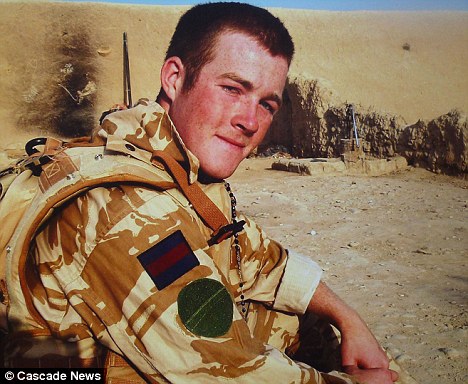
Glenn had to stand there for 45 terrifying minutes while his colleagues successfully managed to get to him.
Mrs Jones, from Tye Green, Essex, said she was physically sick when her son rang to tell her of his ordeal.
His great-grandfather Joseph 'Sunny' Truman also credited a rosary with saving his life in a World War II blast that killed six members of his platoon.
He was with the Royal Regiment of Fusiliers and after being captured towards the end of the war, he and other prisoners were forced to march away from the advancing Allied armies.
Mrs Jones, 41, recalled: 'He was walking across a field with half a dozen of his platoon. He bent down to pick something up and was the only one to survive a sudden bomb blast. He had picked up a rosary.'
Before Glenn was deployed to Afghanistan, she said he asked for a rosary to take with him.

His mother and stepfather Danyal Jones have also kept a bullet which embedded itself in Glenn's body armour when he was shot on a separate occasion. He was winded, but otherwise he was unhurt.
Glenn, a mortar man, is in hospital at the moment with broken ribs he suffered in a non-work related mishap.
Glenn joined the Coldstream Guards at 16 and was deployed at the end of last October.
Mrs Jones said: 'As a parent, it was the hardest thing I had to do because being 16 I had to sign to give permission for him to join the Army. It was too painful to see him leave Brize Norton for Afghanistan.
At home his sister Danyel, six, and brothers George, eight, and TJ, 17, worried for their big brother. Mrs Jones said: 'It was horrible for them.
'I couldn't watch the news because the children used to say: "Is Glenn on there?" each time they said another soldier had been killed.'
Glenn's duties involved patrolling and loading the mortars. He was based in Helmand Province, which has seen some of the worst fighting, and Kabul.
'He lost a couple of close friends out there," his mother added. 'He is a very private person. We don't really push him [to talk about it]. If he wants to tell us, he tells us.
'He has turned around and said: "When you're out there, you either kill or you are killed".
Glenn is based in Aldershot and is now training ahead of his next deployment.
His mother said the Army had changed her son's life since he left Notley High School at 15.
She said: 'He is a better person. He went in a snotty-nosed 16-year-old that knew everything, a Jack the Lad. The change in him is unreal. It is a good change. I am very proud of him.
'We went up to London to Horse Guards Parade where they did their welcome home march. It was the proudest day of my life.'
Last updated at 7:17 PM on 2nd August 2010
A soldier who stood on a landmine and was shot in the chest in Afghanistan is convinced a rosary saved his life in exactly the same way as his great-grandfather towards the end of the Second World War.
Glenn Hockton, 19, who is now home from a seven-month tour of duty with the Coldstream Guards in Helmand Province, was on patrol when his rosary suddenly fell from his neck.
His mother Sheri Jones said today: 'He felt like he had a slap on the back. He bent down to pick up his rosary to see if it was broken. As he bent down he realised he was on a landmine.'
Lucky charm: Glenn Hockton wearing the rosary which helped save his life in Afghanistan
Mrs Jones, from Tye Green, Essex, said she was physically sick when her son rang to tell her of his ordeal.
His great-grandfather Joseph 'Sunny' Truman also credited a rosary with saving his life in a World War II blast that killed six members of his platoon.
He was with the Royal Regiment of Fusiliers and after being captured towards the end of the war, he and other prisoners were forced to march away from the advancing Allied armies.
Mrs Jones, 41, recalled: 'He was walking across a field with half a dozen of his platoon. He bent down to pick something up and was the only one to survive a sudden bomb blast. He had picked up a rosary.'
Before Glenn was deployed to Afghanistan, she said he asked for a rosary to take with him.
Glenn's mother Sheri Jones with the bullet which was retrieved from his body armour
Glenn, a mortar man, is in hospital at the moment with broken ribs he suffered in a non-work related mishap.
Glenn joined the Coldstream Guards at 16 and was deployed at the end of last October.
Mrs Jones said: 'As a parent, it was the hardest thing I had to do because being 16 I had to sign to give permission for him to join the Army. It was too painful to see him leave Brize Norton for Afghanistan.
At home his sister Danyel, six, and brothers George, eight, and TJ, 17, worried for their big brother. Mrs Jones said: 'It was horrible for them.
'I couldn't watch the news because the children used to say: "Is Glenn on there?" each time they said another soldier had been killed.'
Glenn's duties involved patrolling and loading the mortars. He was based in Helmand Province, which has seen some of the worst fighting, and Kabul.
'He lost a couple of close friends out there," his mother added. 'He is a very private person. We don't really push him [to talk about it]. If he wants to tell us, he tells us.
'He has turned around and said: "When you're out there, you either kill or you are killed".
Glenn is based in Aldershot and is now training ahead of his next deployment.
His mother said the Army had changed her son's life since he left Notley High School at 15.
She said: 'He is a better person. He went in a snotty-nosed 16-year-old that knew everything, a Jack the Lad. The change in him is unreal. It is a good change. I am very proud of him.
'We went up to London to Horse Guards Parade where they did their welcome home march. It was the proudest day of my life.'
Fr. Doyle and the ecclesiology of despair
From the blog of Edward N. Peters, Canon Laywer:
"Fr. Thomas Doyle, op., has an essay in The Tablet (24 July 2010) wherein he comments, mostly negatively, on some canonical procedural norms recently revised and published by Rome. My concern here, though, is with what I will call an “ecclesiology of despair” to which I think Fr. Doyle’s essay gives voice.
Concluding his criticisms of the new norms, Fr. Doyle asserts that: “They are tragic evidence that the hierarchical governing body of the Church is no longer capable of leading the People of God.” Now, for Catholics called to maintain communion with the Church in all things (c. 209), such an assertion, no matter what context occasioned it, is disturbing.
The “hierarchical governing body of the Church” is the pope and bishops in union with him (cc. 331, 336), usually operating dispersed throughout the world (cc. 375, 381), sometimes operating in an ecumenical council (c. 337). But let's be clear: the “hierarchical governing body of the Church” is not the ecclesiastical equivalent of, say, the Democratic or Republican Party (groups that can and do lose their mandate to govern in any number of ways), nor is the Church's hierarchy even the equivalent of the federal-state governmental system we know in America (a structure that need not have been adopted and that many nations do not follow). Not at all.
Rather, the “hierarchical governing body of the Church” is the divinely-mandated governing structure that Christ left to his Church. See Lumen gentium 8, 18-29. It is the way that Christ wants his Church to shepherd the People of God. To assert, then, that “the hierarchical governing body of the Church is no longer capable of leading the People of God” is to assert that Christ’s plan and his promise of abiding protection were insufficient to preserve (not so much individuals from sin, for they still have free will, etc., but rather, to preserve) the Petrine-Apostolic foundations of his Church from eventual collapse and, at least from then on, to save her very reason for existence from radical frustration. In short, one sighs in despair, So much for Christ and his divine promises.
Of course Fr. Doyle, blessed with free will, can urge this viewpoint, and others are, I trust, free to contradict him. But we should make no mistake about what his assertion implies for ecclesiology:..."

Incoming! The Sun Unleashes CME at Earth
Earlier this morning, NASA's Solar Dynamics Observatory (SDO) witnessed a complex magnetic eruption on the sun. The joint NASA/ESA Solar and Heliospheric Observatory (SOHO) -- a mission sitting at the L1 point between the Earth and the sun -- also spotted a large coronal mass ejection (CME) blasting in the direction of Earth...We can expect its arrival on Aug. 3.
Quote
'We must strip from our Catholic Prayers and from the Catholic liturgy everything which can be a shadow of a stumbling block for our separated brethren, that is for the Protestants.' — Archbishop Annibale Bugnini, architect of the 'New Mass.' L'Osservatore Romano, March 19, 1965


The Teaching Authority of the Catholic Church
Radio Replies Second Volume:
477. Rome's claim to interpretative authority, based on an obviously doctored text of the Bible can only appeal to those who have not heard the voice of the true Shepherd.
It used to be the Protestant tradition that the Catholic religion is opposed to the Bible. Now when a man has that fixed idea firmly embedded in his mind, he gets a shock when he hears the Bible quoted in favor of Catholicism. The stronger the texts are, the greater his shock. But some people never dream that they may have been laboring under a delusion. They refuse to entertain the idea that they have been wrong all their lives. The texts quoted seem to point to Catholicism all right, but to them it simply cannot be true. So they seek an excuse for not believing what they cannot refute. Every text which seems to favor Catholicism cannot mean what it says, but must obviously be "doctored." And they are so sure that they alone are truly guided by God that anyone impressed by the case for the Catholic religion must be regarded as not having heard the voice of the true Shepherd!
478. Other Churches claim to have given the Bible equal study, and claim equal value for their interpretation.
Since no non-Catholic Churches claim to be infallible, but admit their constant liability to error, they cannot even claim equal value for their interpretations. Moreover, apart from their divergence from the Catholic interpretation, they differ amongst themselves. That would not be, had they all equally arrived at the correct sense of the Bible. As a matter of fact, all practically nullify the claims of each as a reliable guide to the meaning of Scripture.
479. Protestantism and Catholicism are founded on the same basic principles, their differences being due to different interpretations of the Bible.
They are not founded on the same basic principles. In basic principles they are diametrically opposed. What is the basic principle of Protestantism? It is belief in what one thinks the Bible to mean. If a man thinks the Bible to support this or that doctrine, then it surely does so; for he cannot imagine that he might be wrong. He makes an act of faith in his own judgment. But the Catholic basic principle is very different. Instead of deciding for himself what is or is not the teaching of Christ, the Catholic is taught that teaching by the Catholic Church. He knows that his own judgment is quite likely to be wrong, but that the Catholic Church cannot be wrong. How different are the basic principles of the two religions can be judged from results. For the Protestant principle leads to endless diversity, while the Catholic principle leads to a world-wide and international unity.
480. But the Catholic believes in the Catholic Church because he thinks the Bible supports it.
That is not so. The Bible does support it, of course. But even if he never saw a Bible, the Catholic would have sufficient ground for his judgment. He knows that the Catholic priest does not preach merely his own opinions, as does the Protestant minister. He knows that his Church is not a particular sect, but a vast united universal Apostolic Church, whose history shows the allegiance of innumerable saints and martyrs. And such a Church is impossible to account for by merely human forces. It is God's work on the very face of it. Merely human institutions have always tended to fluctuation, change, and disintegration. Empires have crumbled. No human being can get even one nation to agree, say, on political matters. How could a mere man persuade over 400 millions drawn from all nations to agree on religious matters — millions who differ on almost every other conceivable subject? The Catholic has reasonable grounds for his acceptance of the Church as the teacher of mankind in religious matters; and he submits to her authoritative teaching in matters of faith and morals, rather than decide for himself what the Bible must mean.
481. My point is, since Protestantism and Catholicism differ as to what the Bible means, who is to say which is right?
On Protestant principles, there is no one who could do so. And that is the basic fallacy of Protestantism. It offers no certainty, and can offer no certainty, as to what God does really teach. Yet it is essential that in so grave a matter we should have certainty. The Catholic Church alone can give it.
482. If you quote the Bible, the Protestant will quote the Bible; so we are back to our point of view of the Bible, and there is no means of deciding the issue.
For a Catholic the issue does not depend on the Bible, even though the Bible does corroborate Catholicism. No Protestant can prove his beliefs from the Bible, or even that they ought to be proved from the Bible. You say that Protestants cannot prove their position, and that Catholics cannot prove theirs. It's a matter of conjecture and opinion. Protestants may be right or Catholics may be right. Neither has proof, and we must be content to do without proof. I admit that that is the logical result of the Protestant principles on which you argue; and for that reason Protestantism must end in uncertainty and doubt. That in itself should be enough to prove that it cannot be the religion of Christ.
483. How will the problem be solved?
Only by abandoning the Protestant principle of personal and private judgment, and accepting the doctrines taught clearly and definitely by the Catholic Church. She is the only tribunal in the world with authority from God to teach all nations, and endowed with infallibility in order that she may not lead men into error. And for two thousand years she has both fulfilled and proved her mission under the protection and guidance of the Holy Ghost.
Considering Catholicism
From Father Longenecker:
"When a Protestant who is considering the Catholic Church calls me for advice the conversation goes back to some recurring difficulties. So here are some commandments for converts.
The Catholic Church is not just another denomination. It's very different from all the Protestant churches you have ever attended. Behave as if you're visiting a foreign country.
Be curious, not critical.
You're right. There are plenty of hypocritical, heretical and lukewarm Catholics. There are a fair few Prots like that too aren't there?
The Catholic Church is huge. Don't compare it to your Protestant sect. Compare it to all Protestants of every kind in every Prot organization everywhere. Did you find some loony, left wing scary Catholics? Remember the Episcopalians. If we have to answer for radical theologians and loony leftie nuns you have to answer for Kitty Schori, Mary Glasspool, the Jesus Seminar and Matthew Fox.
I know it seems like you're "not getting fed." Once you're received into the church you'll be fed alright: Fed the Body of Christ. Be patient.
Stop imagining that there's a perfect church somewhere. Utopianism is an American disease. If you expect conflict and imperfection you won't be so disappointed with the Catholic Church (or with life generally for that matter)
The Catholic Church is in an epic battle with modernism. Don't just complain about fuzzy feel good sermons, comfort hymns and carpeted churches. Join those of us who are working to 'reform the reform' and play your part.
You wonder where the 'fellowship' is. That's because a typical Catholic parish is huge and socially varied. Protestant churches tend to develop congregations from the same socio economic background. No wonder they have 'good fellowship'. In the Catholic Church you will find your 'fellowship' in one of a huge number of sub groups. Once you've swum the Tiber, join the Women's Club or the Knights of Columbus or the Pro Life Group or the Carmelite Prayer Group or the Third Order Franciscans.
Yes, we do read the Bible, but we read it within the tradition and prayer of the Church. The Scriptures are woven into the Mass and the Liturgy of the Hours. Be prepared to see the Scriptures you love in a totally fresh and exciting way.
Ask why you are considering the Catholic Church. If you're just church shopping you still have a long way to go. The big question is authority. If you have come to believe that the Catholic Church really is the fullest expression of Christ's One, Holy, Catholic and Apostolic Church, and that the Holy Father is the God-appointed successor of Peter, Christ's apostle on earth, then get yourself into the Catholic Church as soon as you can. Everything else will follow."
'Being a woman priest is what I feel I am called to do'

From Patsy McGarry at the Irish Times:
...The website of Ireland’s Brothers and Sisters in Christ (Basic) movement for Catholic women priests in Ireland has not been updated since October 2007. According to Soline Humbert, this is because Basic, which was set up in 1993, has become something of an underground movement. Anticipating the May 2008 action of the CDF, articles and names were removed from the website to prevent people losing their jobs as theologians, chaplains, and so on.
“Fear is an awful thing, another form of institutional abuse,” she says. “People who believe one thing are being forced to do another. At heart it is a dysfunctional church, where people cannot speak about what they believe in conscience.”
This is all such a long way from the Basic seminar in 1995, when participants included the future President, Mary McAleese, and the retired professor of moral theology at St Patrick’s College Maynooth, Fr Enda McDonagh.
Soline Humbert believes she has a vocation for the priesthood and has celebrated the Eucharist in her home every day this past 14 years. “I am not the only one,” she says. “I know several. Some religious sisters do it as well. My first chalice and paten were given to me by a religious sister and another by a community of religious sisters.”
Originally from Versailles, Humbert fell in love with Ireland on a visit in the late 1960s. She attended Trinity College Dublin in the early 1970s and married here. She has two sons. One bishop said to her that “perhaps one of your sons will have your vocation to the priesthood”. She was not impressed. She has not had much luck with bishops.
Then Catholic primate Cardinal Cahal Daly refused even to accept from her a petition calling for women priests. It had 10,000 names. He wrote to her saying he could not do so, as the Pope had spoken on the matter. She wrote a letter to this newspaper so that the signatories could be informed. She quoted from the cardinal’s letter. He wrote to her again, expressing his dismay that she would quote from their private correspondence and saying she could not be trusted.
For Humbert, “it was a moment of insight into the abuse of power. He did not want it known that he had refused to accept the petition”. She tried to get a meeting with the cardinal, without success.
She sent him a Valentine’s card one February. It asked: “What about a date?” The tactic worked. She was invited to Armagh. “It was the toughest meeting. The man was steel,” she says.
She met Cardinal Desmond Connell when he was Archbishop of Dublin. He told her: “A woman wasn’t on the cross and so couldn’t represent Christ. There was not much meeting of minds.”
Cardinal Seán Brady simply refused to discuss the issue with her at all. “He said no, he couldn’t. Rome has spoken,” Humbert says. “He came down like a guillotine.”
Similarly with the late Cardinal Basil Hume, Archbishop of Westminster. He was visiting Dublin and was shaking her hand as she began talking about women priests. “He withdrew his hand. He left me absolutely . . . as if I had leprosy,” she says....
Related:
Weekend Kneeler Jeopardy: Nighttime Brawling Saint
From Swissmiss:
 "After last week's toughie, here's more of a softball. Found it in a book I was browsing through at Barnes and Noble.
Category: Saints and sinners
St. Alex says, please place your answer in the form of a question in the combox, and say a few Hail Marys while you wait for the answer to be revealed.
Demerits for using Google and other sneaky searches. Educated guesses are welcome and encouraged. Good luck!!
The first correct answer in the form of a question wins the highly coveted WKJ ribbon to display on your blog, cubicle or refrigerator door"
Update - we have a winner:
 "After last week's toughie, here's more of a softball. Found it in a book I was browsing through at Barnes and Noble.
Category: Saints and sinners
This saint may be the only one with a notarized police record for nighttime brawling with an intent to inflict serious harm.
St. Alex says, please place your answer in the form of a question in the combox, and say a few Hail Marys while you wait for the answer to be revealed.
Demerits for using Google and other sneaky searches. Educated guesses are welcome and encouraged. Good luck!!
The first correct answer in the form of a question wins the highly coveted WKJ ribbon to display on your blog, cubicle or refrigerator door"
Update - we have a winner:
Donna Nobis Pacem said...
Who was St Ignatius Loyola?

Iranian women's rugby team uniforms
By Nick Pisa
If the rugby-playing women of Iran's national sevens team had cauliflower ears, no-one could tell.
Kitted out in tight-fitting headscarves and full tracksuits to protect their modesty, the players caused quite a stir when they played in Europe for the first time.
Taking to the field in a women's seven-a-side tournament in Cortina D'Ampezzo, Italy, they were dealt a 10-0 by the host nation and then suffered a further 33-0 setback in a second game.

Captain Zohre Eyni, 22, said: 'First I played football but I now play rugby as I really enjoy it but my family are not so sure it is the right thing for a woman.
'The whole team has learnt how to keep the veil in place so that it doesn't interfere with play and I think we have shown that even a physical game like rugby can be played in a veil...

If the rugby-playing women of Iran's national sevens team had cauliflower ears, no-one could tell.
Kitted out in tight-fitting headscarves and full tracksuits to protect their modesty, the players caused quite a stir when they played in Europe for the first time.
Taking to the field in a women's seven-a-side tournament in Cortina D'Ampezzo, Italy, they were dealt a 10-0 by the host nation and then suffered a further 33-0 setback in a second game.
Captain Zohre Eyni, 22, said: 'First I played football but I now play rugby as I really enjoy it but my family are not so sure it is the right thing for a woman.
'The whole team has learnt how to keep the veil in place so that it doesn't interfere with play and I think we have shown that even a physical game like rugby can be played in a veil...
Sunday, August 1, 2010
Vatican coin now in circulation

Since the Vatican accepted the euro in Jan. 2002, the only coins bearing the Pope's visage available were those sold as part of a collection. Now, as the result of a Dec. 2009 accord between the European Union and the Holy See, approximately two million 50 cent pieces have been minted for circulation.
According to the fine print of this agreement, reported France's I-Media, the Vatican was obligated to put at least 51 percent of the nominal value of its coinage in circulation. However, in order to protect value in the important trade of collections, the 50 cent coins are the only ones in circulation and they will only be given out in pairs: two per customer.
Coins of seven other denominations are available in the collector's set, from nominal values of one cent to the two euro coin.
Allowing circulation of only the 50 cent piece protects the value of coin collectors' purchases, sold and resold at prices above their nominal value, and may give visitors a pleasant surprise as they shop around the Vatican. The coins are being given as change at places such as the Vatican gas station, pharmacy and post office.
The coin features the image of Pope Benedict on one side along with the words "Citta del Vaticano 2010."
On the west coast of Florida, a small group of Catholic women priests is saying mass in defiance of the Vatican

By Lona O'Connor Palm Beach Post Staff Writer

Dena O'Callaghan, 73, ordained two years ago, remains upbeat in the face of every new Vatican pronouncement. She is certain that the church will eventually change its position on women priests.
"Gosh, if I didn't believe that, I'd have no vision," said O'Callaghan...
This occurred during the aftermath of the groundbreaking Second Vatican Council, when anything seemed possible within the Catholic Church. English replaced Latin in the Mass and priests turned to face their congregations...
"It all started with Vatican II and all these wonderful things we were going to do," said Ellen McNally, president of the southwest Florida chapter of Call to Action, an umbrella group that supports women priests and social justice issues. "People really wanted to go home and make it happen..."
Saturday, July 31, 2010
It’s About Sharia
Newt Gingrich resets our national-security debate.
Andrew C. MCarthy
(National Review) The 2010 midterms have not happened yet, but the 2012 campaign is under way. For that we can thank Newt Gingrich. Not because Gingrich is a candidate, though he almost certainly is. And not because he can win, because that is by no means certain. We should thank Gingrich because he has crystallized the essence of our national-security challenge. Henceforth, there should be no place to hide for any candidate, including any incumbent. The question will be: Where do you stand on sharia?
The former speaker of the House gets the war on terror. For one thing, he refuses to call it the “war on terror,” which should be the entry-level requirement for any politician who wants to influence how we wage it. Gingrich grasps that there is an enemy here and that it is a mortal threat to freedom. He knows that if we are to remain a free people, it is an enemy we must defeat. That enemy is Islamism, and its operatives — whether they come as terrorists or stealth saboteurs — are the purveyors of sharia, Islam’s authoritarian legal and political system.
This being the Era of the Reset Button, Gingrich is going about the long-overdue business of resetting our understanding of the civilizational jihad that has been waged against the United States for some 31 years. It is the jihad begun when Islamists overran the American embassy in Tehran, heralding a revolutionary regime that remains the No. 1 U.S. security challenge in the Middle East, as Gingrich argued Thursday in a provocative speech at the American Enterprise Institute.
The single purpose of this jihad is the imposition of sharia. On that score, Gingrich made two points of surpassing importance. First, some Islamists employ mass-murder attacks while others prefer a gradual march through our institutions — our legal, political, academic, and financial systems, as well as our broader culture; the goal of both, though, is the same. The stealth Islamists occasionally feign outrage at the terrorists, but their quarrel is over methodology and pace. Both camps covet the same outcome.
Second, that outcome is the death of freedom. In Islamist ideology, sharia is deemed to be the necessary precondition for Islamicizing a society — for Islam is not merely a religious doctrine, but a comprehensive socio-economic and political system. As the former speaker elaborated, sharia embodies principles and punishments that are abhorrent to Western values. Indeed, its foundational premise is anti-American, holding that we are not free people at liberty to govern ourselves irrespective of any theocratic code, that people are instead beholden to the Islamic state, which is divinely enjoined to impose Allah’s laws.
Sharia, moreover, is anti-equality. It subjugates women and brutally punishes transgressors, particularly homosexuals and apostates. While our law forbids cruel and unusual punishments, Gingrich observed that the brutality in sharia sanctions is not gratuitous, but intentional: It is meant to enforce Allah’s will by striking example.
On this last point, Gingrich offered a salient insight, one well worth internalizing in the Sun Tzu sense of knowing one’s enemy. Islamists, violent or not, have very good reasons for the wanting to destroy the West. Those reasons are not crazy or wanton — and they have nothing to do with Gitmo, Israel, cartoons, or any other excuse we conjure to explain the savagery away. Islamists devoutly believe, based on a well-founded interpretation of Islamic doctrine, that they have been commanded by Allah to kill, convert, or subdue all who do not adhere to sharia — because they regard Allah as their only master (“There is no God but Allah”). It is thus entirely rational (albeit frightening to us) that they accept the scriptural instruction that the very existence of those who resist sharia is offensive to Allah, and that a powerful example must be made of those resisters in order to induce the submission of all — “submission” being the meaning of Islam.
It makes no sense to dismiss our enemies as lunatics just because “secular socialist” elites, as Gingrich called them, cannot imagine a fervor that stems from religious devotion. We ought to respect our enemies, he said. Not “respect” in Obama-speak, which translates as “appease,” but in the sense of taking them seriously, understanding that they are absolutely determined to win, and realizing that they are implacable. There is no “moderate” sharia devotee, for sharia is not moderate. Gingrich noted that in response to global outcry against the prospect of death by stoning for an Iranian woman, Sakineh Mohammadi Ashtiani, convicted of adultery, the mullahs’ great concession appears to be that she will be hanged instead. Islamism is not a movement to be engaged, it is an enemy to be defeated.
Victory, Gingrich said, will be very long in coming — longer, perhaps, than the nearly half-century it took to win the Cold War. Invoking JFK, he urged that the survival and success of liberty will still require an unwavering commitment to pay any price and bear any burden, for as long as it takes. Will that entail an ambitious project to democratize Islamic countries — notwithstanding that sharia dictates waging jihad against Westerners who try? Gingrich’s embrace of President Bush’s second inaugural address suggests that he may think so.
How we go about it and whether we use our military to spearhead a “forward march of freedom” are matters the former speaker did not flesh out. He also wondered aloud why, after nearly nine years in Afghanistan, we had not tasked military engineers and contractors to blanket that backward land with highways, the roads to advancement and prosperity. But we haven’t defeated the enemy yet. One can agree wholeheartedly with the former speaker that, having taken on a war against Afghan Islamists, it is imperative that America win. But in World War II, which Gingrich invoked repeatedly, and to great effect, we had our priorities straight: unambiguous victory first; then, and only then, the Marshall Plan’s ambitious reconstruction of Europe and Japan.
Debate over all of this is essential. The crucial point is that we must have the debate with eyes open. It is a debate about which Gingrich has put down impressive markers: The main front in the war is not Afghanistan or Iraq but the United States. The war is about the survival of Western civilization, and we should make no apologies for the fact that the West’s freedom culture is a Judeo-Christian culture — a fact that was unabashedly acknowledged, Gingrich reminded his audience, by FDR and Churchill. To ensure victory in the United States we must, once again, save Europe, where the enemy has advanced markedly. There is no separating our national security and our economic prosperity — they are interdependent. And while the Middle East poses challenges of immense complexity, Gingrich contended that addressing two of them — Iran, the chief backer of violent jihad, and Saudi Arabia, the chief backer of stealth jihad — would go a long way toward improving our prospects on the rest.
Most significant, there is sharia. By pressing the issue, Newt Gingrich accomplishes two things. First, he gives us a metric for determining whether those who would presume to lead us will fight or surrender. Second, at long last, someone is empowering truly moderate Muslims — assuming they exist in the numbers we’re constantly assured of. Our allies are the Muslims who embrace our freedom culture — those for whom sharia is a matter of private belief, not public mission. Our enemies are those who want sharia to supplant American law and Western culture. When we call out the latter, and marginalize them, we may finally energize the former.
It’s that simple. Not easy, but simple.
— Andrew C. McCarthy, a senior fellow at the National Review Institute, is the author, most recently, of The Grand Jihad: How Islam and the Left Sabotage America.
Bishops & Catholic Media Summit

 :
"CNS reports on a summit between bishops and Catholic media professionals. In it, USCCB communications committee chairman, Los Angeles auxiliary bishop, and bishop president of Pax Christi in the USA, Gambino Zavala says the following,While You Are At It...
"As I talked with brother bishops in preparation for this presentation, there was consistent agreement that one aspect that is most alarming to us about media is when it becomes un-Christian and hurtful to individuals," he said. "We are particularly concerned about blogs that engage in attacks and hurtful judgmental language. We are very troubled by blogs and other elements of media that assume the role of magisterium and judge others in the church."
Very interesting. While we should be loving and charitable when possible, we should value the truth of Revelation more than people's feelings. What is even more interesting is that this comes after decades of silence on the part of the bishops concerning the behavior of the professional Catholic media. Where was the concern over the NCR, US Catholic et al distorting and undermining the Faith, while viciously attacking anyone they considered to be 'pre-conciliar'? Not only was there a lack of concern, but rather positive support of dissenting media. How many dioceses have advertised for jobs in the NCR? I wonder what is operative is something similar to what happens in the secular media; that the professionals see their monopoly crumbling and their ideological agenda crumbling. Yes, the bishops (and the rest of us) should be concerned about the new media and Christian behavior. But, it is all rings a little hollow when the lack of action on the old media is considered."

Baltimore Catechism
From intratext.com:
The Baltimore Catechism 1891 I IntraText Edition CT Copyright Èulogos 2007 |
Friday, July 30, 2010
Catholic outrage over plans to keep the Act of Settlement
Posted by geoconger

First published in The Church of England Newspaper.
Catholic leaders in Scotland have denounced the coalition government’s plans to leave intact the 1701 Act of Settlement, which bans the monarch from marrying a Roman Catholic.
“When a monarch is free to marry a Scientologist, Muslim, Buddhist, Moonie or even Satanist but not a Catholic, then there’s something seriously wrong,” said Scottish Roman Catholic Bishop Joseph Devine of Motherwell.
In a written answer given to the House of Commons on June 30, the Parliamentary Under-Secretary of State at the Cabinet Office, Mr. Mark Harper stated “there are no current plans to amend the laws on succession”
Bishop Devine, who during the General Election had urged Catholics not to vote Labour due to their social policies, expressed outrage over the Cameron government decision.
“What trust and confidence can we have in such a leader? He is barely two months into government and is already showing alarming signs of the arrogance and disdain so often associated with power,” he said according to the Scotsman.
On July 12 the Scotsman also reported that Cardinal Keith O’Brien said that it was “quite ironic that the two parties in coalition have both branded themselves champions of equality but have commenced their ‘era of equality’ by sending a clear message to the Catholic community that they are to be the exception.”
Passed by Parliament in 1701 the Act forbids the sovereign from marrying a Roman Catholic and requires the monarch to “join in communion with the Church of England.”
On July 1, 2010 the member for Rhondda, Chris Bryant (Lab.) pressed Mr. Harper to defend the government’s decision not to act. Mr. Bryant noted the Catholic Church in Scotland was strongly opposed to the current law.
Mr. Harper responded that this was true, however, it was not a position held by all Roman Catholics in the United Kingdom. The previous Cardinal Archbishop of Westminster, Cormac Murphy-O’Connor, said that he thought that the Act of Settlement was “discriminatory. I think it will disappear, but I don’t want to cause a great fuss,” while the current Archbishop of Westminster has said “I wouldn’t rush to support such a change in the law. I think that the position of the Queen and the monarchy is to be handled with great sensitivity”.
Mr. Bryant responded that the “Catholic cardinals in Scotland have asserted very forcefully that they believe the law is entirely discriminatory and should be changed, and many prelates in the Church of England have also said it should be changed.”
The minister replied that Cardinal O’Brien in Scotland was “much firmer about wanting to move quickly on this. However, this merely highlights the complexity of the debate. There is not even a single clear view within the Catholic Church in these islands. Some very significant Catholics think that the law should be changed, but should not be rushed or done in a way that causes the monarchy difficulty,” he said.
Cardinal Keith O'Brien, Roman Catholic Archbishop of St Andrews & Edinburgh
Catholic leaders in Scotland have denounced the coalition government’s plans to leave intact the 1701 Act of Settlement, which bans the monarch from marrying a Roman Catholic.
“When a monarch is free to marry a Scientologist, Muslim, Buddhist, Moonie or even Satanist but not a Catholic, then there’s something seriously wrong,” said Scottish Roman Catholic Bishop Joseph Devine of Motherwell.
In a written answer given to the House of Commons on June 30, the Parliamentary Under-Secretary of State at the Cabinet Office, Mr. Mark Harper stated “there are no current plans to amend the laws on succession”
Bishop Devine, who during the General Election had urged Catholics not to vote Labour due to their social policies, expressed outrage over the Cameron government decision.
“What trust and confidence can we have in such a leader? He is barely two months into government and is already showing alarming signs of the arrogance and disdain so often associated with power,” he said according to the Scotsman.
On July 12 the Scotsman also reported that Cardinal Keith O’Brien said that it was “quite ironic that the two parties in coalition have both branded themselves champions of equality but have commenced their ‘era of equality’ by sending a clear message to the Catholic community that they are to be the exception.”
Passed by Parliament in 1701 the Act forbids the sovereign from marrying a Roman Catholic and requires the monarch to “join in communion with the Church of England.”
On July 1, 2010 the member for Rhondda, Chris Bryant (Lab.) pressed Mr. Harper to defend the government’s decision not to act. Mr. Bryant noted the Catholic Church in Scotland was strongly opposed to the current law.
Mr. Harper responded that this was true, however, it was not a position held by all Roman Catholics in the United Kingdom. The previous Cardinal Archbishop of Westminster, Cormac Murphy-O’Connor, said that he thought that the Act of Settlement was “discriminatory. I think it will disappear, but I don’t want to cause a great fuss,” while the current Archbishop of Westminster has said “I wouldn’t rush to support such a change in the law. I think that the position of the Queen and the monarchy is to be handled with great sensitivity”.
Mr. Bryant responded that the “Catholic cardinals in Scotland have asserted very forcefully that they believe the law is entirely discriminatory and should be changed, and many prelates in the Church of England have also said it should be changed.”
The minister replied that Cardinal O’Brien in Scotland was “much firmer about wanting to move quickly on this. However, this merely highlights the complexity of the debate. There is not even a single clear view within the Catholic Church in these islands. Some very significant Catholics think that the law should be changed, but should not be rushed or done in a way that causes the monarchy difficulty,” he said.
Subscribe to:
Posts (Atom)