Showing posts with label orthodox. Show all posts

Friday, July 31, 2015

German Protestants apologise for Reformation iconoclasm


By Christa Pongratz-Lippitt

(The Tablet) The German Protestant Church (EKD) has apologised for the widespread destruction of religious images during the Reformation.

“The Protestant Church rejects the destruction of images. Images have long since become an expression of Protestant piety,” Protestant Bishop Petra Bosse-Huber underlined at a meeting of delegations from the Ecumenical Patriarchate of Constantinople and the EKD. The clerics met in Hamburg to discuss the word “image” from the Orthodox and Protestant points of view. Ecumenical Patriarch Bartholomew and EKD chairman Bishop Heinrich Bedford-Strohm sent greetings and blessings to the Hamburg meeting.

Destroying image was most common in the immediate aftermath of the Reformation. In the first half of the sixteenth century, statues of the Virgin and the saints, stained-glass windows, organs and any objects associated with miracles and the supernatural were removed from Catholic churches and wayside chapels and in many cases destroyed. Switzerland, the Netherlands, England and southern Germany suffered particularly... (continued)


Link:

Saturday, June 13, 2015

Pope calls for agreement on a single date for Christians to celebrate Easter

Francis had invited Bartholomew to present his encyclical on ecology. Zizoulas, one of the greatest Orthodox theologians, will do it in his place. “Mary is much more important than the apostles.” Forcing migrants back in Asia is not an attitude inherent to a continent that “has a mystical treasure-trove”. Similarly, “the fundamentalism found in some parts of Pakistan where Christians were burnt alive for bearing the Gospel is not inherent”.

Rome (AsiaNews) – Pope Francis today proposed that all Christians celebrate Easter at the same time. He did so, noting that “The Catholic Church has been willing since Paul VI to set a date and give up the first solstice after the full moon in March" by which Easter is established.

He must the proposal to find an agreement during a highly ecumenical meditation pronounced in Spanish during the third world retreat for priests, which brought together in the Basilica of St John Lateran about a thousand priest from 90 countries and 5 continents.

With ecumenical goals in mind, the pope said that he had invited the Orthodox ecumenical Patriarch Bartholomew to present his encyclical on ecology. "We are friends,” he said, “ but he had a commitment, and so sent the Archbishop of Pergamum Zizoulas. This way, the encyclical will be presented by one of the greatest Orthodox theologians.

Ex oriente lux, former occidente luxsus,” said the pope in relation to Orthodox Christians. "From the Orthodox East and its Asian part comes the light" of spirituality, while the West exports "luxury, hedonism, consumerism," all things that are causing "decadence," said the pontiff. Indeed, he emphasised Asia’s “spiritual reserves,” noting the cultural and pastoral contributions from the Churches in Japan, Korea, Thailand, and others

Citing the fate of migrants in the Indian Ocean faced with refoulement, he warned that forcing back migrants is a “sin”. What is more, this “kind of attitude in a continent that has a mystical treasure-trove is not inherent, it comes from another part. [. . .] Likewise, the fundamentalism found in some parts of Pakistan where Christians were burnt alive for bearing the Gospel is not inherent. [. . .] There are problems, but Asia is a promise, a future, full of spiritual reserves."

The long meeting gave the pope an opportunity to announce that he would travel to Uganda and the Central African Republic in November. Kenya could be added but it is an idea that is only a possibility. In response to a question from an African priest, Francis said that “Africa is generous with the world, but the world is not generous with Africa, because it uses and treats it as a land to be exploited.”

The pope spoke again about the homily. “In homilies,” he said, "have pity on the people of God. [. . .] People cannot bear more than eight minutes, then they turn off. They want you to speak to the heart. An idea, an image, a feeling is what a homily must have”. Thus, "it is not a lecture or a lesson in catechesis;" it is "positive, not restrictive language..." (continued)


Link:

Monday, April 8, 2013

Romanian Man Sues Bishop and Priests for Failing to Exorcise Flatulent Demons from His House

By

(Neatorama) Madalin Ciculescu, an attorney in Romania, was plagued with foul-smelling demons in his house who constantly turned his electrical gadgets on and off. So he hired four local Orthodox priests to exorcise them. In his lawsuit, Ciculescu argues that they didn't finish the job:
'When I am at home they switch the TV on and off all the time, they make foul smells that give me headaches and basically roam unhindered around my house and my business.'
The man produced his mother to back up his claim saying that even the hair-dryer was possessed and a black shadow came out of it when anyone tried to use it - and she also said the fridge was infested by the flatulent demons that she confirmed left foul smells about the property.
But the lawyer for the Archdiocese from Arges, Anton Alin, rejected the allegation of fraud saying that the exorcism had been properly carried out and they believed the allegations of further demons and more bad smells were simply a product of the man's imagination.
The Romanian court agreed with the church and rejected the application against Bishop Argatu as well as priests Ionut Cret Ovidiu, Gheorghe Nicut, Marius Dumitrescu and Gheorghe Dunitru - and ordered Ciculescu to pay legal costs.

Link:

Sunday, October 28, 2012

Radio Replies Second Volume: Greek Orthodox Church

By Father Rumble and Father Carty - celledoor.com

1254. What is the Greek Orthodox Church?

There are some 16 different Orthodox Churches existing independently of one another. After the first really definite break with Rome when Photius, Patriarch of Constantinople, left the Catholic Church in the ninth century, the Eastern Church followed in the path of all schismatical Churches, splitting up into further divisions. Eight of these separate sections of Orthodoxy have their own Patriarchs, namely, Jerusalem, Antioch, Alexandria, Constantinople, Bulgaria, Rumania, Russia, and Servia. The others lack definite rule. The term "Greek Orthodox Church" is popularly applied to any or all of these Churches; but strictly speaking it should be reserved for that section of Orthodoxy which acknowledges the Patriarch of Constantinople. This is really one of the smaller sections, for the Bulgarians, Rumanians, Russians and others of Slav nationality, are Greeks in no sense of the word. But it is clear that there is no one united Orthodox Church at all, any more than there is one united form of Protestantism. However, since the schismatic Orthodox Churches began with the rebellion of the Patriarchate of Constantinople against Rome in the ninth century, we can allude to all the Orthodox Churches as belonging to the Greek Schism.

1255. Was the Christian Church governed from the beginning with the Bishop of Rome as supreme and infallible head, or by a Council of Bishops?

The Church from the very beginning was governed by the Bishops, including the Bishop of Rome, all the other Bishops being in union with and subject to the universal jurisdiction of the Bishop of Rome. At times the Bishops met together in Councils for more important deliberations, and the decisions of these Councils were acknowledged as binding provided they were approved and sanctioned by the Bishop of Rome as supreme head of the Church.

1256. Did the Patriarchs of the Greek Orthodox Church at any stage after the death of Christ recognize the Pope as supreme and infallible head of the Church?

We cannot speak of the "Patriarchs of the Greek Orthodox Church" prior to the Greek Schism commenced by Photius in 867 A.D. Until then there were simply Patriarchs of Constantinople, presiding there and subject to the Pope. Dr. Orchard, when a Congregationalist, wrote, "An examination of the circumstances of the Great Schism shows that the Eastern Church did then repudiate a supremacy which it had previously been in the habit of conceding to the Roman Patriarchate." The First Council of Constantinople in 381, which only Eastern Bishops attended, demanded that the Bishop of Constantinople should rank next after the Bishop of Rome, and before the Bishops of Alexandria and Antioch. The Council of Chalcedon in 451, attended by the Eastern Bishops, ended its discussion with the unanimous cry, "Peter has spoken by Leo," when the Pope's decision was given. A century and a half later Pope Gregory I could still write, "Who doubts that the Church of Constantinople is subject to the Apostolic See?" No one then doubted it; and no one disputed it until Photius came along in 867 to plunge the East into schism. The Patriarch of Constantinople, and all the Eastern Bishops signed the formula of Hormisdas, who was Pope from 514 to 523. That formula contained these words, "We follow the Apostolic See in everything and teach all its laws. I hope to be in that one Communion taught by the Apostolic See in which is the whole, real, and perfect solidity of the Christian religion." Dean Milman writes, "Before the end of the third century the lineal descent of Rome's Bishops from St. Peter was unhesitatingly claimed and obsequiously admitted by the Christian world."

1257. What reasons led to the breakaway of the Greeks?

The reasons were chiefly political. According to the most recent research work of Jugie, Grumel, Amann, and Dvronik, the schism commenced by Photius in 867 would never have happened had it not been for political rivalry concerning jurisdiction over Bulgaria. In 861 the Bulgarians were converted by missionaries from Constantinople. In 866 Pope Nicholas I appointed Bishops for the Bulgarians in order to bring them under the jurisdiction of the Latin Patriarchate of the West rather than have them under the Patriarchate of Constantinople. The motive to maintain Rome's political authority over Constantinople was not absent, and from this point of view the move was a grave political mistake. The Greeks resented it, and Photius, Patriarch of Constantinople, wrote a reprehensible letter to the Pope in 867 in which he condemned the Catholic Church, and made various charges against her even from the doctrinal point of view. The undeniable provocation did not justify his doing this.

The Pope excommunicated Photius, who retaliated by excommunicating the Pope, and the schism commenced. Photius made peace with Pope John VIII, and was duly recognized as Patriarch of Constantinople; and the reconciliation endured so long as Photius lived. But trouble had been set on foot; and intermittent difficulties with Rome continued until 1054 when Michael Cerularius, the then Patriarch of Constantinople, renewed the break with Rome, moved by sheer ambition to be universal Patriarch over the whole Church. He won the Emperor to his side by appealing to national pride in the political importance of Constantinople. From that time on, no Patriarch of Constantinople has sought confirmation of his appointment from Rome, nor submitted to the jurisdiction of the Pope. Greek Delegates to the Second Council of Lyons in 1274, and again at the Council of Florence in 1439, admitted that they should do so, and return to unity with Rome. But on each occasion on their return to the East their admissions were repudiated through national interests. So the Greek Churches continue in their schismatical state. Political quarrels and personal antagonisms, with faults on both sides, were the original cause of the schism, not dogmatic differences. But from a doctrinal point of view, the Eastern Churches are gradually drifting from orthodoxy, and yielding to the inroads of modernist influences.

1258. I have been told that Greek priests have power to consecrate the Eucharist.

Priests of the Greek Orthodox Churches have valid Orders, and when they offer the Sacrifice of the Mass, they consecrate validly.

1259. As the Greeks are schismatics and heretics also, how can you admit their Orders while denying Anglican Orders?

The Greek Orthodox Churches are separated from the Catholic Church by schism, or division from its authority; and also by heresy, insofar as they refuse to admit certain Catholic dogmatic teachings. But these things do not necessarily affect the question of Orders. If, after leaving the Catholic Church, such ecclesiastical bodies retain the correct form of ordination, and administer the Sacrament of Holy Orders with the right intention, then the priests will be truly ordained, even though in a schismatical and heretical Church. This is the case with the Orthodox Greeks. And since Greek priests are truly ordained, they cannot be reordained should they seek admission to the Catholic Church. Even in the Anglican Church, after its separation from Rome by Henry VIII, in 1534, the ordinations continued to be correct for the first sixteen years, until 1550. But in 1550, during the reign of Edward VI, the form for ordination was altered, and the intention of ordaining priests in the Catholic sense of the word was repudiated. From then on, Anglican Orders have been simply invalid, and converted clergymen from the Anglican Church must remain either as Catholic laymen, or be ordained as Catholic priests without any allowance being made for their previous ordination as ministers in the Church of England.

1260. If a married Greek priest became a Roman Catholic, would he be allowed to officiate as a priest and still live with his wife?

He could not do so if he adopted the Latin rite. But he could do so if, as would probably happen, he joined one of the Uniate Greek Churches which retain their Greek customs and Liturgy even while subject to the Pope.

1261. Do the Greek Churches believe that Christ is really present in the Eucharist? If so, do they celebrate a valid Mass?

The Greek Churches believe in the Real Presence of Christ in the Eucharist; and since their priests have valid Orders, they possess the power of consecrating the Blessed Eucharist in the true sense of the word. The Sacrifice of the Mass in Greek Churches is, therefore, every bit as valid as the Mass in the Catholic Church, even though it is not celebrated in Latin.

1262. May a Catholic hear Mass, then, in a Greek Church?

He may do so in a Uniate Greek Church, but not in any of the schismatical Orthodox Churches. Those Churches are not part of the Catholic Church, but are in a state of schism and of protest against the authority of Christ in His true Church. Churches separated from the unity of the Catholic Church are not according to the will of Christ, who demands that His followers should form one flock under one shepherd. No Catholic therefore may take part in, or sanction in any way, the services of the Greek Orthodox Churches.

1263. I have heard that, when a Catholic priest is not available, Catholics may receive the Sacraments from Greek Orthodox priests. Is that consistent?

When no Catholic priest is available, the Catholic Church permits a dying Catholic to receive one Sacrament only from a Greek priest, and that is the Sacrament of Confession. The very law of the Catholic Church forbidding participation in Greek rites during life is to preserve a Catholic from danger of schism, and within the true Church, for the sake of his very salvation. And if, at the hour of death, that salvation can be the better secured by the reception of absolution from a Greek priest rather than go without such absolution, the Church wisely and mercifully permits it. But, as is clear, this exception avails only in the case of extreme necessity, when no Catholic priest is available, and on condition that the Catholic merely accepts absolution from the Greek priest as a priest, and in no way approving his position as a schismatic.

1264. In what doctrines do the Greek Orthodox Churches differ from the Roman Catholic Church?

They differ on many essential points, although they are much nearer to Catholicism than they are to Protestantism, insofar as they retain the bulk of original Christian doctrine, and a valid priesthood. They acknowledge the doctrine of the Trinity, but deny that the Holy Ghost proceeds from both Father and Son. They deny the supremacy and infallibility of the Pope; the right of the Church to baptize by pouring the water instead of by completely immersing the subject; the right to give Communion under one kind only; the Catholic doctrine of the particular and general judgments; also the Catholic doctrine on the nature of purgatory, although they admit the existence of purgatory. While believing that Mary was quite sinless, and maintaining a great devotion to her as the Mother of God, they deny the doctrine of the Immaculate Conception. This, however, is a more recent denial. The Greek Churches believed in the Immaculate Conception until the advent of Protestantism. Under pressure of Protestant opinion they wavered without denying it. The denial came when the Pope defined the doctrine in 1854, but merely because they were opposed to the Pope and wished to manifest their opposition. They have nothing against the doctrine in itself. The Greeks also differ from Rome concerning the nature of original sin, and of justification. These are the chief differences, some of them rendering the Greek Churches heretical as well as schismatical.

1265. I belong to the Greek Orthodox Church, and regard my religion as identical with the Roman Catholic except for the fact that you acknowledge the Pope as head, while we acknowledge the Patriarch of Jerusalem.

Even were that true, you are confronted with a great problem. Christ declared definitely that His Church would be one fold under one shepherd. And your duty would be to inquire as to the relative merits of the Pope and of the Patriarch of Jerusalem in their claims to be head of the Church. Both cannot be. But, as a matter of fact, you cannot speak of one Greek Orthodox Church with the Patriarch of Jerusalem as its head. The Rev. C. J. MacGillivray, in his book, "Through the East to Rome," 1931, says that, as an Anglican clergyman, he spent some years in the East amongst the Greeks and Syrians, working for the reunion of Greeks and Anglicans. He found it impossible, and in the end became a Catholic. On page 91 of his book he writes: "To begin with, there is no such thing as the 'Orthodox Church.' There is a group of some 15 or 16 independent Churches, recognizing no common authority, but loosely connected as being all 'Orthodox.' And again, if you leave out Russia, the whole number of the Orthodox is exceedingly small; and the Russian Church was only held together by the power of the State. Compared to the Roman Catholic Church the so-called Orthodox Church is just a collection of fossilized and moribund fragments of what was once a great and living Church. Indeed it seems to me to be a great object lesson in the disastrous consequences of abandoning the rock on which the Church of Christ was built. The Orthodox Church has ceased to be a living teacher. It is incapable of any sort of development, or of that constant advance in thought and undying vitality which are characteristic of the Roman Catholic Church. It is not, indeed, carried about with every wind of doctrine like the Protestant Churches. It has, in the main, kept the old Faith, but only at the cost of ceasing to think. On all the vital questions which have been discussed, and in many cases settled in the West, it neither has, nor can have anything to say." Such is the impression formed from first-hand knowledge by the Rev. C. J. MacGillivray during his sojourn amongst Eastern Christians as an Anglican clergyman. You cannot, therefore, speak of the Greek Church as one Church; and not all the groups comprising it acknowledge the jurisdiction of the Patriarch of Jerusalem by any means.

1266. Even though in schism, the Greek Orthodox Church is at least an Apostolic Church.

That cannot be admitted. The word "Apostolic" in general signifies the identity of a present Church with the Church of the Apostles. This identity can be either adequate or inadequate. Adequate apostolicity is present when a Church of today has not only the same doctrine and worship, and the same episcopal constitution, but also the same uninterrupted and lawfully transmitted jurisdiction or authority. Without this latter requirement, any vestiges of apostolicity are inadequate, and useless as a mark of identification. The chief thing, therefore, is the continued juridical succession of apostolic authority. Now this element precisely is missing from the Greek Orthodox Church. By the mere fact of being in schism, apostolic authority is forfeited. In addition, the Greek Church has not preserved the Faith intact in many points. The Greek Church cannot therefore be called apostolic in the technical sense of that word.

1267. Do you deny the Greek Church to be truly Catholic?

Yes. By Catholic we mean a given Church, i.e., one united Church, which remains everywhere essentially the same, and inherits the commission of Christ to teach all nations as a right, exercising that right by constantly propagating itself in continual expansion. Now, in the first place, there is no one Greek Orthodox Church. For example, there is no authoritative bond of union between the Greek Churches of Constantinople, Alexandria, Antioch, Russia, Servia, Rumania, Bulgaria, Ukraine, and Estonia, etc. Moreover, these Greek Churches are not even conscious of a Divine commission to teach all nations. They consent to be national in their outlook, and show no sign of the expansive power which seeks to propagate itself amongst all peoples. The Greeks declare the Latins to have fallen into schism, yet make no effort to convert them back to "Orthodoxy." Is it not significant that, while no Latins ever followed the Patriarch of Constantinople, many in the East, including many Patriarchs of Antioch and Alexandria, remained in Communion with Rome after the schisms of Photius and Cerularius? It is impossible to regard the Greek Orthodox Churches as Catholic in the true sense of the word.

1268. Since Greek Orthodoxy is so near to Roman Catholicism, why change from one to the other?

The mere fact that they are not identical is sufficient reason for a change from Greek Orthodoxy to Catholicism. It is necessary to be subject to the right authority. Obedience is the very heart of religion. We went from God by disobedience; the road back is by obedience. And the authority of the Pope is that of Christ. Of him Christ said, "He that heareth you, heareth Me; and he that despiseth you, despiseth Me." Lk 10:16. Again, Christ said, "If a man will not hear the Church, let him be as the heathen." Mt 18:17. Our Lord could never have commanded men to obey two conflicting authorities. That would spell chaos. The very reasons the Greeks urge for not becoming Catholics show that they do not really believe their Churches to be as near to Catholicism as they pretend. Moreover, Greek priests are getting more and more into the habit of fraternizing with Protestants in common services. But no Greek Orthodox priest would be allowed to participate in any Catholic rites. The Greeks acknowledge a bond with definitely heretical Churches; but they have no real bond with the Catholic Church. They are outside Catholic unity.

Link:

Saturday, March 17, 2012

Pope Shenouda III, head of Egypt’s Coptic Christian church, dies at 88

By Associated Press, Updated: Saturday, March 17, 6:10 PM

CAIRO, Egypt — Pope Shenouda III, the patriarch of the Coptic Orthodox Church who led Egypt’s Christian minority for 40 years during a time of increasing tensions with Muslims, died Saturday. He was 88.

His death comes as the country’s estimated 10 million Christians are feeling more vulnerable than ever amid the rise of Islamic movements to political power after the toppling a year ago of President Hosni Mubarak. The months since have seen a string of attacks on the community, heightened anti-Christian rhetoric by ultraconservatives known as Salafis and fears that coming governments will try to impose strict versions of Islamic law... (continued)

Tuesday, October 20, 2009

Holy protestors force cancellation of Catholic Wedding

By Charles Charalambous

BANNER-WAVING Orthodox protestors yesterday put a stop to a Catholic wedding ceremony at Ayios Yiorgios church in Chlorakas after shouting a string of abuse at the priest and others in the church.

The protestors had gathered for the second day outside a conference of the Joint Commission for Theological Dialogue between the Roman Catholic Church and the Orthodox Church.

The small church is opposite the venue.

Protestors were incensed when the Catholic priest, who has permission from the Church of Cyprus to hold ceremonies, asked them to leave. Instead they heckled him to leave. “We peacefully call on you to leave and to have the wedding in a Catholic Church,” said one of the protestors.

When the priest told them he had permission, another said: “We are Orthodox Christians. It’s our church and you have no place here.”

The incident was caught on camera by Antenna television.

Another protestor outside the church said the Catholic priest had shown up with a key, entered the church and began moving things around “as if he was in a warehouse”.

“Some heretic....a Latin heretic...came and told us to go outside because there was a wedding, a papal wedding,” said the protestor.

He claimed it was all a plot to distort the history of Cyprus because the church in question was historically important in terms of the EOKA struggle when it was used as a drop-off point for weapons.

“They (Catholics) are not allowed to enter our church,” said the first protestor. “Aren’t you ashamed. You came to throw us out,” he said to the priest.

The Catholic priest then walked away, saying the wedding was cancelled.

The protestors who began demonstrating on Saturday oppose dialogue between the Orthodox Church and the Roman Catholic Church, and claim that the aim of the dialogue between the two churches is the submission of the Orthodox Church to the Pope.

Archbishop Chrysostomos expressed his displeasure about the Saturday protest in scathing terms.

“The Church is certainly a place for healing, and people turn to it in order to be healed. But it is not an asylum, nor shall we allow it to become a home for the mentally-ill. The Church cannot be turned into a lunatic asylum” he said.

“For someone – whether a lay or clerical person – to place his opinion above the opinion and decisions of the local synods of the whole of the Orthodox faith amounts to vanity, and indeed satanic vanity.”

Inviting the protestors to “get their feet back on the ground and gain some redemptive humility”, he declared that all clerics and monks who took part in the protest would be punished, and told the participants to visit him in his office yesterday.

The Archbishop said that the clerics would face suspension and loss of pay, and the monks would be deprived of Holy Communion “for several weeks”.

“If they don’t like it, they should take off their robes and leave the formal Church. Let them go and set up their own church. This is why I will be very strict.”

The protestors responded by saying that instead of “convincing with theological arguments as a pastor”, the Archbishop was “using the powers of his office to issue threats” of disciplinary action against clerics involved in the protest.

Lavrentios de Giorgio, President of the Saint Kosmas Aitolos Orthodox Union, speaking for the protestors argued yesterday that the Archbishop did not have the authority to impose punishments on clergy belonging to the Kitium diocese, describing such actions as “a coup” by the Church leader.

In response, Paphos Bishop Georgios – who is in charge of the inter-faith dialogue – said that the protestors were “ultra-orthodox” people.

“Neither I nor the Synod nor anyone else is less Orthodox than them,” he said.

“People need to understand that we are all in dialogue with our fellow-man and we will not betray our faith or our values.”

The conference takes place every two years, and will end on Friday.

Tuesday, September 22, 2009

Will the "Third Rome" Reunite With the "First Rome"?

Recent Meeting Could Mark Turning Point

By Robert Moynihan

WASHINGTON, D.C., SEPT. 21, 2009 (Zenit.org)- Sometimes there are no fireworks. Turning points can pass in silence, almost unobserved.

It may be that way with the "Great Schism," the most serious division in the history of the Church. The end of the schism may come more quickly and more unexpectedly than most imagine.

On Sept. 18, inside Castel Gandolfo, the Pope's summer palace about 30 miles outside Rome, a Russian Orthodox Archbishop named Hilarion Alfeyev, 43 (a scholar, theologian, expert on the liturgy, composer and lover of music), met with Benedict XVI, 82 (also a scholar, theologian, expert on the liturgy and lover of music), for almost two hours, according to informed sources. (There are as yet no "official" sources about this meeting -- the Holy See has still not released an official communiqué about the meeting.)

The silence suggests that what transpired was important -- perhaps so important that the Holy See thinks it isn't yet prudent to reveal publicly what was discussed.

But there are numerous "signs" that the meeting was remarkably harmonious.

If so, this Sept. 18 meeting may have marked a turning point in relations between the "Third Rome" (Moscow) and the "First Rome" (Rome) -- divided since 1054.

Archbishop Hilarion was in Rome for five days last week as the representative of the new Russian Orthodox Patriarch Kirill of Moscow.

One key person Archbishop Hilarion met with was Cardinal Walter Kasper. On Sept. 17, the cardinal told Vatican Radio that he and Archbishop Hilarion had a "very calm conversation."

Cardinal Kasper also revealed something astonishing: that he had suggested to the archbishop that the Orthodox Churches form some kind of "bishops' conference at the European level" that would constitute a "direct partner of cooperation" in future meetings.

This would be a revolutionary step in the organization of the Orthodox Churches.

Papal-Patriarch encounter?

Cardinal Kasper said a Pope-Patriarch meeting was not on the immediate agenda, and would probably not take place in Moscow or Rome, but in some "neutral" place (Hungary, Austria and Belarus are possibilities).

Archbishop Hilarion himself revealed much about how his Rome visit was proceeding when he met on the evening of Sept. 17 (before his meeting with the Pope) with the Community of Sant'Egidio, an Italian Catholic group known for its work with the poor in Rome.

"We live in a de-Christianized world, in a time that some define -- mistakenly -- as post-Christian," Archbishop Hilarion said. "Contemporary society, with its practical materialism and moral relativism, is a challenge to us all. The future of humanity depends on our response… More than ever before, we Christians must stand together."

A report from Interfax, the news service of the Moscow Patriarchate, on Sept. 18 revealed that Archbishop Hilarion spoke to the Pope about "cooperation between the Russian Orthodox and Roman Catholic Churches in the area of moral values and of culture" -- in particular during the "Days of Russian Spiritual Culture," a type of exhibit with lectures scheduled for spring 2010 in Rome. (One might imagine that the Pope himself could attend such an exhibition).

In memory of the visit, Archbishop Hilarion gave the Pope a pectoral cross, made in workshops of Russian Orthodox Church, the report said, Interfax reported.

Today, an Interfax report supplied details of Hilarion's remarks this morning in the catacombs of St. Callixtus.

"Denied by the world, far from human eyes, deep under ground in caves, the first Roman Christians performed the feat of prayer," Hilarion said. "Their life brought the fruit of holiness and martyr heroism. The Holy Church was built on their blood shed for Christ."

Then the Church came out of the catacombs, but Christian unity was lost, the archbishop said.

Archbishop Hilarion said that human sin is the cause of all divisions, while Christian unity can be restored only in the way of sanctity.

"Each of us, conscientiously fulfilling a task the Church has given him or her, is called to personally contribute to the treasury of Christian sanctity and work to achieve God-commanded Christian unity," the archbishop said.

A second Interfax report today added further information about the meeting with the Pope.

Growing influence

"During a talk with Pope Benedict XVI, Archbishop Hilarion of Volokolamsk pointed out the status of Orthodox believers in Western Ukraine where three Orthodox dioceses had been almost eliminated as a result of coercive actions of Greek Catholics in late 1980s and early 1990s," Interfax reported.

Archbishop Hilarion "stated the need to take practical steps to improve the situation in Western Ukraine," within the territories of Lvov, Ternopol and Invano-Frankovsk Dioceses, the report said.

Meanwhile, in Russia itself, the influence of the Russian Orthodox Church, headed by Patriarch Kirill, seems to be growing, though not without opposition.

The rise in Russia of Kirill and his increasing influence in legislative matters seems to be arousing opposition from the "siloviki," forces connected with the old KGB.

In an article in the current issue of Argumenty Nedeli, Andrey Uglanov says that Kirill's extraordinary activity has attracted attention from some who do not like to have their positions questioned, let alone challenged. And that has become Kirill's "big problem."

These "siloviki," Uglanov says, have been offended by Kirill's "anti-Stalinist and anti-Bolshevik actions," including his appearance at the Solovetsky stone in Moscow's Lubyanka Square on the very Day of the Memory of the Victims of Political Repression.

In this context, Hilarion's visit to Rome takes on even more importance.

The Russian Orthodox Church is a power in Russia, but it faces opposition and needs allies.

What is occurring in Hilarion's visit to Rome, then, may have ramifications not only for the overcoming of the "Great Schism," but also for the cultural, religious and political future of Russia, and of Europe as a whole.

It is especially significant, in this context, that Hilarion, Kirill's "Foreign Minister," has some of the same deep interests as Benedict XVI: the liturgy, and music.

"As a 15-year-old boy I first entered the sanctuary of the Lord, the Holy of Holies of the Orthodox Church,” Hilarion once wrote about the Orthodox liturgy. “But it was only after my entrance into the altar that the 'theourgia,' the mystery, and 'feast of faith' began, which continues to this very day.

"After my ordination, I saw my destiny and main calling in serving the Divine Liturgy. Indeed, everything else, such as sermons, pastoral care and theological scholarship were centered around the main focal point of my life -- the liturgy."

Liturgy

These words seem to echo the feelings and experiences of Benedict XVI, who has written that the liturgies of Holy Saturday and Easter Sunday in Bavaria when he was a child were formative for his entire being, and that his writing on the liturgy (one of his books is entitled "Feast of Faith") is the most important to him of all his scholarly endeavors.

"Orthodox divine services are a priceless treasure that we must carefully guard," Hilarion has written. "I have had the opportunity to be present at both Protestant and Catholic services, which were, with rare exceptions, quite disappointing… Since the liturgical reforms of the Second Vatican Council, services in some Catholic churches have become little different from Protestant ones."

Again, these words of Hilarion seem to echo Benedict XVI's own concerns. The Pope has made it clear that he wishes to reform the Catholic Church's liturgy, and preserve what was contained in the old liturgy and now risks being lost.

Hilarion has cited the Orthodox St. John of Kronstadt approvingly. St. John of Kronstadt wrote: "The Church and its divine services are an embodiment and realization of everything in Christianity... It is the divine wisdom, accessible to simple, loving hearts."

These words echo words written by Cardinal Ratzinger, now Benedict XVI, who often said that the liturgy is a "school" for the simple Christian, imparting the deep truths of the faith even to the unlearned through its prayers, gestures and hymns.

Hilarion in recent years has become known for his musical compositions, especially for Christmas and for Good Friday, celebrating the birth and the Passion of Jesus Christ. These works have been performed in Moscow and in the West, in Rome in March 2007 and in Washington DC in December 2007.

Closer relations between Rome and Moscow, then, could have profound implications also for the cultural and liturgical life of the Church in the West. There could be a renewal of Christian art and culture, as well as of faith.

All of this was at stake in the quiet meeting between Archbishop Hilarion and Benedict XVI on Friday afternoon, in the castle overlooking Lake Albano.

Wednesday, July 1, 2009

Orthodox in Australia Acquiring Abandoned Catholic, Protestant and Anglican Churches

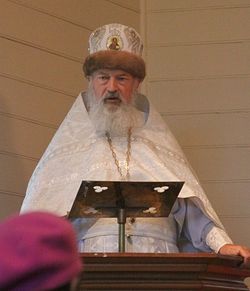
Protopriest Michael Protopopov gives an interview to www.pravoslavie.ru to discuss the reasons why Catholics, Protestants and Anglicans are deserting their churches...

Загрузить увеличенное изображение. 600 x 900 px. Размер файла 137166 b.  Mitred Protopriest Michael Protopopov"The sale of church property on a gargantuan scale is an indication of the fact the Australian populace is living in a post-Christian age. More and more people are becoming secular as opposed to being religious and spiritual. Fifty years ago, the Australian populace was much more religious; the Catholic Church has begun to recede dramatically since the Second Vatican Council
of 1963. Likewise the Anglican Church has seen plummeting parishioner numbers since the introduction of homosexuality as not a ban to clergy, same sex marriages, female clergy and even female bishops.

The closure of Anglican, Protestant and Catholic churches in rural and populated areas is also due to the fact that they lack priests, nuns and seminarians. People have lost commitment.

Especially Catholics aren’t committed as they were before the Second Vatican Council of 1963. Those people that were once committed, those people who founded these churches, have wandered away from the Catholic Church, and their children have perhaps grown up not knowing Christianity at all. Thus, out of the youth there are hardly any candidates for seminary or monasticism. Without a solid seminary and monastic program, the Catholic Church can hardly expect a positive future.

http://www.pravoslavie.ru/sas/image/100226/22612.p.jpg

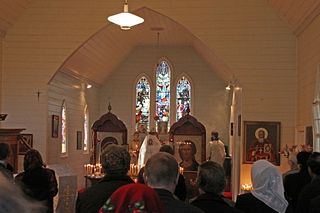
It is quite sad that Catholic and Anglican churches are being abandoned and sold. For example, at the Russian Orthodox parish in Warrnambool, there are beautiful, old stained glass windows which have inscriptions in memory of the founders of the church, brass candle sticks which have engraved in them names of parishioners who are now forgotten by their own people. Those parishioners and founders of the church are remembered in our prayers during every liturgy—as is standard practice in the Orthodox Church to pray for the “founders of this holy temple.”

Thursday, June 25, 2009

'Ark of the Covenant' about to be unveiled?

Update 2: Ark of the Covenant Story was Bad Translating, Hype
Update:
(click here)
________________________________________

Ethiopian patriarch tells pope he will show artifact to world


The patriarch of the Orthodox Church of Ethiopia says he will announce to the world Friday the unveiling of the Ark of the Covenant, perhaps the world's most prized archaeological and spiritual artifact, which he says has been hidden away in a church in his country for millennia, according to the Italian news agency Adnkronos.

Abuna Pauolos, in Italy for a meeting with Pope Benedict XVI this week, told the news agency, "Soon the world will be able to admire the Ark of the Covenant described in the Bible as the container of the tablets of the law that God delivered to Moses and the center of searches and studies for centuries."

The announcement is expected to be made at 2 p.m. Italian time from the Hotel Aldrovandi in Rome. Pauolos will reportedly be accompanied by Prince Aklile Berhan Makonnen Haile Sellassie and Duke Amedeo D'Acosta.


Abuna Pauolos, patriarch of the Orthodox Church of Ethiopia

"The Ark of the Covenant is in Ethiopia for many centuries," said Pauolos. "As a patriarch I have seen it with my own eyes and only few highly qualified persons could do the same, until now."

According to Pauolos, the actual Ark has been kept in one church, but to defend the treasure, a copy was placed in every single church in Ethiopia.

He said a museum is being built in Axum, Ethiopia, where the Ark will be displayed. A foundation of D'Acosta will fund the project.

The Ark of the Covenant is the sacred container of the Ten Commandments as well as Aaron's rod and a sample of manna, the mysterious food that kept the Israelites alive while wandering in the wilderness during their journey to the promised land.

The Bible says the Ark was built to the specifications of God as He spoke to Moses. It was carried in advance of the people and their army by priests. It was also carried in a seven-day procession around the walled city of Jericho.


Sketch of Ark of the Covenant based on a description by the late explorer Ron Wyatt (wyattmuseum.com)

The idea that the Ark is presently in Ethiopia is a well-documented, albeit disputed, tradition dating back to at least 642 B.C. The tradition says it was moved to Elephantine Island in Egypt, then to Tana Kirkos Island in Ethiopia and finally to its present site at St. Mary's of Zion Church in Axum.

Ethiopians believe it is destined to be delivered to the Messiah when He reigns on Mount Zion – the Temple Mount in Jerusalem.

Jeremiah 3:16 points to a time when the Ark will vanish not only physically, but from the minds of the people: "And it shall come to pass, when ye be multiplied and increased in the land, in those days, saith the LORD, they shall say no more, The ark of the covenant of the LORD: neither shall it come to mind: neither shall they remember it; neither shall they visit it; neither shall that be done any more."

The Book of Revelation says the Ark is in the temple of God in heaven (Rev. 11:19). Muslim scholars say it will be found near the end of times by the Mahdi – a messianic figure in Islam.

Saturday, December 6, 2008

Metropolitan Kirill named interim leader of Russian Church

MOSCOW, December 6 (RIA Novosti) - The governing body of the Russian Orthodox Church, the Holy Synod, elected on Saturday Metropolitan Kirill of Smolensk and Kaliningrad as the interim leader of the Church.

Patriarch of Moscow and All Russia Alexy II, who led the Russian Church for 18 years, died at the age of 79 in his residency near the capital on Friday. His body will be lying in state in the Cathedral of Christ the Savior from Saturday evening.

Alexy II will be buried on Tuesday in the Annunciation side-chapel of Moscow's Epiphany Cathedral.

Photo

Alexy II became patriarch of the Russian Orthodox Church in 1990, shortly before the collapse of the atheist Soviet Union, and presided over a religious revival in Russia, with thousands of churches and monasteries being restored and hundreds of new ones built across the country.

A national council of bishops, priests, monks and laymen should be summoned in six months to elect a new patriarch for the Russian Church.

Friday, December 5, 2008

Russian Orthodox Church Patriarch Alexy II dies

http://img.beta.rian.ru/images/15005/68/150056854.jpg

MOSCOW (AP) — The Russian Orthodox Church says its Patriarch Alexy II has died.

The church says the 79-year-old died at his residence outside Moscow on Friday. It did not give the cause of death, but the patriarch had long suffered from a heart ailment.

The outspoken patriarch had led the world's biggest Orthodox church since 1990, presiding over a flock that by most estimates numbers two-thirds of Russia's population of 142 million.

St. Nicholas the Miracleworker (12th-13th c.)

http://i34.tinypic.com/2jcbolc.jpg
"The third icon among our examples, St. Nicholas the Miracleworker, with Scenes from His Life, also comes from Sinai, but it is a later work, from the end of the twelfth or the first half of the thirteenth century. The saint is an amalgamation of two St. Nicholases, a bishop of the fourth century and a pious monk of the sixth. By the twelfth century St. Nicholas has become one of the most beloved and popular saints, not only in the Byzantine Empire but in Russia and the West. He was considered the patron of sailors, seamen, and fishermen, scholars, students and teachers, merchants, traders, marriageable maidens, bankers, and even robbers and thieves. Hagiographical icons of the saint presented in the middle his bust (in Russia, also his standing figure) and a selection of episodes from his life and from his posthumous miracles framing the central image. The icon shown here includes 16 episodes, from the saint's birth to his death. The monumental character of the central panel is softened by an addition of interesting decorative details. The hair and the beard of the saint are fancifully outlined by flowing white curls and the crosses on the saint's omophorion show intricate design. Next to Nicholas' head are two small figures: on the left Christ with a Gospel book, and on the right the Virgin with an omophorion. These two figures allude to the story of the saint's presence at the First Ecumenical Synod in Nicaea in 325. According to the story, Nicholas, angered by the blasphemous words of the heretic Arius against the Holy Trinity, slapped him on the face. For this, he was put in prison and his bishop's attributes, the Gospel Book and the omophorion, were taken from him. However, at night, Christ and the Virgin appeared in his prison cell and returned the Gospel book and the omophorion to him, forcing Emperor Constantine to free the saint and reinstate him as a bishop. In Russia, St. Nicholas became the most popular saint of all, depicted in literally thousands of icons, ranging from simple busts to very elaborate hagiographical icons with more than forty border scenes."

Tuesday, October 21, 2008

Scripture and the Meaning of Holiness

http://d.yimg.com/us.yimg.com/p/ap/20081018/capt.169fc7a7c12f4b96843038992f0780a8.vatican_orthodox_oss104.jpg?x=400&y=265&q=85&sig=mrD9XQ_EMXdJo.kNgF9SmQ--

Pope and Patriarch Preside Over Vespers

Father Thomas Rosica, CSB

VATICAN CITY, OCT. 19, 2008 (Zenit.org).- One of the topics mentioned in a good number of the synod presentations was that of the saints and blessed who offer the Church concrete examples of lives rooted in the sacred Scriptures and the living Word of God.

When Archbishop Angelo Amato, the new prefect of the Congregation for Saints' Causes, addressed the synod Tuesday, he offered a very graphic image of lives rooted in the sacred Scriptures: For more than 2,000 years men and women, old and young, wise and ignorant, in the East as in the West, applied themselves to the school of the Lord Jesus, which caused this sublime commandment to echo in their hearts and minds: "You must therefore be perfect, just as your heavenly Father is perfect" (Matthew 5:48).

This does not mean that man-made perfection is the goal to be reached, rather it is the heights of divine perfection. With simplicity and humility, even youth -- like 14-year-old Domenico Savio and 13-year-old Laura Vicuña -- have taken the Lord's words seriously and taken up the path toward sainthood.

Their library was largely composed of the life and words of Jesus: Blessed are the poor, blessed are those who mourn, blessed are the gentle, blessed are those who hunger and thirst for uprightness, blessed are the merciful, blessed are the pure in heart, blessed are the peacemakers, blessed are those who are persecuted. The saints, understanding that the beatitudes are the essence of the Gospel and the portrait of Christ Himself, became their imitators.

In this picture made available by the Vatican newspaper L'Osservatore ...

The theme of the saints and holiness reached a crescendo on Saturday evening during the solemn vespers ceremony celebrated in the Sistine Chapel by Benedict XVI, the Ecumenical Patriarch Bartholomew I of Constantinople, and all delegates and participants in this world Synod of Bishops on the Word of God in the life and mission of the Church.

Backdoor

We were told at the end of the morning session to begin making our way around 4 p.m. through the "back way" to the Sistine Chapel: walking around the basilica, through parts of the Vatican Gardens, past the palace and manicured gardens of the Governatorato, and into the courtyard of St. Damaso.

Basilian Bishop Ronald Fabbro of London, Canada, and I took our time walking along the quiet path and into the maze of inner courtyards until we arrived at San Damaso. We joined many other cardinals, bishops and synodal delegates who were then escorted by Swiss Guards up the "seconda loggia."

http://d.yimg.com/us.yimg.com/p/ap/20081019/capt.a9289efe7ff945a09192ce078d19cd7a.italy_pope_pompeii_visit_gb109.jpg?x=400&y=285&q=85&sig=XcSWRCpfJwDf7cNa0XXjLQ--

Once we arrived in the Sistine Chapel, there was a hush over the audience, many of whom had arrived a full hour early just to pray under and before the beauty around us. Shortly before the vespers began, a Vatican monsignor from the Office of Pontifical Ceremonies spoke to us about the historic and ecclesial significance of this chapel's artwork, commissioned by Pope Julius II. The chapel was built with the same dimensions of the Holy of Holies in the Temple of Jerusalem. The monsignor did not, however, touch upon some things I remember about this grandiose room from my art history classes while I was a university student years ago.

For example, Pope Julius was referred to as "Il Terrible." His life reminds us of one of the colorful characters of Rabelais's world: Julius was a wild hunter, a boastful warrior and bullish fighter, and somewhat of a problematic character. "E' stato un papa abbastanza curioso" (He was quite a curious Pope), one Vatican diplomat said -- diplomatically!

Contrary to popular opinion, Michelangelo Buonarotti didn't paint the frescos in the reclining position, nor did he do them alone. He and his helpers prepared and painted the vault from the standing position (albeit leaning back a bit). The artist had many assistants -- to scrape, prepare the wall for plaster, to mix the paints, and to carry up supplies from the floor 60 feet below. He did a few of the later characters free hand, but most were detailed in "cartoons" (preparatory drawings).

Often, work had to be done while services were going on below. The bishops and cardinals often complained back then about the dust and noise. There were no complaints from bishops and cardinals on Saturday night. Only awe and gratitude for being in this room.

Vatican first

At exactly 5 p.m., the papal and patriarchal procession entered the Sistine Chapel as the Sistine choir began its haunting chants. The significance of this sight unfolding before us was lost on no one in the Sistine Chapel.

In this picture made available by the Vatican newspaper L'Osservatore ...

Benedict XVI and the Ecumenical Patriarch Bartholomew I entered the chapel walking side by side. Behind them came their closest collaborators working in the areas of Christian unity in their respective churches. This was history in the making: the first time an Orthodox patriarch was taking part in a world Synod of Bishops, or co-presiding, if you will, in this historic and magnificent place.

Following the vespers, the Pope invited Patriarch Bartholomew to address us, and did he ever speak, in flawless English. The Ecumenical Patriarch's talk was divided into three sections: on hearing and speaking the Word of God through the Holy Scriptures; on seeing God's Word in nature and above all in the beauty of the icons; and finally on touching and sharing God's Word in the communion of saints and the sacramental life of the Church."

The talk was a masterpiece meriting further study, meditation and contemplation. Click here for full text: http://zenit.org/article-23981?l=english

Like fire

The third section of the Patriarch's magisterial lesson really struck me. Here are some excepts of Bartholomew's reflection on the saints and holiness:

"Within the life of the Church, the unfathomable self-emptying and generous sharing of the divine Logos is reflected in the lives of the saints as the tangible experience and human expression of God's Word in our community. In this way, the Word of God becomes the Body of Christ, crucified and glorified at the same time. As a result, the saint has an organic relationship with heaven and earth, with God and all of creation. In ascetic struggle, the saint reconciles the Word and the world [...]

"This is why the saint loves with warmth and spaciousness that are both unconditional and irresistible. In the saints, we know God's very Word, since -- as St. Gregory Palamas claims -- God and his saints share the same glory and splendor. [...]

"In the gentle presence of a saint, we learn how theology and action coincide. In the compassionate love of the saint, we experience God as "our father" and God's mercy as "steadfastly enduring." (Ps. 135) The saint is consumed with the fire of God's love. This is why the saint imparts grace and cannot tolerate the slightest manipulation or exploitation in society or in nature. [...]

"And within the communion of saints, each of us is called to 'become like fire' (Sayings of the Desert Fathers), to touch the world with the mystical force of God's Word, so that -- as the extended Body of Christ -- the world, too, might say: 'Someone touched me!' (cf. Mt 9.20)

"Evil is only eradicated by holiness, not by harshness. And holiness introduces into society a seed that heals and transforms. Imbued with the life of the sacraments and the purity of prayer, we are able to enter the innermost mystery of God's Word.

"It is like the tectonic plates of the earth's crust: the deepest layers need only shift a few millimeters to shatter the world's surface. Yet for this spiritual revolution to occur, we must experience radical metanoia -- a conversion of attitudes, habits and practices -- for ways that we have misused or abused God's Word, God's gifts and God's creation."

Archbishop Angelo Amato spoke of the personal library, composed of the life and words of Jesus, especially of the great blueprint for the Christian life found in the beatitudes.

The Ecumenical Patriarch spoke not just of words imprinted on the hearts and minds of the holy ones, but also of the gift of the fire of God's Word that must be alive and burning within the hearts of the saints.

It is this fire, this dynamism, that will burn away the evil within us and around us and cause holiness to burst forth, healing and transforming the society and culture surrounding us.

* * *

Basilian Father Thomas Rosica is the Vatican's English-language press attache for the 2008 world Synod of Bishops. A Scripture scholar and university lecturer, he is the chief executive officer of the Salt and Light Catholic Media Foundation and Television Network in Canada, and a member of the General Council of the Congregation of St. Basil.

Pope Benedict XVI (L) speaks with Orthodox Christian Patriarch ...

Saturday, October 18, 2008

Together with pope, ecumenical patriarch addresses synod for first time ever

Bartholomew calls it "historic." The remarks of both demonstrate effort toward unity: "if we have the same fathers, how can we not be brothers?"

Vatican City (AsiaNews) - Ecumenical patriarch Bartholomew is calling it "an historic event," after being the first to speak to the bishops of the Catholic Church gathered for a synod. For his part, Benedict XVI said, "Your fathers are also our fathers, and ours are yours: if we have the same fathers, how can we not be brothers?" Behind the two of them, who were seated on chairs of equal size, the depiction of the last judgment in the Sistine Chapel.

It was in the most famous of the chapels in the apostolic palace, in fact, that this afternoon the first vespers for the 29th Sunday of ordinary time were celebrated, "on the occasion of the participation of ecumenical patriarch Bartholomew I in the work of the 12th assembly of the synod of bishops." "At this moment, we have truly experienced the synod," the pope commented, speaking spontaneously at the end of the extensive address by the patriarch. "Hearing the word of God," he added, "also opens one's eyes to the realities of today," and the "fathers" of the synod "will continue their work illuminated by the words" of Bartholomew.

The patriarch of Constantinople, after speaking of the "historic event" because of his very presence at the synod, expressed his hope of arriving one day at "full unity" between Orthodox and Catholics, overcoming the current differences and agreeing "fully over the role of primacy and collegiality in the life of the Church." Bartholomew also indicated some concrete objectives: "as disciples of God," he added, "it is more imperative than ever to present a single perspective, beyond social, political, and economic views, on the need to uproot poverty, promote equilibrium in the globalized world, combat fundamentalism and racism, and develop religious tolerance in a world of conflict."

Tuesday, October 7, 2008

Pope to Patriarch: We Need Unity Faster

Benedict XVI Tells Alexy II the Times Urge Haste

By Inmaculada Álvarez

VATICAN CITY, OCT. 6, 2008 (Zenit.org).- Benedict XVI sent a personal message to Russian Orthodox Patriarch Alexy II saying that modern times call for a hastening of the journey toward Christian unity.

The Sept. 22 message was hand-delivered to Alexy II by the archbishop of Naples, Cardinal Crescenzio Sepe, on an official visit to Moscow at the invitation of the patriarch. The cardinal gave the message to the patriarch in a meeting that lasted a little more than an hour last Thursday.

"I have a deep affection for all the Orthodox brethren, and I am particularly close to them in these most recent days when conflict has caused significant suffering to peoples so dear to me," the Holy Father said. "I never cease to offer daily prayers for peace, asking the Lord that the appeals of Your Holiness to resolve all hostility for the good of the nations may be heeded."

He added: "Faith in Our Lord Jesus Christ is a bond that unites hearts in a profound way and invites us all to strengthen our commitment to manifest to the world a shared witness of living together respectfully and peacefully.

"Our times, marked so often by conflict and grief, make it even more necessary to hasten the journey toward the full unity of all the disciples of Christ, so that the joyous message of salvation may be spread to all humanity."

Getting closer

Cardinal Sepe told Vatican Radio on the day of his meeting with Alexy II that the Orthodox and Catholic Churches are growing ever closer, "as the patriarch himself emphasized with emotion."

"The impression is that a very important step has been taken to create a climate of closeness and mutual respect, of fraternity and friendship," he added.

Bishop Vincenzo Paglia of Terni, president of the Italian bishops' ecumenism commission, who was also present in the meeting with Alexy II, said that the process of growing closer should proceed with meetings between the various pastors of both Churches.

On the path to unity, the bishop added, "meetings between experts are no longer sufficient." Rather, ecumenism "is a coming together of the Churches."

And, Bishop Paglia affirmed, ecumenism is more and more "a demand of contemporary society."

"The harmony between the Catholic Church and the Orthodox Church is ever more evident," he said, referring to the challenges presented to all Christians in Europe and contemporary society. "Certain limits and challenges can only be faced from a perspective of unity."

--- --- ---

On the Net:

Benedict XVI's letter: www.zenit.org/article-23823?l=english

Tuesday, July 22, 2008

Could Josef Stalin be made a saint?

The Communist party in St Petersburg has petitioned the Orthodox Church to canonise Josef Stalin if he wins a television poll to nominate the greatest Russian in history.

The Soviet dictator, who was responsible for the deaths of around 15 million people during his 31-year reign of terror, is in second place in online voting for the Name of Russia competition.

Stalin last week surrendered a narrow lead to Nicholas II in the contest, which is based on the BBC's Great Britons series.

But with a result not expected until the end of the year, the country's Communists are convinced that Stalin will still emerge the victor...

Yet the idea of tuning Uncle Joe into Saint Joe has so far won little official backing from the Orthodox Church, which was one of Stalin's chief victims...

Sunday, June 1, 2008

POPE TO ALEXIS II: GROWING CLOSENESS BETWEEN US

The image “http://d.yimg.com/us.yimg.com/p/rids/20080529/i/r74544551.jpg?x=400&y=315&sig=7_8iB3QofPPhUcjMRZcRhA--” cannot be displayed, because it contains errors.

VATICAN CITY, 30 MAY 2008 (VIS) - The Holy Father has written a Message to His Holiness Alexis II, Patriarch of Moscow and All Russia, delivered by Cardinal Walter Kasper, president of the Pontifical Council for Promoting Christian Unity, during a meeting with the Patriarch.

In the text of his English-language Message, the Pope writes that the cardinal's visit to Russia "offers me a welcome opportunity to extend my cordial greetings, to express my esteem for your ministry in the Russian Orthodox Church and to restate my appreciation for your commitment to fostering relations between Catholics and Orthodox".

"It is with joy", the Holy Father adds, "that I reflect on the experience of growing closeness between us, accompanied by the shared desire to promote authentic Christian values and to witness to our Lord in ever deeper communion. I think with gratitude of the recent visit of Your Holiness to Strasbourg and Paris, and the warm welcome given to the Catholic archbishop of the archdiocese of the Mother of God in Moscow during the Christmas celebrations last year.

"Another sign of fraternity and friendship towards the Catholic Church is to be seen in the invitation extended to Cardinal Kasper by His Eminence Kirill, metropolitan of Smolensk and Kaliningrad, president of the Department for External Church Affairs of the Patriarchate of Moscow, to visit that eparchy on the occasion of his name-day. This is not only a sign of personal goodwill, but also a gesture towards the Catholic Church which Cardinal Kasper represents".

"During his time in Russia", writes the Pope, "Cardinal Kasper will visit Kazan to venerate the icon of the Mother of God which my beloved predecessor, Pope John Paul II, conveyed to Your Holiness through the good offices of Cardinal Kasper. ... This icon bears a likeness to all the other venerable icons of the Mother of God. ... It also offers an opportunity for encounter with Muslims, who show great respect for Mary, the Mother of God".

The Pope notes haw the Russian Patriarch "has been increasingly committed to dialogue with other Christians and the members of other religions" and reaffirms his own "deep gratitude" for, and "prayerful interest" in, "the signs of friendship and trust which your Church and its representatives have demonstrated in various ways".

Reiterating his gratitude to Alexis II for his dialogue "with different ecclesial, religious and social bodies", Benedict XVI concludes: "May the Risen Saviour grant you health, peace and inner joy, and may he bring us closer to each other, that we may undertake together our journey towards full communion in Him".

Thursday, December 27, 2007

Rival monks clash at Bethlehem

Bethlehem, Dec. 27, 2007 (CWNews.com) - Rival groups of Orthodox clerics clashed inside the basilica of the Nativity in Bethlehem on December 27, forcing Palestinian police to restore order.

Priests of the Greek Orthodox and Armenian Apostolic churches came to blows during a dispute over the boundaries of their respective jurisdictions within the basilica, located on the site of Christ's birth. The confrontation arose as the two groups were cleaning the church in preparation for the Orthodox observance of the Nativity in January.

Administration of the Nativity basilica is shared by Catholic, Orthodox, and Armenian Apostolic clerics. The relationships among the different groups have frequently been contentious, and there have been frequent disputes over jurisdiction in spite of a highly detailed agreement.

The Franciscan monks who represent the Catholic Church at the basilica were not involved in the December 27 melee. The Orthodox and Armenian clerics were cleaning the building after thousands of Catholics had joined in their own Christmas celebration there.


Thursday, December 20, 2007

Russian Patriarch: Solve Orthodox Disputes Before Dialogue With Rome:

Moscow, Dec. 19, 2007 (CWNews.com) - Russian Orthodox Patriarch Alexei II believes that the world's Orthodox leaders should settle their internal disputes before proceeding with ecumenical talks with the Catholic Church, the Interfax news agency reports.

During a meeting in Moscow with the Czech Orthodox Metropolitan Christopher, Patriarch Alexei expressed concern that the last two meetings of a joint Catholic-Orthodox theological commission have been marred by disagreements among the Orthodox representatives.

This year, Russian Orthodox officials walked out of the joint commission meeting in Ravenna, Italy, in a protest over the seating of a delegation from the Estonian Orthodox Church. The Moscow patriarchate does not recognize the Estonian Orthodox Church.

"We think such issues ought to be settled in dialogue [among Orthodox leaders] and not discussed in the presences of the Catholics," Patriarch Alexei said.

The walkout in Ravenna marked the second consecutive time that the Russian Orthodox delegation has sparked a dispute at a meeting of the joint Catholic-Orthodox commission. During the last previous meeting, the Russian delegates protested a statement which, they argued, implied that the Ecumenical Patriarch of Constantinople held a position analogous to that of the Roman Pontiff, as the acknowledged leader of the Orthodox world.

In the Ravenna meeting, the Russian Orthodox delegates were again challenging the authority of the Patriarch of Constantinople, since it was the Ecumenical Patriarch who had recognized the canonical independence of the Estonian Orthodox Church.