Showing posts with label Father George Rutler. Show all posts

Friday, June 12, 2015

A “still small voice” that does not fade away

By Father George Rutler

A young city boy on his first camping trip awoke his father at dawn and said, as he gazed out of his tent, “Look, Dad, the sun is rising just like on TV.” Our present generation, of which we are privileged to be a laggard part, does not find it easy to distinguish actuality from artifice. In the background is a reluctance to acknowledge that an impression of reality is not the same as reality itself. This is symptomatic of what Pope Benedict XVI called the “dictatorship of relativism.”

By that he meant the notion absorbed by people bereft of logic, that what one wants something to be, comes to be simply by the wanting. This has immediate and desultory influence on moral conduct. So, like the little boy who thought that the real sun looked like the cartoon sun on television (or, like the nice woman who told me that the altar flowers were so lovely that she though they were artificial), people may reject the concrete facts of nature and posture that their desires are legitimate just because they are desired. A lurid example of this is the redefinition of marriage to make that organic and divine institution nothing more than a fantasy of one’s arrested emotional development, the product of a plebiscite, and the opinion of judges in solemn robes. Polls and parliaments are willing tyrants when the mob consents to be tyrannized by their opinions and decrees.

G.K. Chesterton gently slapped his readers back to reality from egoistic comas when he wrote in his A Short History of England: “To have the right to do a thing is not at all the same as to be right in doing it.” So when someone says, “I am free to do what I want with my body,” you may be impelled by charity and justice to reply that he is indeed so free, but if he defies the law of gravity, the pavement quickly will be of a different opinion, and if he says there is no difference between a man and a woman, two shades named Adam and Eve will rise up with mocking smiles.

Those who have long sipped the intoxicating nectar of false perception may hesitate to draw a line between desire and dogma, fabrication and fact. If reality is nothing more than the visible costume of an impression, impressive tyrants will orchestrate that fantasy from their balconies, with rhetoric to mold malleable minds. The long legacy of demagoguery attests that weak points persuade people if the points are shouted loudly enough to overwhelm reason. Opinion polls shout, and network “talking heads” shout, and Internet pundits shout, but then there is a “still small voice” that does not fade away: the long and logical echo of “Fiat Lux” uttered by the real Creator of the real universe.

Link:

Friday, September 12, 2014

The Real Heroes of the 1863 Draft Riots


By Father George Rutler

(Crisis Magazine) The staircase in my rectory is lined with pictures of the twelve pastors who preceded me in my parish, which is called Hell’s Kitchen.  I hope that thirteen is a benign number. While the neighborhood now is experiencing the most promising real estate development in the history of the nation, it did not get its nickname for being what it is now.  Here is where the boatloads of Irish immigrants from the Great Famine arrived at the nearby docks, amid terrible poverty, crime and vice, giving our vocabulary the “Paddy wagon” and “donnybrook.” The faces of my first predecessors are serious, for those pastors had a hard job to do for God and I cannot hope to fill the shoes of those men who toiled in ill streets.

The first of them was Monsignor Arthur J. Donnelly who built a huge parish from scratch in 1857, regularizing marriages and tending abandoned children, and trying to form a Catholic culture just as Archbishop Cullen had managed to do somewhat in Dublin where, contrary to romance, oppression had long neglected the moral norms of the Church.  Donnelly was pastor during the Civil War and was appalled by what was happening to his people and nation as he tried to establish the parish.  The great church, school, and convent that he established were moved a generation later two blocks north to make way for the Pennsylvania Station.

The Draft Riots took place July 13-16 in 1863. They had precedent in Cincinnati in 1862 where Bishop John Purcell’s brother, the Reverend Edward Purcell, was singular in his anti-slavery publicity through The Cincinnati Telegraph. Orestes Brownson, whom John Henry Newman hoped might join his new Catholic University in Dublin, observed that pro-slavery Catholics for the most part  “only acted out the opinions they had received from men of higher religious and social position than themselves,” and insisted that  “had they been guided properly, the riots would never have taken place, or at least the main participants in them would not have been Irish Catholics.”

In New York the riots lasted four days and at least 120 were killed, while some estimates have 500 or more. Over 2,000 were injured, and more than 50 businesses and homes and two Protestant churches were destroyed. Racism melded with religious bigotry and some Protestant churches were threatened because they were pro-Republican and centers of the abolition cause.  Rioters sacked the Protestant “Five Points Mission” as a parish priest, at great danger to himself, tried to stop them while wearing his stole and waving his Breviary. Two blocks from my rectory a black man was lynched on a lamp post, mutilated, and set on fire.  The nearby Presbyterian church was about to be torched when Monsignor Donnelly appealed to the mob and the church was saved.   Today at Mass I sit in a large oak chair that was the gift of the Presbyterian minister and his elders in gratitude for their rescue. When Monsignor Donnelly died in 1890 after thirty-three years as pastor, the Presbyterians attended his Requiem Mass, the first they had ever seen.  Many of the overwhelmed police were Irish Catholics, horrified at what they saw, and they behaved heroically, like the local regimental Colonel Henry O’Brien, who was killed protecting a policeman... (continued)


Link:

Monday, September 1, 2014

Benedict XVI: Pope as Prophet


By Father George Rutler

(Crisis Magazine) There is a warm spot in my heart for Sir Cecil Spring-Rice because he loved Theodore Roosevelt and disdained Woodrow Wilson.  He also wrote the hymn  “I Vow to Thee My Country” which some progressivists have forbidden their shrunken congregations to sing because it speaks of a real heaven, and a life of sacrifice. He said affectionately of Teddy: “You must always remember, the president is about six.”  In the instance of his subject, that bespoke an innocent exuberance which sometimes tottered on the brink of vainglory and romance, and later led to the disaster of the Bull Moose Party, but which also impelled the Rough Rider up San Juan Hill (Kettle Hill for pedants). That was a flourish of innocence, as distinct from naiveté.  For naiveté is to innocence what superstition is to faith, optimism to hope, and sentimentality to love.

In our day we have witnessed hearty public figures political and religious, fudging those distinctions and visiting mosques and bantering as though they were in a Kiwanis club.  As they do, Christians are being killed in foreign lands by the disciples of Mohammed, whom the politically cautious say has been misunderstood by his extreme devotees.  If that is so, we have yet to hear censure from the more moderate clients of that enigmatic figure who slaughtered many with his own sword.  Images of Christian infants cut in half and children beheaded in Iraq, show that Herod is alive, and those of us who wear crucifixes now can see pictures of young men being crucified, as warnings that the cross is not an ornament designed by Tiffany for debutantes.

No civilized human can react with anything but embarrassment when Nancy Pelosi says on CNN that she has been informed by the Qataris that Hamas is a “humanitarian agency.”  Her grotesque comment was made as Hamas was using human shields and citing lines from “The Protocols of the Elders of Zion.” At the same time, the cathedral in Mosul was being desecrated by the Islamic State and Yezidis were starving on a mountaintop as a moral descant to Pascal:  “Christ is in agony until the end of the world.”

Agony is not a topic for humor. His century’s master of the English language, P.G. Wodehouse, recognized as such by T.S. Eliot, Evelyn Waugh, Graham Greene and Churchill, broadcast from his internment camp ambiguous jokes about the Nazi genocide. “Risus abundat in ore stultorum.”  Wodehouse was a gentle naïf, and, while distracted by golfing, he suffered under a lifelong cloud thereafter until he was decorated by his Queen who recognized that there was no malice in the man who never aged from six to manhood.  There are those on the public scene today who do not have his excuse of permanent childhood.

In 1933, an anti-Nazi rally was held in Madison Square Garden where that noble and underestimated Governor Al Smith declared in his rough voice and Lower East Side diction, reading from notes written in is own hand on three envelopes with no recourse to teleprompters: “This fact, however, remains: That up to the present moment, if we look at the record, the responsible head of the German Government has said nothing in denunciation of this conduct.”  More cultivated and less informed personalities like Lord Halifax, Geoffrey Dawson of the London Times and the 9th Duke of Manchester William Montague gathered at Cliveden, the country estate of the American expatriate Lady Astor, to mock those who said that Hitler meant what he said. The Irish journalist, Claud Cockburn, a Communist Party propagandist, may have caricatured their naiveté but dangerous it was, and it led to the pathetic incantations of Chamberlain who flaunted the term “appeasement” as a salutary policy, only to inherit the fate yet due to those in high places today who treat with presidents and governors, and then express “disappointment” that those presidents and governors had lied to them. History will record them uttering what Captain Renault sputtered in the fiction of film: “I am shocked. Shocked.”

On September 12, 2006 King Harald of Norway made available documents showing that the esteemed King Olaf V, as Crown Prince in the 1930s had urged his wiser father, King Haakon VII, to accommodate the Nazis.  Both eventually fled to London when reality checked in.  It was not a proud moment for the House of Schleswig-Holstein-Sondenburg-Glucksburg, and a high price was exacted from all those who spouted what Chesterton called “easy speeches that comfort cruel men.”  The New York Times, always eager to let theory trump practice, just as it had let its Moscow correspondent Walter Duranty defend Stalin, published an assurance from its Berlin reporter, Frederick T. Birchall, smoothly saying that Hitler had commanded the Nazi storm troops “to put an immediate stop to acts of political terror, personal persecutions and interference with private business.” The result was, according to him, “a visible relaxation of political tension throughout Germany.”
That 1933 New York rally was succeeded in 1939 by another in the same arena, when 22,000 pro-Nazis, inspired by figures including the universal hero, Charles Lindbergh, whom the world thought could slow the rise of the oceans and heal the planet, boasted that the enemy was not an enemy.  They spoke under a large picture of George Washington who, they said, was one of them because he was an Aryan.  A grave in Mount Vernon must have rattled, but ideology has no patience for fact.

Today, the weaker voices who place politics above prophecy and popularity above the people, may say as some Frenchmen in the 1930s, understandably weary of war, said as they looked the other way, “We will not die for Danzig.”  Bombs and shrapnel soon spelled out that Danzig was a cipher for all humanity.

If a prophet is not without honor save in his own country, a great prophet is not without honor save in the whole world.   Pope Benedict XVI bent under that mantle in 2006 when he spoke in Regensburg.   His only miscalculation was to assume that civilization might still be civil enough to respect reason.  Quoting the Byzantine emperor Manuel II Paleologus, himself a remnant of a decaying civilization which still distinguished good from evil, he considered how the Islamic notion of a divine power divorced from reason, whose absolute will is its own justification, could ransack the dignity of man.  He condemned no one, and spoke only for truth without which the votaries of unreason, for whom there is no moral structure other than the willfulness of amorality, and whose God is not bound by his own word, rain down destruction.

The response of some, who protested with violence, proved by that very violence the Regensburg hypothesis, if the Incarnate Christ whose word is truth, can be called a hypothesis.  Pope Benedict said:  “Violence is incompatible with the nature of God and the nature of the soul…. God is not pleased by blood—and not acting reasonably is contrary to God’s nature. Faith is born of the soul, not the body. Whoever would lead someone to faith needs the ability to speak well and to reason properly, without violence and threats.… To convince a reasonable soul, one does not need a strong arm, or weapons of any kind, or any other means of threatening a person with death….”

Later, the distinguished Egyptian Jesuit scholar, Father Shamir Halil Shamir, wrote:  “Benedict XVI is probably one of the few figures to have profoundly understood the ambiguity in which
contemporary Islam is being debated and its struggle to find a place in modern society. At the same time, he is proposing a way for Islam to work toward coexistence globally and with religions, based not on religious dialogue, but on dialogue between cultures and civilizations based on rationality and on a vision of man and human nature which comes before any ideology or religion. This choice to wager on cultural dialogue explains his decision to absorb the Pontifical Council for Inter-religious Dialogue into the larger Pontifical Council for Culture.”

The president of Argentina, the problematic Christina Kirchner, said that the Pope’s remarks were a “diatribe” and “dangerous for everyone.”  A supporter of Kirchner, the left-wing “investigative journalist” Horatio Verbitsky, adept as a conspiracy theorist, claimed in the journal “Pagina/24″ that Cardinal Jorge Bergoglio, at that time archbishop of Buenos Aires, had distanced himself from the Regensburg address, and the cardinal’s spokesman, Father Guillermo Marco, was quoted in Newsweek Argentina as saying that Bergoglio was “unhappy” with what Pope Benedict had said.  The London Daily Telegraph made the same claim with nothing more substantial than the article in Newsweek Argentina.  It is the case that another Argentinian archbishop, Joaquin Pina, criticized the Regensburg thesis, four days after which the Holy See accepted his resignation, but he already was one year past retirement age.

These few years since have seen written in the suffering of distressed souls what Pope Benedict described calmly and charitably.  Such a short time can sharpen perceptions, and Pope Francis, whom we are assured is close to Benedict, has recently said from his humble abode:  “The news coming from Iraq leaves us with dismay and disbelief.” Consequently, the Holy See conceded that military action may be needed to stem the atrocities of the Islamic State of Iraq.  Only time will tell if that is a day late and a dollar short. Pythagoras’s belief that history repeats itself is a notion contrary to Christian progress, but all history attests that mistakes can repeat themselves, and the only way out of that fatal trap is to admit error and make amends. Both Benedict and Francis continue to grace the world with their obedience to the Logos.  Should the God of Love call Benedict first to his heavenly home where humility’s only advertisement is the peace which passes all understanding, may Francis or another successor of Peter, declare Benedict a Doctor of the Church.  Of one thing we may be certain:  like the bold prophet Jeremiah, the benign prophet Benedict will never say in this world or from the next, “I told you so.”  Reality has said that already by events more than words.

Link:
The Rev. George W. Rutler is the new pastor of St. Michael's church in New York City. His latest book is Principalities and Powers: Spiritual Combat 1942-1943 (South Bend, IN: St. Augustine’s Press.)

Saturday, February 15, 2014

Father George Rutler: On Letting the Light Shine


By Rev. George W. Rutler

(Crisis Magazine) As a rather observant child, I made a mental note of the fact that my maternal grandmother would ask me to “make a light” instead of asking me to switch it on. When she was a child, no one switched lights on.  At night, light was not had without effort, not in her English town nor in most places yet.  She was born on the day that Gladstone introduced his Irish Home Rule bill in the House of Commons, the same Gladstone who gave a lamp to Newman who had “never sinned against the Light,” a lamp that still can be seen on his desk in Birmingham, and it certainly was not electric. Four years after my grandmother’s birth, Florence Nightingale recorded her voice on a wax cylinder patented by the Edison Company.  My grandmother harbored a devotion to the “Lady with a Lamp” for her town’s regiment had fought in the Crimean War and some of them remembered the Lady visiting at night the wards in the Selimye Barracks of Scutari and it most definitely was not an electric lamp:  that was the year Thomas Edison was born.

While eclectic in theology, and something of a Universalist, Florence Nightingale moved from Unitarianism to Anglicanism, and soon came to admire the slum work of the future Cardinal Manning who provided her with ten Catholic nuns to help nurse the soldiers in the war.  They, along with fourteen Anglican nuns, nurtured the English custom of calling all nurses, mostly secular but usually veiled, “Sister.”  A lamp, not electric, became the symbol of nursing organizations even in the United States.  Then there was the friend of my grandmother, a very old lady, Granny Pye as I called her, who had been born in Scotland in the year that the missionary David Livingston died in Zambia.  Although she belonged to the Old Kirk that did not allow ritual candles, she had a ritual of her own, for she read from the family Bible every night by candlelight, as though light bulbs were somewhat profane.

My point is that artificial light is so available now, at the flip of a switch, that we are losing a sense of wonder at the gift of light. The first creature was light itself “Let there be light….” It is hard to describe light without referring to its opposite.  “The people who dwelt in darkness have seen a great light” (Isaiah 9:2).  The first thing one learns in painting, after tackling perspective, is that colors seem bright only by contrast, and that principle of chiaroscuro was known well before the likes of  Caravaggio and de la Tour.  You don’t have to spend a winter in Lapland to know that:  just spend a few dim days in February, or try selling an apartment without a view.

Light and life go together and there are countless “last words” that have to do with light as life ends.  As he was dying, Goethe cried out, “Mehr Licht!—More light!” but in his case it probably had no spiritual meaning. He had also been a scientist who considered that his best book was  “The Theory of Colors.”  He most likely was just asking that the shutters be opened. To give him his due, anyone who has read his Faust, knows that he also knew of moral darkness and what happens in chambers of the mind that choose darkness over light.  In retrospect, it is poignant, though not of any religious significance, that Theodore Roosevelt said as he went to bed for the last time: “Put out the light.” He was thinking of electricity and not mortality. That good man just wanted a good sleep, but he did not know how good it would be.  Very different and far from prosaic, was what young O. Henry, abandoned by his wife Sara, said with his last alcoholic breath in the dim gaslight of his rented room: “Turn up the lights—I don’t want to go home in the dark.”  However oblique his spiritual intuition may have been, it seems laden with an ancient appeal to One “in whom is no darkness at all” (1 John 1:5).

Our Lord’s utterances stunned, enthralled and shocked the crowds, but none was more startling than this:  “I am the light of the world. Whoever follows me will never walk in darkness, but will have the light of life” (John 8:12).  As the light itself, his human decibels shouted to the sky that his essence is not a creature, but the divinity who creates physical light with the agency of  “the Father of lights, with whom there is no change, nor shadow of alteration” (James 1:17), and with their Spirit who will “enlighten the hearts of the faithful” with the fire of love.  Frail human voices have the inestimable privilege of professing that mystery each Sunday in the Creed:  Jesus of Nazareth is  “Light from Light” from beyond Nazareth.

God offers the human race the light of life in order that it might “shine before others, so that they may see your good works and give glory to your Father who is in heaven” (Matt 5:16).  Morally, the exercise of the free will can make that light beautiful or garish.  On his visit to the United States which gave the world so many congenial quotes, G.K, Chesterton was entranced by the billboard lights in Times Square advertising soaps and cigarettes and hair tonic. He remarked, “What a garden of delights this would be if only one could not read.”

Our Lord dignifies the human race by enabling his own light to shine through his human creatures so that it might give “light to all the house” (Matt. 5:15).  That house includes everyone’s own neighborhood, with its astonishing challenges and potential. In my own instance, that neighborhood, which is my parish, consists right now in the largest real estate development in the nation, besides some venerable older fixtures including the Empire State Building. It becomes a nightly light show of colors that would have got another book out of Goethe. The saints are an even more wonderful light show themselves. They are the “generation that seeks him…” (Psalm 24:6). To risk the rhetorical indecency of a pun, the generator that lights this generation up is not in Manhattan, for it is in the City that “has no need of the sun, nor of the moon, to shine in it. For the glory of God has enlightened it, and the Lamb is the lamp thereof” (Rev. 21:23).

Link:

Thursday, November 7, 2013

Father George Rutler: Medjugorje cult "has become an industry from which many have made a lot of money"

From Brantly Millegan at Aleteia:

Author and pastor of the Church of St. Michael in Manhattan, Fr. George Rutler views the Medjugorje phenomenon overall very negatively and sees the letter as a step in the right direction. “I have had numerous encounters with proponents of the Medjugorje cult, almost of of which have been dismaying. Popes and others have been misrepresented as wholeheartedly endorsing it. It has become an industry from which many have made a lot of money. This statement of the CDF indicates at least solid reservations about the alleged apparitions.”

“Benefits of grace accrued by pilgrims are testimony to the power of God to reward sincerity of heart through any devotion, bogus or not. I have also known of many disappointments, errors, and scandals attached to Medjugorje, not least of which is disobedience to the local Ordinary. It amazes me that after so many years, this cult endures despite the banality of the locutions, and while one of course defers to the final decision of the Church, one would not be surprised if a negative judgment on authenticity is rejected by fanatics.”

Church historian Fr. C. John McCloskey has similar sentiments. “This letter is decades late but nonetheless very welcome. The Church is slow in these matters because it is eternal. We should all pray that the Vatican gives its final judgement on the matter soon and the followers of these ‘apparitions’ obey and do not cause a schism of sorts in the Church. The Year of Faith is about conversions and reversions to our Holy Faith!”

James Likoudis, President Emeritus of Catholics United for the Faith, points to the continued disobedience of millions of Catholics against the judgement of the local bishops near Medjugorje and thinks that a positive judgement is highly unlikely. “The surprising statement on Medjugorje by the CDF to be communicated to the U.S. bishops appears to signal a negative Vatican judgment on the authenticity of the Marian apparitions in the former Yugoslavia. What is even more surprising is that the negative judgment of the two Bishops of Mostar as well as that of all the bishops of the Conference has not been heeded for many years by millions of Catholics who continue to give credibility to quite questionable apparitions of Our Lady.”

“At any rate, without prejudging the final decision of the special Commission of Cardinals regarding Medjugorje, it is certainly difficult to believe that the Commission would reverse the judgments of Bishops who for years have investigated the matter on the spot and declared in effect, that ‘supernatural apparitions and revelations’ had not taken place. It would be quite astonishing were the judgment of the present Bishop of Mostar, actually be overturned. ‘The numerous absurd messages, insincerities, falsehoods, and disobedience associated with the events and ‘apparitions’ of Medjugorje from the very outset, all disprove any claims of authenticity.’ (Bishop Ratko Peric) In my opinion, the Vatican’s welcome stress on collegiality would hardly favor throwing orthodox bishops under the bus.”


Link:
Related:

Wednesday, February 13, 2013

The Higher Science of the Saints

By Father George Rutler

For quite a while, the Richard III Society was easily passed off as one of those eccentricities like the Flat Earth Society. It sought to salvage the reputation of the Plantagenet king who was killed at the Battle of Bosworth Field in 1485. As a propagandist of Richard's Tudor successors, Shakespeare gave us the undying image of the dying king, physically malformed and morally corrupt, lamenting “Now is the winter of our discontent,” and finally crying out: “A horse, a horse! My kingdom for a horse!” Much objective good can be said of him, in fact, as he was an enlightened reformer of laws and a brave fighter. Through the efforts of his fan club — the “Richardians” — archeologists have exhumed in Leicester what are “beyond a reasonable doubt” the king’s bones. In addition to other evidence that corroborates his identity, such as his spinal deformity and wounds, his mitochondrial DNA (mtDNA) has been traced from his sister, Anne of York, all the way to a young Canadian carpenter now living in London.

This is another instance of how physical science vindicates ancient truth. The king’s character certainly remains a disputed matter, but the oral tradition of his appearance and place of burial has now been confirmed. Forensic scientists will even be able to reconstruct the appearance of his face. The same was recently done with Robert the Bruce, and the result was, to say the least, a disappointment to those with romantic notions of the man. In a similar way, genetic science can now trace the development of human life and even film it in the womb. Those who until recently spoke of a “blob of tissue” have been defeated by the evidence of this irrefutable fact. And the prophet Jeremiah is vindicated: “Before I formed you in the womb I knew you” (Jeremiah 1:4).

The prophet was specifically looking forward to the Messiah, whose divine nature can only be revealed by the higher science of the saints. Unlike Richardians, who are glad to have found the bones of their king, Christians know that their King has left no bones. That is why we have forty days of Lent, not to search for Him, but to search for ourselves. “What is man, that thou art mindful of him? And the son of man, that thou visitest him?” (Psalm 8:4). The Psalmist answers his own question: “Thou hast made him a little lower than the angels and crowned him with glory and honor” (Psalm 8:5). The Letter to the Hebrews quotes this and declares, not by any archeological discovery or forensic evidence, but by the eyewitness of the apostles themselves: “We see Jesus, who for a little while was made lower than the angels, crowned with glory and honor because of the suffering of death, so that by the grace of God He might taste death for everyone” (Hebrews 2:9).

Link:

Thursday, January 24, 2013

When the State Tries to be Master Over Nature

By Father George Rutler

Connecting with people you'd like to have known is a nice hobby, and I can claim to be just three handshakes from Abraham Lincoln and only five from George Washington. Recently at the opera, I put several people three handshakes from Puccini. Alas, an employee in a sporting goods store near Grand Central was unmoved when I put him four handshakes from Mendelssohn. Just two handshakes from the Alice of Wonderland, I spent many hours in the rooms she knew when her father was dean of the college where I studied and where Lewis Carroll wrote the stories for her. Alice Liddell, later Mrs. Reginald Hargreaves, died in 1934 at the age of 82, shortly after she visited New York to be honored by Columbia University.

In Through the Looking Glass, Humpty Dumpty boasts: “When I use a word, it means just what I choose it to mean — neither more nor less.” “The question is,” said Alice, “whether you can make words means so many different things.” “The question is,” said Humpty Dumpty, “which is to be master — that's all.”

When the State tries to be master over nature, behavior becomes disordered. The results of the disastrous legalization of the destruction of unborn children prove that, and now it is happening again in attempts to “redefine” marriage. So far, eleven countries have done it, as well as nine of our own states, along with the nation’s capital. Hundreds of thousands have publicly protested the attempt of France’s Socialist president to play “master.” It should be obvious to all except the dense and the willfully ignorant, that the next step will be to attack the Church through civil penalties for refusing to accept the authority of the State to invert the natural order, of which the State is only a steward.

Pope Benedict XVI has said: “. . . if there is no pre-ordained duality of man and woman in creation, then neither is the family any longer a reality established by creation. Likewise, the child has lost the place he had occupied hitherto and the dignity pertaining to him. [Rabbi] Bernheim [the Chief Rabbi of France] shows that now, perforce, from being a subject of right, the child has become an object to which people have a right and which they have a right to obtain. When the freedom to be creative becomes the freedom to create oneself, then necessarily the Maker himself is denied, and ultimately man, too, is stripped of his dignity as a creature of God, as the image of God at the core of his being.”

At the wedding in Cana, Christ's mother said, “Whatever my son says to do, do it.” We are free not to do what he says, and to play Humpty Dumpty with nature, but when the social order has a great fall, all the politicians will not be able to put it back together again.

Link:

Sunday, December 9, 2012

Fr. George Rutler: A Wider Kind of Insanity

By Father George Rutler

When people “rush” Christmas, they pay an oblique tribute to the Advent mysteries, because they want something to celebrate, and in the darkening days of the year they know that celebration has something to do with light. If only they paid attention to what Christ shows about those mysteries of death, judgment, heaven and hell, they’d have a much better celebration. “These things I have spoken to you, that my joy may be in you, and your joy may be filled” (John 15:11).

The second mystery of Advent is God’s judgment: His design for the world and how we fit into His plan. We shall be accountable to Him in the “particular judgment” when we die, for what we have done with the gift of life He has given us. This will not be like facing a judge in court. It will be like facing one’s spouse after a long separation and reaching out. There can only be an embrace if there is love. St. John Chrysostom said that in the moment of judgment, Christ will ask only: “How much did you love?” If the temporal world was created out of eternity by God’s love, we can fit into that eternity only if love is the passport.

The essence of divine justice, then, consists in how one reciprocates the love that gives life. “Evil men do not understand justice, but those who seek the Lord understand it fully” (Proverbs 28:5). That is easier said than done, for how can the Lord’s justice be understood in part, let alone “fully”? And yet, the answer is clear. The Lord’s justice, which is the way He designs the world and all its motions and our participation in it, is beautiful, true, and good, and while we may not easily define beauty, truth and goodness, we know their result: joy.

Insanity is the inability to make right judgment. There is more insanity than we realize. The local police once gave me a special code number to call if I saw anyone in our neighborhood behaving strangely, and I told them that if I obliged them, their telephone would be ringing off the hook. But there is a wider kind of insanity, and it is life lived contrary to God’s will. It is the source of sadness, and nothing is more insane than to be sad while being alive.

There are many reasons for sorrow in “this valley of tears,” but such sorrow is not despair. The cynic may say that the light at the end of the tunnel is an approaching train, but the saints know that the light is Christ Himself. As the judge who is righteous and true, He says, “These things I have spoken to you, that in me you may have peace. In the world you shall have distress: but have confidence, I have overcome the world” (John 16:33).

Link:

Monday, October 15, 2012

A Feather on the Breath of God

By Father George Rutler

On October 7, Pope Benedict XVI declared the 34th and 35th official "Doctors of the Church" - Hildegard of Bingen and John of Avila. The latter was a crucial figure in the sixteenth century reform of the Church. Hildegard, born in 1098 to a noble family in what is now Germany, is more remote, but extraordinarily compelling for her unique genius.

She became abbess of a Benedictine monastery in Disibodenberg which, as it grew, was moved to Bingen. There she graced the Church as a philosopher, theologian, botanist, medical scientist, and musician. She charted the orthodox way through some of the more fantastic heresies and enthusiasms afflicting the twelfth century, most notoriously the Cathars. St. Bernard commended her writing to Pope Eugenius III, who had been trained by him, and after that she became well known beyond Germany. Her musical compositions have become popular in our own day, a vivid glimpse of liturgical chant at the cusp of a golden age. She is the first composer whose biography is known, and she may have written the first opera - Ordo Virtutum. In it, the Virtues sing angelic melodies while Satan only speaks, for he cannot sing.

On the day she became a Doctor of the Church, I recalled another musical Hildegarde of our own day. Hildegarde Sell, born in 1906 to a German-American family in Wisconsin, started the fashion for some entertainers to use only one name, and she became the most famous cabaret singer of her time as "The Incomparable Hildegarde." She first appeared in films in 1933 and was the first person to sing on the new medium of television in 1936. King Gustave V of Sweden and the Duke of Windsor were devoted to her, and she was enshrined in song by George and Ira Gershwin. She appeared on the covers of Time and Life magazines, advertised as the most expensively dressed celebrity of her day. Like her patron saint, she wrote about herbal remedies, though she was more interested in their cosmetic properties than was the Doctor of the Church.

While The Incomparable Hildegarde's signature song "Darling, Je Vous Aime Beaucoup" will not be confused with St. Hildegard's Ordo Virtutum, she was a Third Order Carmelite and a daily communicant. She made a point of having the best silks and satins of her wardrobe tailored into vestments for the missions. St. Hildegard died at 82, a great age in the Middle Ages, and our Hildegarde was 99, a great age in any age. I visited her as she was dying in a nursing home, where her one room was considerably smaller than her ten-room suite at the Plaza. And instead of her favorite Renoir, there was a small lithograph of the Sacred Heart. She wore none of her famous line of cosmetics as she said the Rosary, and she never looked lovelier. She would have understood what her patroness and Doctor of the Church said: "I am a feather on the breath of God."


Link:

Wednesday, October 10, 2012

The Mainstream Media Falls for the Latest Hoax: The Case of Mrs. Jesus


(Crisis Magazine) Monsignor Ronald Knox, probably the most inspired preacher and apologist of the twentieth century, wrote an essay in 1928 satirizing some skeptical Biblical literary critics, in which he used their methods to “prove” that the real author of Tennyson’s In Memoriam was Queen Victoria.

Many who doubt the plausibility of the Scriptures are gullible about hoaxes. I don’t just mean the rabbit with antelope horns called a jackalope. There was the Cardiff Giant of 1869 promoted by P.T. Barnum, and John Payne Collier’s forgery of Shakespeare letters. Some pretended to be the Grand Duchess Anastasia, and far earlier was the hoax of a lady pontiff named Pope Joan. The New York Zoo hoax of 1874 convinced many that animals had escaped.  Henry Ford promoted the “Protocols of the Elders of Zion.”  While it is not certain that Teilhard de Chardin was one of the perpetrators of the Piltdown Man ruse in 1913, Stephen Jay Gould was convinced that he was a principle player in fabricating the so-called Eoanthropus. There were aliens landing in Roswell, New Mexico in 1947, and the Balloon Boy hoax in 2009. The Da Vinci Code claimed an albino monk hid corpses nearby on 34th Street. I confess that I keep a warm spot in my heart for the Loch Ness Monster, which also intrigued Pope Pius XII who discussed it with the above-mentioned Monsignor Ronald Knox. Unfortunately, Nessie’s primary witness was an English vicar, and such testimony is not potent in courts of law. And let us not forget the many pious but parochial Catholics headed for the hills with packaged rations during the Y2K scare at the start of the Third Millennium.

Hoaxes gain credibility when they use respected sources. In 1938, Orson Welles’ adaptation of H.G. Wells’ War of the Worlds convinced thousands because it was broadcast on radio. Monsignor Knox did something similar on the sacrosanct BBC in 1926 with his amusing “Broadcast from the Barricades” which reported the toppling of Big Ben, by trench mortars and the torching of the lynching of a cabinet minister.  That may actually have stirred up the devil in Welles.  People today are inclined to believe hoaxes because they are mentioned witlessly in the mainstream media.

In 2002 The New York Times spent a lot of printer’s ink on a bogus ossuary reputed to be that of a “brother” of Christ.  The “Times” as well as the Washington Post featured this on their front pages, although neither journal gives such publicity to huge events such as the annual Pro-Life gathering in the nation’s capital.  Recently the same journal announced on its front page the discovery of a fourth century parchment translating a second century Greek text, claiming that there was a Mrs. Jesus. Shortly thereafter, the parchment was judged a forgery by Coptic experts.  If a correction ever appears, it will be in fine print back in the shipping news section.  Or at least on page 8 which is where, in the same week, The New York Times reluctantly reported Pope Benedict’s Mass for 350,000 in Lebanon—an event that astonished nearly everyone except our mainstream media.

As The New York Times generally gives the impression that anyone who takes the Scriptures seriously is archaic and arcane, there is an inconsistency in that newspaper’s affectation of interest in the Christology dormant in Abysinnian paleography. Since journalists often invoke pretentious scholarship to challenge the authenticity of the Shroud of Turin and the Tilma of Guadalupe, the question begged is, “Why do these people suddenly become so credulous about phenomena that contradict Christian inspiration?” The answer speaks for itself. The New York Times would be delighted to find that Christ did not radically contradict the norms of His age by forsaking all else and calling others to do the same as a proclamation of the Mystical Union between Christ as Bridegroom and the Church as Bride:  “Let us rejoice and exult and give him the glory, for the marriage of the Lamb has come, and his Bride has made herself ready; it was granted her to clothe herself with fine linen, bright and pure—for the fine linen is the righteous deeds of the saints. And the angel said to me, ‘Write this: Blessed are those who are invited to the marriage supper of the Lamb.’ And he said to me, ‘These are the true words of God’ (Rev. 19:7-9).” But these are not the words of The New York Times whose editors do not include the Good News among “all the news that’s fit to print,” and whose inverted anthropology prefers to give frequent and gushing coverage in its “Styles” section to ceremonies uniting bridegrooms with bridegrooms and brides with brides.

Those branches of the media which of late have become flamboyant propagandists of state policies, should, but obviously do not,  take the counsel of St. Paul, who probably would be fired after his first day at work as an editor of The New York Times: “I say again what we have said before: If anyone preaches any gospel other than that which you received,  let him be anathema (Galatians 1:9).”

Link:

Sunday, September 30, 2012

Father Rutler: Saint Francis of Assisi was not a garden gnome

By Father George Rutler

On October 4, we give thanks for one of the best known and least known of all saints. Least known, that is, because Francis of Assisi was not a garden gnome, or a doe-eyed hippy skipping with animals and hugging trees. Garden gnomes do not bear the Stigmata of Christ's wounds. A vegetarian? He berated a friar for wanting to abstain from meat on a feast day and said that on Christmas he would “smear the wall with meat.” An iconoclast? He was meticulous in the ceremonials of the Mass, insisting that every sacred vessel and vestment be the best, and his Rule dismissed any friar who parted from the Pope on the slightest article of Faith. A pacifist? He joined the Fifth Crusade, simmering ever since eleven thousand Muslims had invaded Rome and desecrated the tombs of Peter and Paul in the year 846. Francis went to North Africa in 1219 to convert the Muslims and confronted Sultan al Malik al-Kamil, who had just slaughtered five thousand Christians at Damietta. Francis fearlessly told the Sultan: “It is just that Christians invade the land you inhabit, for you blaspheme the name of Christ and alienate everyone you can from His worship.” While counselors called for the beheading of Francis according to Muslim law, the Sultan was so taken with the humility of Francis that he only had him beaten, chained and imprisoned, and then he released him.

We are engaged in similar challenges today. Of course, we are aware of the crisis in the Middle East, but the strife is worldwide. Consider Nigeria, whose Catholic population in the last century has soared to nearly twenty million. Last week, under Muslim pressure, the government stopped the Eternal Word Television Network from broadcasting. I have worked with this worldwide Catholic network for twenty-five years and have many Nigerian friends. Two days after the Nigerian bishops objected to this censorship, a Catholic church was destroyed by Muslims, who killed and wounded many worshipers. This seems to be under the radar of our own government and the mainstream media.

May Saint Francis be our model in how to deal with the threats of our own day: not enfeebled by sentimentality and relativism, but armed with a Franciscan zeal for the conversion of souls. We may not have Francis’ charm, but we have in our hearts and churches the same God. By the way, the popular “Prayer of Saint Francis,” which begins, “Make me a channel of your peace,” was actually the work of an anonymous author who published it in France in 1912. Its vague theology and lack of mention of Christ, express a semi-Pelagian heresy unworthy of the Saint of Assisi. Let the last words of the real Saint of Assisi be our guide: “I have done what was mine to do; may Christ teach you what you are to do. Do not seek to follow in the footsteps of the men of old; seek what they sought.”

Sunday, September 9, 2012

Making Music

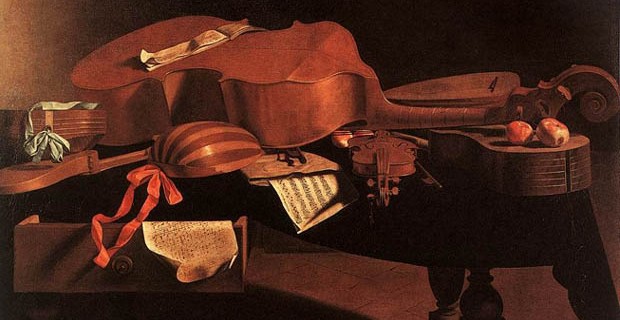
Baschenis_-_Musical_Instruments


Rev. George W. Rutler(Crisis Magazine) Like Proust’s “episode of the madeleine” which occasioned an involuntary flood of memory, I remembered a flush of things when I chanced upon a Coolidge-Dawes campaign button among items in one of my grandmother’s souvenir boxes. Charles G. Dawes was a fitting companion for the classically-trained Coolidge, whose eloquence has been ignored by jaded historians. Coolidge was the last president to write his own speeches, and the so-called “Silent Cal” held an informal, chatty press conference every week. Without teleprompters, he honed his words and many of them were lapidary: “It is a great advantage to a president and a major source of safety to the country for him to know that he is not a great man.”

Dawes, a successful businessman, was a son of Ohio and then Nebraska and became the only vice president to be awarded the Nobel Peace Prize when it meant something. He was the architect of the Dawes Plan for reparations after World War I. Eventually he became ambassador to the Court of St. James. But what involuntarily sprung to mind when I saw that campaign button was music. Dawes had taught himself the piano and was a composer. The only other public figure around that time to compose was Mayor Jimmy Walker who, in 1910, had written the song “Will You Love Me In December As You Do In May?” By almost every human measure, the Mayor was unlike the Vice President, and he did not pretend to moral heights. I am told that he dutifully attended Mass every Sunday in my old Church of St. Agnes on East 43nd Street, reverently refraining from receiving Communion because of his irregular domestic arrangements. As a different sort of musician, Dawes was classical in taste and in 1912 composed for piano and violin his celebrated  “Melody in A Major.” In the very year he died, 1951, it was made into a popular song, “”It’s All in the Game,” which outsold Jimmy Walker’s vaudeville number.

The number of public officials who have actually composed music is small, although many have been musicians. Condoleezza Rice did us proud with her performance before the Queen in Buckingham Palace, but we still suffer the occasional politician playing aesthetically unsettling music on an acoustic guitar. Among heads of state, Harry Truman practiced two hours a day as a boy and became a fine pianist, and a self-deprecatory one at that: after playing a piece for a group of Methodist ladies in 1945, he said, “When I played this, Stalin signed the Potsdam Agreement.” John Quincy Adams was a harpist, Woodrow Wilson treasured his violin, and Warren G. Harding could play every instrument in a band he organized except the slide trombone and E-flat cornet.  The decline from Thomas Jefferson playing Vivaldi, Corelli, and Haydn on his Amati violin, to William Jefferson Clinton playing “Heartbreak Hotel” on his saxophone, is another hole in the balloon of social Darwinism. In recent times, King Frederick IX of Denmark’s House of Gluckensburg both played the piano and conducted orchestras.  King Bhumibol of Thailand plays the clarinet. As heads of state in waiting, Crown Prince Naruhito plays the viola and Prince Charles is a cellist.

Among heads of state who were composers as well as players, David soothed Saul with his harping and seems to have annotated the singing of the Psalms. There is the hapless case of Nero who made the Romans listen to his compositions. Richard Coeur de Lion delighted in being his own minstrel. And there are Henry VIII who may have written “Greensleeves” and  George III who only began to compose for the harpsichord after he went insane. Then there was the edgy King Ludwig II of Bavaria, patron of Wagner, who endowed the Staatstheater am Gartnerplatz in Munich. Farther back were the especially fecund Thibault IV of Navarre and  Alfonso X of Castile; and Louis XIII of France whose motets and a ballet are extraordinary.  The Hapsburgs are in a category of their own, because all of them from Frederick II to Karl VI, were composers. Frederick the Great wrote 121 flute sonatas and a symphony plus some marches. Though not a head of state, Albert of Saxe-Coburg-Gotha, eventually Prince Consort in 1857, played the organ to the delight of Mendelssohn in 1842 and composed more than forty published works, mostly lieder, some of which are still performed.  Richard Nixon is said to have composed for violin and piano, both of which he played. When Josep Pilsudski was president of the Second Republic of the land that gave us Chopin, it is not surprising that his prime minister was Ignacy Paderewski. As an aside, one notes that George III’s consort, Queen Charlotte, the mother of fifteen children, chose as her music master Johann Sebastian Bach’s eleventh son Christian , and sang an aria in 1764 to the accompaniment of an eight year old Mozart. Considering that Mozart was the last of seven children, J.S. Bach the last of eight and the father of twenty, and the tenor Johann Haydn, a younger brother of Joseph, whose father’s seventeenth child was born when he was 63, artificial contraception would have greatly reduced the world’s repertoire of music.

Back to my original theme, Vice President Dawe’s “Melody in A Major” enchanted Fritz Kreisler who made it one of his signature pieces. As a prodigy, Kreisler had entered the Vienna Conservatory at the age seven, and then, with the support of his Jewish father who worked hard to pay his expenses, he studied in Paris under Bruckner, Hellmesberger, and Massenet, and came to the United States in 1888 to perform in Steinway Hall at the age of thirteen. At one point, in a state of dejection after failing to be admitted to the Vienna Philarmonic because of his vibrato, Fritz gave up the violin to study medicine, but he returned and in 1910, the Catholic master Sir Edward Elgar dedicated to him the “Violin Concerto in B Minor “ which Kreisler had commissioned and performed at its premiere. Later on, Kreisler lived in New York City at 2 Sutton Place where Bishop Fulton Sheen, then an auxiliary bishop, met him while calling on a neighbor. Soon he received Kreisler into the Church. The great musician had a great soul, and studied the Scriptures diligently in Hebrew and Greek. He adapted one of his compositions to a waltz tune as theme music for Sheen’s television program. Shortly before his death, he became blind and deaf in a traffic accident, but was uncomplaining, and died with edifying serenity in 1962. Kreisler was probably the last major performer to use catgut for strings. Possibly with Kreisler in mind, Sheen frequently use the image of beautiful music coming from the gut of a cat, but in this he was mistaken since catgut usually is from sheep’s intestines. But that is better than the fourth string on Paganini’s violin which was said to have been an intestine of his much beloved late wife, although Liszt denied this.

It does seem that an ear for music goes along with a gift for languages, and Kreisler was a polyglot. Sheen was virtually tone deaf and although his French was grammatical and fluent, he spoke it with a poor accent. Kreisler took an interest in the building of the Church of Our Saviour of which I am the sixth pastor. Bishop Sheen often remarked that he was to be the first pastor but that did not work out for reasons known best to him and Cardinal Spellman. He lived across the street and often visited what are now my rooms. I think the good bishop would be pleased to see in my study a fine bust of Kreisler, carved in 1949 by the Czech sculptor Mario Korbel. It came my way by almost miraculous circumstance. Carved on it are the opening notes of his “Liebesfreud.”

These were some of the memories that infused themselves when I came across that Coolidge-Dawes campaign button, and, if they ramble a little here and there, they are, after all, involuntary. It is just that some of this might be worth noting, or else they could be lost. I should give the last word to John Henry Newman whose sister, Harriet, thought that he had the potential to become another Paganini, although we assume not in every detail. Newman took up the violin at the age of ten and performed for his Oxford colleagues, for the near destitute children of Littlemore, in his Oratory school, and alone, even composing for a comic opera. He writes in The Idea of a University: Music, I suppose … has an object of its own … it is the expression of ideas greater and more profound than any in the visible world, ideas, which center indeed in Him whom Catholicism manifests, who is the seat of all beauty, order, and perfection whatever, still ideas after all which are not those on which Revelation directly and principally fixes our gaze.”

Link:

Friday, August 10, 2012

Vacation Trials and Tribulations

By Father George W. Rutler

(Crisis Magazine) It is not my practice to take vacations.  They strike me as a form of surrender, like Evacuation Day in New York City, which marked the end of the British presence in Manhattan on November 25, 1783. In fact, the last shot of the Revolutionary War was fired that day on jeering crowds from one of the departing royal ships. It is still commemorated annually here by decreasing numbers of people who for some reason celebrate the cultural suicide of New York.  It can’t go on forever, though, since our schools teach nothing about our past:  this year on Independence Day, most people on Jones Beach were unable to answer a television reporter’s questions about what happened on July 4 and who was the first president of the United States. But every vacation strikes me as a form of evacuation with results not quite as dire as the disappearance in 1783 from our shores of the last ethnic group with a command of the English language.

Against my better judgment, and at the urging of numerous people with mixed motives, I took a vacation in July.  A retired bishop had told me I should take one.  I objected that I had no need to go away, since I love what I do and do not need a vacation from it.  He replied that I may not need a vacation but perhaps my parish does. So off I went, accepting a kind invitation to the Gulf of Mexico for three days. My first mistake was to fly, since everyone who knows me well knows that there is some inexplicable jinx on me when I take an airplane.  If there are a hundred flights scheduled and one is canceled, it will be mine.  The last time I defied this curse was earlier this year, to attend a wedding in Australia for one full day and two nights.  It is hard for me to get substitutes in my parish, so I rarely spend an overnight away, but going to the other side of the planet for just a day did prove somewhat of a strain, especially as on the way over, there was a power failure, and then a bogus terrorist scare, after which, two hundred miles over the Pacific, a man behind me had a heart attack. The jumbo jet turned around and we flew to Pearl Harbor under circumstances more benign than in 1941. We were greeted by an ambulance and a group of grass-skirted senior citizens from the Honolulu Chamber of Commerce singing Aloha songs. After waiting almost a whole day, we were bundled back on the airplane. There was a further delay because of a tardy catering service.  Everyone agreed that we did not need food, since it was hard to tell by that time what the meal should be.  It seemed to be the consensus that all we needed was a capable bartender.  Fortunately, the ill man was saved, although most us felt that we were on a trajectory to the grave. So I arrived in Sydney with only a few hours before the wedding.

Now back to my mandated holiday.  Out of three days at the Gulf of Mexico, which I could tell, just by looking, was much larger than New York harbor, there were constant tropical storms with fierce lightning, and only one window of opportunity for swimming. As I do not take the sun well, and prefer the beach at night, I had little chance to test the waters for sharks.  My family has inbred judiciously and injudiciously since the Norman Conquest to attain the sickly pallor, which provokes remarks from hardier outdoorsmen.  I did not betray my ancestors. For the rest of those few days, there was nothing to do but watch informally dressed people waiting on long lines to eat a wide assortment of fish in restaurants, most of which had gift shops featuring the same sort of costume jewelry that can be had on lower Lexington Avenue at discount. The fish were similar to kinds indigenous to the Hudson River except for unattractive creatures with suction cups. I have no appetite for anything that can cling to a ceiling.

My return flight from Pensacola was delayed more than five hours because of a mechanical problem.  This required changing my connecting flight twice.  Because I had a funeral scheduled for the next day, I tried to place a telephone call to my parish saying that I might be spending the night in Atlanta, whose modernist airport could benefit from a visit by General Sherman. I do not have a mobile telephone and when I asked for the location of the nearest telephone booth, it was as if I had requested an astrolabe.  There was one “public telephone” requiring an expensive “Phone Card” with operating instructions that only an engineer from Cal Tech could understand. Everyone including children now have “cell phones” that are said to damage the brain. I saw evidence of that medical caution all around me.  A kindly woman in the airport souvenir shop selling taxidermied heads of small alligators as paperweights, lent me her mobile telephone which I gratefully used though it was bright pink and decorated with floral stencils. I was able to arrive at LaGuardia around midnight, shortly before closing time.

Upon my return, taking an expensive taxi driven by a Zoroastrian who shared my critical opinions of Al Qaeda, I was moved to kiss the ground of Park Avenue. Then I lost my wallet, which contains everything necessary for survival except oxygen, which so far is still free in our country.  It was proper punishment for not traveling with just a walking stick and sandals, which advice indicates that our Lord himself did not think in terms of long trips. At least I made the funeral as scheduled.  It has been my long experience that the beloved departed, though dead, always are punctual for their funerals while brides, though alive,  usually are late for their weddings.

G.K. Chesterton said that “travel narrows the mind.” By this he meant that we appreciate things foreign when they are far away, but when we travel and encounter them, we focus on how different we are from them. I pray that I may keep my anxious vow, frequently broken, never to fly again.  As a theologian, I know that if God had wanted man to fly, he would not have given us Amtrak.  So that is all I have to say about the strange custom of going on vacations. For my part, I spent the rest of the summer happily in my parish, taking advantage of the general evacuation of the locals, to study German, do some boxing, paint a landscape, and practice my violin—which has the benefit of driving the flocks of pigeons from my roof.  Curiously, my own neighborhood was filled with vacationers from other places, including a young couple with three children taking a break from the Gulf of Mexico. I am persuaded more than ever before, of the wisdom in Noel Coward’s song: “Why do the wrong people travel, travel, travel, When the right people stay back home?”  A higher authority is St. Paul who traveled only of necessity and was beaten, shipwrecked and stung my scorpions in the process.  He said, “When you live in New York you don’t have to travel because you are already there.”  Or perhaps it was another one of those saints.  But it is true.

Link:

Tuesday, July 24, 2012

Fr. Rutler: Post-Comfortable Christianity and the Election of 2012

By Father George Rutler
 
(Crisis Magazine) Shortly before he died in Oxford in 1988, the Jesuit retreat master and raconteur, Bernard Bassett, in good spirits after a double leg amputation, told me that the great lights of his theological formation had been Ignatius Loyola and John Henry Newman, but if he “had to do it all over,” he’d only read Paul.  “Everything is there.”  There is a temptation to think that God gave us the Apostle to the Gentiles in order to have second readings at Sunday Mass, usually unrelated to the first reading and the Gospel.  But everything truly is there.  Paul was one of the most important figures in human history, and a great character to boot.  That is, a character in the happiest sense of the word.  “But by the grace of God I am what I am, and his grace toward me was not in vain” (1 Cor 15:10).

Tragedy and comedy intertwine, ultimately issuing in glory, whenever he is on trial.  He longs to live and to die in the same breath: ”For to me to live is Christ and to die is gain” (Philippians 1:210).  Whenever he is on trial for his life, he invokes a forensic brilliance to save the very life he is willing to sacrifice.  Just as Jesus who had come into the world to die, slipped through the mob in Nazareth because his hour had not yet come, so does Paul become his own defense when on trial, ready to die by God’s calendar and not man’s.

In Caesarea, he confounds Antonius Felix, the Roman governor of Judaea and Samaria, and a little later he does the same  to the successor of Felix, Procius Festus.   The best court scene is Paul before Marcus Annaeus Novatus, who had taken the name of his adoptive father Junius Gallio, the rhetorician and friend of his father Seneca Sr. whose son Seneca, Jr. was the noble Stoic.  Nero forced Seneca’s suicide, but before that, in Achaia where Gallio was proconsul, Paul was bit of a Rumpole of the Bailey, in how he played the jury like a piano to the frustration of the judge.  The point is this:  Paul, both innocent and shrewd, was willing to suffer and did so regularly, as he was not loathe to recount at length, and he was also ready to die, but as death comes but once, he wanted it to be at the right moment.

There is in Paul a model for Catholics at the start of the Third Millennium which began with fireworks and Ferris wheels but is now entering a sinister stage.  Like Paul, it is not possible to be a Christian without living for Christ by suffering for him, nor is it possible to be a Christian without willing to die for him when he wants.   The Christian veneer of  American culture has cracked and underneath is the inverse of the blithe Christianity that took shape in the various enthusiasms of the nineteenth century and ended when voters were under the impression that they finally had a Catholic president.

This new period is not “Post-Christian” because nothing comes after Christ.   We can, however, call it “Post-Comfortable Christian...”  (continued)


Link:

Thursday, March 29, 2012

Father George Rutler: In the Beginning

Image Copyright: Adam Block, Mt. Lemmon SkyCenter, University of Arizona

By Father George Rutler

Human imagination cannot conceive the power and pressure that held all the essential elements of the universe together in a piece of matter about the size of a pinhead when the world began. Physicists tend now to date the explosion of that particle to about sixteen billion years ago. Their job is to consider how it happened, not why it happened. The Creator Himself explained the "why" of the beginning in the Book of the Beginning. The Bible begins: “Bereshit bara Elohim et hashamayim ve'et ha'arets. — In the beginning, God created the heaven and the earth” (Genesis 1:1). There was a sound and then light.

That sound was the Word — the Logos — the divine power that is the logic of all that is. “En arche en ho Logos — In the beginning was the Word” (John 1:1). This stretches the imagination as much as it does basic physics. Thomas Jefferson knew his Greek and quoted John 1 in a letter to John Adams on April 11, 1823. But his mind was not agile enough to interpret this revelation as anything other than a form of polytheism, or “tritheism” as he dismissed the Holy Trinity. Back then, his physics was as primitive as his metaphysics, but even if he could not conceive of the Creation, he was one with all of us in having been conceived. Like the first particle of the universe at the “Big Bang,” all 46 unique chromosomes containing our essential human identity were encoded in us when we began as a single-cell zygote.

When the Holy Spirit, the bond of love between the Father and the Son, “overshadowed” the Virgin Mary, the Eternal Logos “was made flesh and dwelt among us” (John 1:14). In the Annunciation, the young woman conceived “the true light, which enlightens everyone” (John 1:9).

This mystery is recited in Latin at the end of the Extraordinary Form of the Mass, “In principio erat Verbum.” The Eucharist ends with the beginning, for by communion with Christ, human beings become moral agents of their Creator: “To those who did accept him he gave power to become children of God, to those who believe in his name, who were born not by natural generation, nor by human choice, nor by a man's decision, but of God” (John 1:12-13).

Bereshit,  En arche, In Principio, In the Beginning . . . whatever the language, there is a beginning with a purpose. That is the source of happiness. When the Logos took a human nature, He also sensed the human emotion of joy. There is one explicit reference to that, when Jesus “rejoiced in the Holy Spirit” and spoke to the Father of hashamayim ve'et ha'arets: “I give you praise, Father, Lord of heaven and earth, for although you have hidden these things from the wise and the learned you have revealed them to the childlike” (Luke 10:21).

    Wednesday, February 22, 2012

    Father George Rutler: Noble Dreams and Nightmares

    By Father George Rutler

    In the vault of modern political oratory is a speech of one senator in the 1960's quoting George Bernard Shaw: “You see things; and you say, ‘Why?’ But I dream things that never were; and I say, ‘Why not?’ ”  There are noble dreams, such as those of our nation's Founding Fathers, right up to the last century's civil rights movement.  Jacob saw a ladder to heaven in a dream. But dreams can also be the sugar-coated nihilism of John Lennon's song Imagine, which is still dear to the hearts of the mindless.

    The Risen Christ ate food to show the Apostles that He was not just a dream, and so the Lenten preparation for the Feast begins with hard reality: “You are dust.” This is an alarm clock that awakens us from moral slumber, and we have been slumbering a lot in our culture. The surest way to guarantee that evil can happen here is to say that evil cannot happen here. God constantly posits a choice between life and death, precisely because both are real, even for those who dream of existence with neither heaven nor hell and “only sky.”

    Recent attempts of the Health and Human Services Department to promote a culture of death by violating the Constitutional right to free exercise of religion are in part the work of public officials who have boasted of their admiration for a bad dreamer: Saul Alinsky. That strategist for “community organizers” insisted that there is no objective truth. Pope Benedict XVI would call this the “dictatorship of relativism.” Alinsky, as the common man's Machiavelli, used this relativism to approve of corruption in public officials as a matter of policy, the justification of unethical means to achieve ends and the destruction of any opposition. Alinsky's guide book, Rules for Radicals,  is prefaced with a tribute to “the first radical known to man who rebelled against the establishment and did it so effectively that he at least won his own kingdom – Lucifer.”

    While some journalists would give the impression that the government mandates are all about contraception, they also cover sterilization and abortifacients. Many Christians themselves do not understand the moral implications of artificial birth prevention as explained in Pope Paul VI's encyclical Humanae Vitae. In 1968 his prophetic warnings were widely ridiculed as nonsense: moral breakdown, increased infidelity and illegitimacy, pornographic exploitation of women by men. Then he asked: “Who will prevent public authorities from favoring what they believe to be the most effective contraceptive methods and from mandating that everyone must use them, whenever they consider it necessary?”

    Who will prevent them?  Only those wise enough to distinguish between noble dreams and nightmares. They will know what many utopian dreamers do not know:  The voice in Shaw's play Back to Methuselah that spoke of dreams that never were and asked “Why not?” was the Serpent in the Garden.

    Sunday, January 29, 2012

    Fr. Rutler: “What Happens When a Government Tries to Chain the Conscience?”

    From The Cardinal Newman Society:

    http://copiosa.org/images/Rutler.jpgFr. George Rutler was kind enough to share his latest parish bulletin concerning the recent HHS mandate with the Cardinal Newman Society.

    He writes:

    Our many fellow Catholics now enchained for the Faith of our Fathers in such places as China, Syria, and Egypt are, as Father Faber’s hymn says, “in heart and conscience free.” But what happens when a government tries to chain the conscience itself?

    A few weeks ago, in a remarkably unanimous decision, the U.S. Supreme Court rejected the attempt of the present Administration in Hosanna-Tabor Evangelical Lutheran  Church and School v. EEOC to restrict religious freedom. Chief Justice Roberts wrote that the Administration’s argument that the First Amendment does not guarantee the right of religious organization to choose its leaders, was an “extreme” infringement of the free exercise clause.

    Undeterred, and menacingly on the cusp of the anniversary of Roe v. Wade, the Department of Health and Human Services has issued an “interim final rule” which requires all private health plans, including those of  Catholic hospitals and schools, to include coverage of prescription contraceptives, female sterilization procedures, and abortion counseling.

    http://www.oursaviournyc.org/images/2007-04-06-frrutler.jpg/image_preview
    For a while, various Catholic leaders had hoped that they might reach an understanding with the Administration, and some even felt more at peace with the president’s assurances. But “peace for our time” only lasts until Poland is invaded. Cardinal Mahony, whom no one would fault for intransigence, now says, “I cannot imagine a more direct and frontal attack on the freedom of conscience than this ruling today. This decision must be fought against with all the energies the Catholic Community can muster.” Our own archbishop said, “In effect, the president is saying we have a year to figure out how to violate our consciences.”

    At the time of the last presidential election, some may have thought that I overstated things in finding parallels with the dystopian world described in Robert Hugh Benson’s Lord of the World, in which Julian Felsenburgh makes eugenics “a sacred duty.”

    Since our Lord did not humiliate the frightened apostles by saying “I told you so” when he rose from the dead, I shall not say “I told you so” to any who underestimated the plottings of social engineers whose audacity is only an audacity of despair.

    Blessed John Henry Newman, in Discussions and  Arguments on Various Subjects, cited the prediction of an eighteenth-century Protestant bishop and scientist, Samuel Horsley:
    “The Church of God on earth will be greatly reduced, as we may well imagine, in its apparent numbers, in the times of Antichrist, by the open desertion of the powers of the world. This desertion will begin in a professed indifference to any particular form of Christianity, under the pretense  of universal toleration; which toleration will proceed from no true spirit of charity and forbearance, but from a design to undermine Christianity, by multiplying and encouraging sectaries… For governments will pretend an indifference to all, and will give a protection in preference to none.”