By Sarah Palin
Hey Mark Zuckerberg and Facebook - why are you picking on priests while apologizing to "others"?
Friends, have you heard about this? Facebook is forcing members of
religious orders to remove their titles – their spiritual and vocational
identities like "Monsignor" and "Father" – when using the social media
monopoly, while permitting everyone else to use titles like "Father". In
fact, Facebook just publicly apologized "to drag queens, drag kings...
," etc. for any confusion regarding
THEIR allowance to use whatever names and titles they choose on
Facebook, like "Father"! Surely this is just a management oversight, eh?
Granted, they're a monopoly, but if enough of us speak up about their
intolerance, then let's hope they get the message and allow freedom of
religion. If not, there's not much point in any of us hanging in there
with Facebook, right? Here's my coverage of the issue in One America News Network: https://youtu.be/TiWdu--ZU6Y
Link:

Showing posts with label Facebook. Show all posts
Showing posts with label Facebook. Show all posts
Wednesday, August 26, 2015


Saturday, November 9, 2013
Archbishop Fulton J. Sheen
From ChurchMilitant.TV's Facebook page:

Link:
Related:

"Gotta Love The Venerable ArchBishop Fulton J. Sheen."
Link:
Related:
- Investigation concludes on alleged Fulton Sheen miracle
- New Beginnings: RealCatholicTV Moves Studio, Changes Name
- Archbishop Fulton Sheen and the Faith - The Vortex With Michael Voris From RealCatholicTV
- Diocese Takes Next Step for Sainthood for Sheen
- Militant vs. Nice
- Archbishop Sheen's cause for beatification 'on track'
- Bishop Sheen Quote
- Man and Woman
- Don't forget to make your morning offering to God every day this Holy Week!
- Archbishop Fulton J. Sheen on the Blessed Virgin Mary
- Remembrance, and Maybe Sainthood, for Bishop Fulton J. Sheen
- A Dispute between Archbishop Sheen and Francis Cardinal Spellman
- EWTN: Mass to Remember Archbishop Fulton J. Sheen
- The Crisis Must Come
- Bishop Anthony Taylor's Claims About the Pre-Vatican II Church not Being "What Jesus Taught" - Michael Voris Responds
- What's my Line? Bishop Fulton J. Sheen
- The Annunciation: When Freedom and Love Were One
- Archbishop Fulton J. Sheen on Fatima
- The Mass
- Archbishop Fulton J. Sheen Discusses Angels
- Archbishop Fulton J. Sheen on Loneliness
Saturday, May 26, 2012
Ann Barnhardt:
1. I stumbled on my words a bit and I just wanted to make clear what I was saying at the 1:43 mark. I am NOT being followed nor am I the least bit paranoid that I am being followed. If I am, I would like to apologize to whoever is "following" or "surveilling" me, because, yes, I am the single most BORING person on the face of the earth.
2. Warren hits it out of the park at the end when he drills in on the adolescent narcissism and self-absorption of Facebook. Dude, that's our culture in a nutshell: a society of people stunted into a perpetual adolescence, with its attendant ignorance, sense of entitlement, sense of invincibility and lack of fully-realized masculinity - manifested in cowardice. Facebook is a self-feeding derivative of that childishness.
3. The scripture reference is right in the heart of the Sermon on the Mount.
But let your speech be yea, yea: no, no: and that which is over and above these, is of evil. --Matthew 5:37Translation: CUT THE CRAP. Isn't this exactly the problem today? No one talks straight. No one lays it out. No one is honest and forthright. It's all just a steady stream of mincing, equivocating, politically correct, lying bullshit. Anything to be "liked", given a "thumbs up" or to generate cash flow. No one's "yes" means "yes", and no one's "no" means "no" anymore. People are pathologically incapable of answering the damn question. People are pathologically incapable of clarity for fear of "giving offense."
Well, except for me. And I guess that is why I have any degree of popularity, and why people find me interesting. People are so unused to seeing someone who is forthright that they are shocked by it. How incredibly sad.
4. People say to me, "But Ann, I only say private stuff on the "private message" side of Facebook, so no one else can see it. I never put anything personal on my wall. So my info is all totally private and secure."
And then Ann does a double face-palm, goes over and sits on the stairs and quietly sobs.
Link:
Related:
Wednesday, March 21, 2012
Facebook's 'dark side': study finds link to socially aggressive narcissism
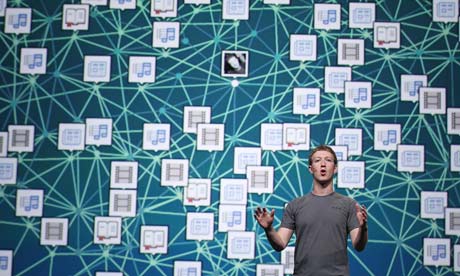
By Damien Pearse
(The Guardian) Researchers have established a direct link between the number of friends you have on Facebook and the degree to which you are a "socially disruptive" narcissist, confirming the conclusions of many social media sceptics.
People who score highly on the Narcissistic Personality Inventory questionnaire had more friends on Facebook, tagged themselves more often and updated their newsfeeds more regularly.
The research comes amid increasing evidence that young people are becoming increasingly narcissistic, and obsessed with self-image and shallow friendships.
The latest study, published in the journal Personality and Individual Differences, also found that narcissists responded more aggressively to derogatory comments made about them on the social networking site's public walls and changed their profile pictures more often.
A number of previous studies have linked narcissism with Facebook use, but this is some of the first evidence of a direct relationship between Facebook friends and the most "toxic" elements of narcissistic personality disorder.
Researchers at Western Illinois University studied the Facebook habits of 294 students, aged between 18 and 65, and measured two "socially disruptive" elements of narcissism – grandiose exhibitionism (GE) and entitlement/exploitativeness (EE).
GE includes ''self-absorption, vanity, superiority, and exhibitionistic tendencies" and people who score high on this aspect of narcissism need to be constantly at the centre of attention. They often say shocking things and inappropriately self-disclose because they cannot stand to be ignored or waste a chance of self-promotion.
The EE aspect includes "a sense of deserving respect and a willingness to manipulate and take advantage of others".
The research revealed that the higher someone scored on aspects of GE, the greater the number of friends they had on Facebook, with some amassing more than 800.
Those scoring highly on EE and GG were also more likely to accept friend requests from strangers and seek social support, but less likely to provide it, according to the research...
Sunday, March 18, 2012


Monday, March 5, 2012
Some users are closing the book on Facebook
Young adults suffer social network fatigue
BY MATT HUSTON
(The Philadelphia Inquirer) The world's most popular website started in a college dorm room, and for some users it stops there, too.
Though Facebook currently claims a tenth of the world's population in monthly users, many in its original demographic, young adults, have attempted, sometimes successfully, to go against the grain. Call it Facebook fatigue, social network sickness, sensory overload: It's not unusual for college-age users to call it quits.
At least for a little while.

Colleen Andrews, 24, a graphic designer from Far Hills, N.J., was spurred by a breakup: "I didn't want to be tempted to look at his profile," she said. She dumped her own Facebook profile in September.
Laura Amatulli, a senior at the College of New Jersey, has given up the site for Lent four times.
Dan Granados, 17, of Levittown, Pa., stopped using his account a few weeks ago. For him, it's a personal challenge. "I just decided to deactivate it, see how long I could go."
The social network, along with competitors such as Twitter and the recently launched Google-plus, is ingrained in the everyday lives of students and young professionals who came of age as social networking was on the rise. But Facebook, with a huge initial public offering expected this spring, looms largest.
Those who quit Facebook give a variety of reasons: superficial connections, inappropriate posts, distraction from work or other activities. Stepping away from the constant data feed can be a relief, they say.

According to Zizi Papacharissi, head of the Department of Communication at the University of Illinois-Chicago, the reason people leave Facebook is tied to the reason they start using it in the first place. They are "balancing social opportunity with risk," she said. Those who give it up are the ones who decide that the costs outweigh the benefits.
"Maybe it's taking up too much time, maybe it's taking up too much effort," Papacharissi said. Another complaint is oversharing. The average number of Facebook friends per user is 245, according to a Pew Research Center sample. But these connections don't always amount to information that users actually want to pay attention to.
"I'd say there was a good 200 people that I either didn't know very well or didn't know at all," Granados said.

Derek Snyder, 20, a student at Indiana University of Pennsylvania, said he was unhappy with the amount of drinking photos and other posts he deemed inappropriate.
He prefers Twitter: "No pictures, easier to use, nobody talking drama on you or anybody else."
The pull of Facebook, however, is not always easy to escape. So prevalent is the site among young people, some ex-users face personal temptation and even complaints from their friends.
 "People get angry at you," said Cara O'Keeney, 22, a College of New Jersey senior. She deactivated her account in September and said her friends are still sending her text messages about it.
Papacharissi stressed that Facebook is a real domain for friendship.
"You want to think of Facebook as just a different place where people interact," she said. "Just like you go with your friends to the bar or to the movies ... Facebook is just another place."
Admitting the possibility that they might go back, former Facebook users cited the desire to keep in touch with graduating friends, meet new roommates and maintain a social connection that they started to take for granted.
But the social media giant is undoubtedly here to stay, Papacharissi said. Colleges and universities themselves are on Facebook these days.
"It is more and more difficult for people to leave Facebook because it's become very much a social institution," she said. "A service like Facebook will continue to the point of ubiquity. It will be like social wallpaper."
BY MATT HUSTON
(The Philadelphia Inquirer) The world's most popular website started in a college dorm room, and for some users it stops there, too.
Though Facebook currently claims a tenth of the world's population in monthly users, many in its original demographic, young adults, have attempted, sometimes successfully, to go against the grain. Call it Facebook fatigue, social network sickness, sensory overload: It's not unusual for college-age users to call it quits.
At least for a little while.

Colleen Andrews, 24, a graphic designer from Far Hills, N.J., was spurred by a breakup: "I didn't want to be tempted to look at his profile," she said. She dumped her own Facebook profile in September.
| "People get angry at you," said Cara O'Keeney, 22, a College of New Jersey senior. She deactivated her account in September and said her friends are still sending her text messages about it." |
Dan Granados, 17, of Levittown, Pa., stopped using his account a few weeks ago. For him, it's a personal challenge. "I just decided to deactivate it, see how long I could go."
The social network, along with competitors such as Twitter and the recently launched Google-plus, is ingrained in the everyday lives of students and young professionals who came of age as social networking was on the rise. But Facebook, with a huge initial public offering expected this spring, looms largest.
Those who quit Facebook give a variety of reasons: superficial connections, inappropriate posts, distraction from work or other activities. Stepping away from the constant data feed can be a relief, they say.
According to Zizi Papacharissi, head of the Department of Communication at the University of Illinois-Chicago, the reason people leave Facebook is tied to the reason they start using it in the first place. They are "balancing social opportunity with risk," she said. Those who give it up are the ones who decide that the costs outweigh the benefits.
"Maybe it's taking up too much time, maybe it's taking up too much effort," Papacharissi said. Another complaint is oversharing. The average number of Facebook friends per user is 245, according to a Pew Research Center sample. But these connections don't always amount to information that users actually want to pay attention to.
"I'd say there was a good 200 people that I either didn't know very well or didn't know at all," Granados said.
Derek Snyder, 20, a student at Indiana University of Pennsylvania, said he was unhappy with the amount of drinking photos and other posts he deemed inappropriate.
He prefers Twitter: "No pictures, easier to use, nobody talking drama on you or anybody else."
The pull of Facebook, however, is not always easy to escape. So prevalent is the site among young people, some ex-users face personal temptation and even complaints from their friends.
Papacharissi stressed that Facebook is a real domain for friendship.
"You want to think of Facebook as just a different place where people interact," she said. "Just like you go with your friends to the bar or to the movies ... Facebook is just another place."
Admitting the possibility that they might go back, former Facebook users cited the desire to keep in touch with graduating friends, meet new roommates and maintain a social connection that they started to take for granted.
But the social media giant is undoubtedly here to stay, Papacharissi said. Colleges and universities themselves are on Facebook these days.
"It is more and more difficult for people to leave Facebook because it's become very much a social institution," she said. "A service like Facebook will continue to the point of ubiquity. It will be like social wallpaper."
Friday, January 20, 2012
Friday, June 24, 2011
Father Corapi: "I am not seeking laicization"
From Father Corapi's Black SheepDog Facebook page:

h/t to Deborah Morlani Tribe via Facebook.
Related Links:
h/t to Deborah Morlani Tribe via Facebook.
Related Links:
- Please Understand This, I Have Not Left The Church
- Michael Voris of the Vortex on the Professional Catholic Bloggers (transcript)
- Fr. Corapi Filed Defamation Suit On Advice of Fr. Flanagan, Founder of the Society of Our Lady and Bishop Rene Gracida
- Fr. Corapi: I am listening.. I will not be releasing those audio tapes.
- Tuesday morning.
- A Few Thoughts on Father Corapi's Announcement yesterday - by Bishop Rene Henry Gracida, Bishop Emeritus of the Diocese of Corpus Christi
- Valuable Canonical Insight Into the Case of Father John Corapi - by Fr. Mike via Bishop Gracida
- Good-Bye, Good Priest! Father John Corapi’s Kafkaesque Catch-22 - by
- Reconsidering the Dallas Charter - Fr. Michael P. Orsi
- About Fr. John Corapi With Observations About Our Times - by Fr. John Zuhlsdorf
- Carol McKinley on Falsely Accused Priests
- Father Corapi: God Love You, God Bless You, and Good-Bye
Saturday, February 20, 2010

Wednesday, May 20, 2009
Pope to go on Facebook as Vatican embraces online technology
Pope Benedict XVI is to have a Facebook account as part of a Vatican effort to embrace online technology to interact with all one billion members of the global Roman Catholic Church.
By Alastair Jamieson
The initiative, which follows the earlier creation of a YouTube channel for the Pontiff, will also involve iPhone applications and a new Vatican website, www.pope2you.net, which is scheduled to go live on the Catholic Church's World Communications day on May 24...
Wednesday, April 15, 2009
Twitter can make you immoral, claim scientists
By Jenny Hope
Last updated at 7:45 AM on 14th April 2009
Last updated at 7:45 AM on 14th April 2009
Social networks such as Twitter may blunt people's sense of morality, claim brain scientists.
New evidence shows the digital torrent of information from networking sites could have long-term damaging effects on the emotional development of young people's brains.
A study suggests rapid-fire news updates and instant social interaction are too fast for the 'moral compass' of the brain to process.
The danger is that heavy Twitters and Facebook users could become 'indifferent to human suffering' because they never get time to reflect and fully experience emotions about other people's feelings...
Wednesday, July 9, 2008

Thursday, June 19, 2008

Subscribe to:
Posts (Atom)