Showing posts with label Archbishop Fulton J. Sheen. Show all posts

Friday, June 8, 2018

Judge: Move Fulton Sheen’s remains from New York to Peoria


By Phil Luciano

(Peoria Journal Star) PEORIA — A New York judge ruled Friday that the remains of Archbishop Fulton Sheen be sent to Peoria.

The decision is the latest in a lengthy tug-of-war between the New York Archdiocese and the Peoria Diocese over the final resting place for Sheen, who was born in El Paso and ordained in Peoria, and who is buried in a vault at St. Patrick’s Cathedral in New York City.

In 2016, the same judge, Arlene Bluth, ruled that the remains immediately could be moved to Peoria. However, repeated appeals by the New York Archdiocese led to a February appellate ruling that the judge had failed to give adequate consideration to a sworn statement by a Sheen clergy-friend who claimed Sheen has expressed a desire to be buried in New York.

But Friday, Bluth ruled that the friend has never stated that Sheen would oppose a Peoria interment. Further, the judge suggested Sheen would not object to such a relocation as a step toward his canonization. The Peoria Diocese has argued that the Vatican would be more amenable to elevating Sheen to sainthood, if Archdiocese and Diocese were to stop feuding — which presumably would occur upon a final interment designation... (continued)


Link:

Thursday, November 17, 2016

BREAKING: Archbishop Fulton Sheen's returning to Peoria

By WEEK Producer

(HOI-19) PEORIA, Ill. -- The New York Supreme Court has ordered Archbishop Fulton Sheen's body to be returned to Peoria immediately.

Diocese of Peoria attorney Patricia Gibson confirms the order was made by a New York State judge today.

The burial site of Sheen's body has been a long term dispute between the Archdiocese of New York and Sheen's family. He is currently interred in St. Patrick's Cathedral in New York City.

It is hoped that moving Sheen's body back to Peoria will allow the process to grant him sainthood to move forward.

Gibson said she hopes the body will be transferred back to Peoria within the next few weeks.

Link:

Saturday, September 6, 2014

A Dispute between Archbishop Sheen and Francis Cardinal Spellman

Repost from September 13, 2011:

A Dispute between Archbishop Sheen and Francis Cardinal Spellman

From Vidimus Dominum:

(By: Paul I Murphy, La Popessa)

In 1957 Francis Cardinal Spellman, the powerful Archbishop of New York, insisted that Archbishop Fulton Sheen’s Society for the Propagation of the Faith owed the Archdiocese of New York one million dollars for supplies that the Society had distributed to impoverished people around the world. This dispute eventually made its way into the Pope’s office, and was settled when Pope Pius XII learned via a phone call to President Eisenhower that the surplus aid had been donated by the U.S. government to the Church free of charge. Not wishing to humble a longtime friend before another prelate of a lesser rank, the Pope reminded the two bishops that forgiveness was Divine and they should go in peace. He then gave them his blessing.

Once outside the Pope’s office an enraged Cardinal Spellman turned to Archbishop Sheen and shouted angrily, “I will get even with you!” Unmoved, the Archbishop replied while looking squarely at the Cardinal with his penetrating dark eyes, “Jealousy is the tribute mediocrity pays to genius!”

Unfortunately for Archbishop Sheen, Cardinal Spellman made good his threat. His much watched television series was not renewed despite its increasing popularity, and the Archbishop was transferred to a small diocese in Upstate New York, which Cardinal Spellman and other prelates referred to as an “ecclesiastical Siberia.”

Link:
Related:

Wednesday, September 3, 2014

Bishop Sheen Cause Suspended, Call for Prayer


From the Catholic Post:

EDITOR'S NOTE: The following is a news release from the Diocese of Peoria. It was distributed to the media on Wednesday, Sept. 3, 2014.

-----

It is with immense sadness that the Most Reverend Daniel R. Jenky, CSC, Bishop of Peoria and President of the Archbishop Fulton J. Sheen Foundation, announced today that the Cause for Sheen’s beatification and canonization has for the foreseeable future been suspended. The process to verify a possible miracle attributed to Sheen had been going extremely well, and only awaited a vote of the Cardinals and the approval of the Holy Father. There was every indication that a possible date for beatification in Peoria would have been scheduled for as early as the coming year. The Holy See expected that the remains of Venerable Sheen would be moved to Peoria where official inspection would be made and first class relics be taken. Subsequently, the Archdiocese of New York denied Bishop Jenky’s request to move the body to Peoria. After further discussion with Rome, it was decided that the Sheen Cause would now have to be relegated to the Congregation’s historic archive.

Countless supporters especially from the local church in Central Illinois have given their time, treasure and talent for this good work with the clear understanding that the body of Venerable Sheen would return to the Diocese. Bishop Jenky was personally assured on several occasions by the Archdiocese of New York that the transfer of the body would take place at the appropriate time. New York’s change of mind took place as the work on behalf of the Cause had reached a significant stage.

Bishop Jenky is what is technically called the “actor” of the Sheen Cause. The Diocese of Peoria and the Sheen Foundation have prayed and labored for this good work for the last twelve years. The Bishop is heartbroken not only for his flock in Peoria but also for the many supporters of the Sheen Cause from throughout the world who have so generously supported Peoria’s efforts. It should be noted, however, that saints are always made by God not by man. Efforts for many causes have sometimes taken decades or even centuries. Bishop Jenky urges that those who support the Sheen Cause continue their prayers that God’s will be made manifest.

No further comment will be released at this time.

Link:
Deja Vu from November 10, 2010 - Whispers in the Loggia:

Holy Fulton: Amid Dispute Over Resting Place, Peoria Halts Sheen Sainthood We interrupt this hiatus for an intriguing story of particular note....

Arguably the most influential figure in the four-century history of American Catholicism, nearly a year after Fulton Sheen was celebrated anew across the globe on the 30th anniversary of his death, the iconic prelate's boyhood diocese has suddenly pulled out of leading the charge for his beatification.

In a release posted to its website late last week, the Peoria-based Archbishop Sheen Cause announced the surprise move thus: It is with great sadness and disappointment, Bishop [Daniel] Jenky announces that after nine years of effort and sacrifice, the Diocese of Peoria is suspending its efforts on behalf of the Beatification of Fulton J. Sheen. The Archdiocese of New York has made it clear that it is not likely that they will ever transfer the remains of Fulton J. Sheen to his home diocese of Peoria...  (continued)

Related:

Tuesday, January 28, 2014

Archbishop Fulton J. Sheen


“In ancient Rome, there was a potestas patria or the right of the father to dispose of a child. In our modern day, there is the potesta matria or the right of the mother to dispose of a child. In between pagan Rome and pagan today there was, and still is, a group of God-loving people who will protect those who are incapable of independent existence because they sense in their own frailty the mercy of God and, therefore, resolve to extend it to others."

~ Fulton J. Sheen: Bishop Sheen Writes, (January 25, 1975).


h/t to ChurchMilitant.tv

Related:

Sunday, September 9, 2012

Making Music

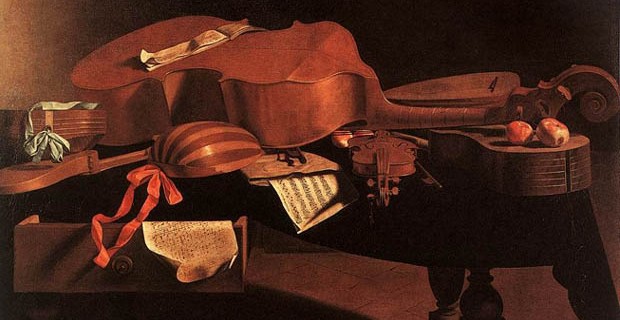
Baschenis_-_Musical_Instruments


Rev. George W. Rutler(Crisis Magazine) Like Proust’s “episode of the madeleine” which occasioned an involuntary flood of memory, I remembered a flush of things when I chanced upon a Coolidge-Dawes campaign button among items in one of my grandmother’s souvenir boxes. Charles G. Dawes was a fitting companion for the classically-trained Coolidge, whose eloquence has been ignored by jaded historians. Coolidge was the last president to write his own speeches, and the so-called “Silent Cal” held an informal, chatty press conference every week. Without teleprompters, he honed his words and many of them were lapidary: “It is a great advantage to a president and a major source of safety to the country for him to know that he is not a great man.”

Dawes, a successful businessman, was a son of Ohio and then Nebraska and became the only vice president to be awarded the Nobel Peace Prize when it meant something. He was the architect of the Dawes Plan for reparations after World War I. Eventually he became ambassador to the Court of St. James. But what involuntarily sprung to mind when I saw that campaign button was music. Dawes had taught himself the piano and was a composer. The only other public figure around that time to compose was Mayor Jimmy Walker who, in 1910, had written the song “Will You Love Me In December As You Do In May?” By almost every human measure, the Mayor was unlike the Vice President, and he did not pretend to moral heights. I am told that he dutifully attended Mass every Sunday in my old Church of St. Agnes on East 43nd Street, reverently refraining from receiving Communion because of his irregular domestic arrangements. As a different sort of musician, Dawes was classical in taste and in 1912 composed for piano and violin his celebrated  “Melody in A Major.” In the very year he died, 1951, it was made into a popular song, “”It’s All in the Game,” which outsold Jimmy Walker’s vaudeville number.

The number of public officials who have actually composed music is small, although many have been musicians. Condoleezza Rice did us proud with her performance before the Queen in Buckingham Palace, but we still suffer the occasional politician playing aesthetically unsettling music on an acoustic guitar. Among heads of state, Harry Truman practiced two hours a day as a boy and became a fine pianist, and a self-deprecatory one at that: after playing a piece for a group of Methodist ladies in 1945, he said, “When I played this, Stalin signed the Potsdam Agreement.” John Quincy Adams was a harpist, Woodrow Wilson treasured his violin, and Warren G. Harding could play every instrument in a band he organized except the slide trombone and E-flat cornet.  The decline from Thomas Jefferson playing Vivaldi, Corelli, and Haydn on his Amati violin, to William Jefferson Clinton playing “Heartbreak Hotel” on his saxophone, is another hole in the balloon of social Darwinism. In recent times, King Frederick IX of Denmark’s House of Gluckensburg both played the piano and conducted orchestras.  King Bhumibol of Thailand plays the clarinet. As heads of state in waiting, Crown Prince Naruhito plays the viola and Prince Charles is a cellist.

Among heads of state who were composers as well as players, David soothed Saul with his harping and seems to have annotated the singing of the Psalms. There is the hapless case of Nero who made the Romans listen to his compositions. Richard Coeur de Lion delighted in being his own minstrel. And there are Henry VIII who may have written “Greensleeves” and  George III who only began to compose for the harpsichord after he went insane. Then there was the edgy King Ludwig II of Bavaria, patron of Wagner, who endowed the Staatstheater am Gartnerplatz in Munich. Farther back were the especially fecund Thibault IV of Navarre and  Alfonso X of Castile; and Louis XIII of France whose motets and a ballet are extraordinary.  The Hapsburgs are in a category of their own, because all of them from Frederick II to Karl VI, were composers. Frederick the Great wrote 121 flute sonatas and a symphony plus some marches. Though not a head of state, Albert of Saxe-Coburg-Gotha, eventually Prince Consort in 1857, played the organ to the delight of Mendelssohn in 1842 and composed more than forty published works, mostly lieder, some of which are still performed.  Richard Nixon is said to have composed for violin and piano, both of which he played. When Josep Pilsudski was president of the Second Republic of the land that gave us Chopin, it is not surprising that his prime minister was Ignacy Paderewski. As an aside, one notes that George III’s consort, Queen Charlotte, the mother of fifteen children, chose as her music master Johann Sebastian Bach’s eleventh son Christian , and sang an aria in 1764 to the accompaniment of an eight year old Mozart. Considering that Mozart was the last of seven children, J.S. Bach the last of eight and the father of twenty, and the tenor Johann Haydn, a younger brother of Joseph, whose father’s seventeenth child was born when he was 63, artificial contraception would have greatly reduced the world’s repertoire of music.

Back to my original theme, Vice President Dawe’s “Melody in A Major” enchanted Fritz Kreisler who made it one of his signature pieces. As a prodigy, Kreisler had entered the Vienna Conservatory at the age seven, and then, with the support of his Jewish father who worked hard to pay his expenses, he studied in Paris under Bruckner, Hellmesberger, and Massenet, and came to the United States in 1888 to perform in Steinway Hall at the age of thirteen. At one point, in a state of dejection after failing to be admitted to the Vienna Philarmonic because of his vibrato, Fritz gave up the violin to study medicine, but he returned and in 1910, the Catholic master Sir Edward Elgar dedicated to him the “Violin Concerto in B Minor “ which Kreisler had commissioned and performed at its premiere. Later on, Kreisler lived in New York City at 2 Sutton Place where Bishop Fulton Sheen, then an auxiliary bishop, met him while calling on a neighbor. Soon he received Kreisler into the Church. The great musician had a great soul, and studied the Scriptures diligently in Hebrew and Greek. He adapted one of his compositions to a waltz tune as theme music for Sheen’s television program. Shortly before his death, he became blind and deaf in a traffic accident, but was uncomplaining, and died with edifying serenity in 1962. Kreisler was probably the last major performer to use catgut for strings. Possibly with Kreisler in mind, Sheen frequently use the image of beautiful music coming from the gut of a cat, but in this he was mistaken since catgut usually is from sheep’s intestines. But that is better than the fourth string on Paganini’s violin which was said to have been an intestine of his much beloved late wife, although Liszt denied this.

It does seem that an ear for music goes along with a gift for languages, and Kreisler was a polyglot. Sheen was virtually tone deaf and although his French was grammatical and fluent, he spoke it with a poor accent. Kreisler took an interest in the building of the Church of Our Saviour of which I am the sixth pastor. Bishop Sheen often remarked that he was to be the first pastor but that did not work out for reasons known best to him and Cardinal Spellman. He lived across the street and often visited what are now my rooms. I think the good bishop would be pleased to see in my study a fine bust of Kreisler, carved in 1949 by the Czech sculptor Mario Korbel. It came my way by almost miraculous circumstance. Carved on it are the opening notes of his “Liebesfreud.”

These were some of the memories that infused themselves when I came across that Coolidge-Dawes campaign button, and, if they ramble a little here and there, they are, after all, involuntary. It is just that some of this might be worth noting, or else they could be lost. I should give the last word to John Henry Newman whose sister, Harriet, thought that he had the potential to become another Paganini, although we assume not in every detail. Newman took up the violin at the age of ten and performed for his Oxford colleagues, for the near destitute children of Littlemore, in his Oratory school, and alone, even composing for a comic opera. He writes in The Idea of a University: Music, I suppose … has an object of its own … it is the expression of ideas greater and more profound than any in the visible world, ideas, which center indeed in Him whom Catholicism manifests, who is the seat of all beauty, order, and perfection whatever, still ideas after all which are not those on which Revelation directly and principally fixes our gaze.”

Link:

Tuesday, June 26, 2012

Militant vs. Nice


"Our Lord was crucified by the nice people who held that religion was all right in its place, so long as its place was not here, where it might demand of them a change of heart.  The gravest error of the nice people in all ages is the denial of sin."


- Archbishop Fulton Sheen

Monday, April 2, 2012

Don't forget to make your morning offering to God every day this Holy Week!

From RealCatholicTV:
Don't forget to make your morning offering to God every day this Holy Week! Fulton Sheen likes this one:

Oh My God I offer thee my prayers works and sufferings this day, in union with the Sacred Heart of Jesus for the intentions for which he pleads and offers Himself in the Holy Sacrifice of the Mass, in thanksgiving for Thy favors, in reparation for my offenses and in humble supplication for my temporal and eternal welfare, for the needs of our Holy Mother the Church, the conversion of sinners, and the relief of the poor souls in Purgatory. I wish to gain all the indulgences attached to the prayers that I say and to the good works that I shall perform this day.

Tuesday, September 13, 2011

A Dispute between Archbishop Sheen and Francis Cardinal Spellman

From Vidimus Dominum:

(By: Paul I Murphy, La Popessa)

In 1957 Francis Cardinal Spellman, the powerful Archbishop of New York, insisted that Archbishop Fulton Sheen’s Society for the Propagation of the Faith owed the Archdiocese of New York one million dollars for supplies that the Society had distributed to impoverished people around the world. This dispute eventually made its way into the Pope’s office, and was settled when Pope Pius XII learned via a phone call to President Eisenhower that the surplus aid had been donated by the U.S. government to the Church free of charge. Not wishing to humble a longtime friend before another prelate of a lesser rank, the Pope reminded the two bishops that forgiveness was Divine and they should go in peace. He then gave them his blessing.

Once outside the Pope’s office an enraged Cardinal Spellman turned to Archbishop Sheen and shouted angrily, “I will get even with you!” Unmoved, the Archbishop replied while looking squarely at the Cardinal with his penetrating dark eyes, “Jealousy is the tribute mediocrity pays to genius!”

Unfortunately for Archbishop Sheen, Cardinal Spellman made good his threat. His much watched television series was not renewed despite its increasing popularity, and the Archbishop was transferred to a small diocese in Upstate New York, which Cardinal Spellman and other prelates referred to as an “ecclesiastical Siberia.”

Link:
Related:

Saturday, December 12, 2009

Remembrance, and Maybe Sainthood, for Bishop Fulton J. Sheen


Published: December 9, 2009

To a Catholic boy like Tim Dolan, growing up in the heartland when Protestant neighbors still made casual jokes about the “papists” next door, Bishop Fulton J. Sheen rode into town in the 1950s on the new main street of the United States, the television set, like a true-blue American hero.

“He showed the broad American public that the truths of our faith were consonant with the highest values of the society: patriotism, God, family and the struggle against Communism,” said that boy, now known as Archbishop Timothy M. Dolan of New York.

Archbishop Dolan led a memorial Mass on Wednesday evening at St. Patrick’s Cathedral to commemorate the 30th anniversary of the death of Bishop Sheen. An auxiliary bishop of the New York Archdiocese from 1951 to 1965, the man whom the Rev. Billy Graham called “the greatest communicator of the 20th century” is buried in a crypt under the cathedral altar, which was open for public viewing before the Mass.

In a way, the event — which attracted Roman Catholic dignitaries, parishioners from across the country and two great-great nieces of the bishop — served unofficially as promotion for a little-noticed campaign to make Bishop Sheen, the first and greatest Catholic televangelist, a saint of the church.

After 20 years in radio, Bishop Sheen scored a hit with his first weekly TV show, “Life is Worth Living,” on the DuMont network. The program drew tens of millions of viewers on Tuesday nights from 1951 to 1957, though it appeared opposite giants of early television like Lucille Ball and Milton Berle (who once quipped that the bishop was pretty good for a guy who “uses old material”).

In those broadcasts, and a similar show syndicated from 1961 to 1968, the bishop, an Illinois farmer’s son who wrote his doctoral dissertation on Marxism, used a polished extemporaneous style to comment on topics of the day, whether movies, Broadway plays or international politics. Among his most famous half-hour commentaries was a 1953 denunciation of Joseph Stalin.

“When he came upon the scene, there was still wavering doubt about whether Catholics were truly American,” said John L. Allen Jr., an author of books about Catholicism and senior correspondent for The National Catholic Reporter, an independent newspaper. “Sheen clinched the deal with the general public, showing that you could be completely Catholic and completely American.”

Some scholars credit the popularity of his broadcast with making possible the 1960 election of the country’s first and only Catholic president, John F. Kennedy.

Unlike the other famous Catholic broadcaster of the 20th century, the Rev. Charles E. Coughlin, who blended harsh attacks on President Franklin D. Roosevelt with anti-Semitism, Bishop Sheen combined his vigorous anti-Communism with an almost equally strong anti-racist message that placed him well ahead of the curve as an advocate for civil rights in the 1950s. In 1967, he also became a vocal opponent of the war in Vietnam.

For Archbishop Dolan, 59, who grew up in suburban St. Louis, the unabashed Catholicism of the red cape and crucifix worn by Bishop Sheen during all his broadcasts — though risky in its time — proved that the core beliefs of a Catholic “could be expressed by a person who was well-educated, down to earth and not threatening in the least,” he said.

Bishop Sheen’s great crossover appeal was made evident one night when the future archbishop’s father walked in the door and recounted what had just happened while he was taking out the garbage.

“We had a neighbor named Norm who used to always kid my dad about being Catholic,” Archbishop Dolan said in an interview on Tuesday. “And one evening he meets my dad at the curb and says: ‘Bob, I was watching that bishop of yours. Sheen. He’s not a bad guy. He makes a lot of sense.’ ”

The neighbor’s gibes were never particularly mean-spirited, and Bob Dolan was not a particularly observant Catholic. But the father’s response to the neighbor’s comment was memorable. “He came into the house, beaming, bursting with pride,” the archbishop said. “ ‘You’ll never guess what Norm just said,’ he tells us all.”

Since 2002, the effort to canonize Bishop Sheen has been led by Bishop Daniel R. Jenky of the Diocese of Peoria, Ill., where the Sheen family raised their four sons and where Bishop Sheen was ordained in 1919.

The Rev. Andrew Apostoli, a Franciscan friar who is gathering evidence of miracles attributed to Bishop Sheen’s intercession since his death in 1979, said the bishop had been designated by the Vatican as a “Servant of God,” the first step toward sainthood.

Two months ago, Father Apostoli said, evidence of two miracles, including affidavits signed by doctors and witnesses to medical recoveries “unexplainable by science,” were submitted to the Vatican for verification. If accepted, the bishop would be beatified, or made a “Blessed Person,” and after verification of a third miracle, made a saint.

It is customary, he said, for the bishops in the places where saints are born to seek the return of their remains. In Bishop Sheen’s case, that would mean removal from the crypt at St. Patrick’s and reburial at St. Mary’s Cathedral in Peoria.

Really? he was asked.

“Well, yes, but it is a very sensitive point, so I don’t want to say anything further about that,” Father Apostoli said.

Archbishop Dolan said he knew about the custom. “Bishop Jenky is a good friend of mine, and I appreciate that he would dream that someday the remains of Bishop Sheen would be returned to Peoria,” he said. “He even kids me about it: ‘You know, Tim, when he becomes a saint, we’re going to try and get him.’ ”

He paused. “But, you know, Bishop Sheen only spent a few years in Peoria.”

He paused again, as if searching for words. “And he loved New York.”

Bishop Jenky, who attended Wednesday’s Mass, could not be reached for comment.

Ravi Somaiya contributed reporting.


Wednesday, December 9, 2009

30 Years Later

http://www.archbishopsheencause.org/wp-content/plugins/nextgen-gallery/nggshow.php?pid=1&width=215&height=300

Wednesday, December 9th marks the 30th anniversary of the holy death of Archbishop Fulton J Sheen.

Wednesday, December 2, 2009

EWTN: Mass to Remember Archbishop Fulton J. Sheen

http://farm4.static.flickr.com/3064/2896914300_c6aa8736bd.jpg?v=0

From NLM:

EWTN To Air Special Mass in Remembrance of 30th Anniversary of Death of Archbishop Fulton Sheen

Irondale, AL (EWTN) – EWTN Global Catholic Network will air a special Mass in remembrance of the 30th anniversary of the death of Archbishop Fulton Sheen live from St. Patrick’s Cathedral in New York at 5:30 p.m. ET, Wednesday, Dec. 9. The two-hour event will encore at midnight ET.

In an outpouring of support for the canonization of the late Archbishop, dioceses worldwide will join together on this day to offer Masses for this intention. Masses will be celebrated in 35 countries on six continents.

In New York, Archbishop Timothy Dolan will be the main celebrant and homilist.

Tuesday, July 21, 2009

Man and Woman

By Bishop Fulton J. Sheen

In human love there are two poles: man and woman. In Divine love there are two poles: God and man. From this difference, finite in the first instance, infinite in the second, arise the major tensions of life. The difference in the God-man relationship between Eastern religions and Christianity is that in the East man moves toward God; in Christianity, God moves first toward man. The Eastern way fails because man cannot lift himself by his own bootstraps. Grass does not become a banana, through its own efforts. If carbon and phosphates are to live in man, man must come down to them, and elevate them to himself. So if man is to share the Divine Nature, God must come down to man. This is the Incarnation.

The first difference in the man-woman relationship can be understood in terms of a philosophical distinction between intelligence and reason which St. Thomas Aquinas makes, and which has saved his followers from falling into errors like those of Henri Bergson. Intelligence is higher than reason. The Angels have intelligence, but they have no reason. Intelligence is immediacy of understanding and, in the domain of knowledge, is best explained in terms of "seeing." When a man says, "I see," he means that he grasps and comprehends. Reason, however, is slower. It is mediate, rather than immediate. It makes no leap, but takes steps. These steps in a reasoning process are threefold: major, minor, conclusion.

Applying the distinction to man and woman, it is generally true that man's nature is more rational and woman's, more intellectual. The latter is what is generally meant by intuition. The woman is slower to love, because love, for her, must be surrounded by a totality of sentiments, affections, and guarantees. The man is more impulsive, wanting pleasures and satisfactions, sometimes outside of their due relationship. For the woman, there must be a vital bond of relationship between herself and the one she loves. The man is more on the periphery and rim, and does not see her whole personality involved in his pleasures. The woman wants unity, the man, pleasure.

On the more rational side, the man often stands completely bewildered at a "woman's reasons." They are difficult for him to follow, because they are not capable of being broken down, analyzed, torn apart. They come as a "whole piece"; her conclusions obtrude without any apparent basis. Arguments seem to leave her cold. This is not to say who is right, for either approach could be right under different circumstances. In the trial of Our Blessed Lord the intuitive woman, Claudia, was right, and her practical husband, Pilate, was wrong. He concentrated on public opinion as a politician; she concentrated on justice, for the Divine Prisoner in her eyes was a "just man." This immediacy of conclusion can often make a woman very wrong as it did in the case of the wife of Zebedee, when she urged Our Lord to allow her sons to sit at His right and left side when He came into the Kingdom. Little did she see that a chalice of suffering had to be drunk first, for Divine Reason and Law has dictated that "no one would be crowned unless he had struggled."

A second difference is between reigning and governing. The man governs the home, but the woman reigns. Government is related to justice; reigning is related to love. Instead of man and woman being opposites, in the sense of contraries, they more properly complement one another as their Creator intended when He said: "It is not good for man to be alone." In the old Greek legend referred to by Plato, he stated that the original creature was a composite of man and woman and, for some great crime against God, this creature was divided, each going its separate way but neither destined to be happy until they were reunited in the Elysian fields.

The Book of Genesis reveals that Original Sin did create a tension between man and woman, which tension is solved in principle by man and woman in the New Testament becoming "one flesh" and a symbol of the unity of Christ and His Church. This harmony, then, should exist between man and woman, in which each fills up, at the store of the other, his or her lacking measure in quiet and motion.

The man is normally more serene than the woman, more absorbent of the daily shocks of life, less disturbed by trifles. But, on the other hand, in great crises of life, it is the woman who, because of her gentle power of reigning, can give great consolation to man in his troubles. When he is remorseful, sad, and disquieted, she brings comfort and assurance. As the surface of the ocean is agitated and troubled, but the great depths are calm, so in the really great catastrophes which affect the soul, the woman is the depth and man the surface.

The third difference is that the woman finds less repose in mediocrity than man. The more a person is attached to the practical, the concrete, the monetary, and the material, the more his soul becomes indifferent to great values and, in particular, to the Tremendous Lover. Nothing so dulls the soul as counting, and only what is material can be counted. The woman is more idealistic, less content over a long period of time with the material, and more quickly disillusioned about the carnal. She is more amphibious than man, in the sense that she moves with great facility in the two zones of matter and spirit. The oft-repeated suggestion that woman is more religious than man has some basis in truth, but only in the sense that her nature is more readily disposed toward the ideal. The woman has a greater measure of the Eternal and man a greater measure of Time, but both are essential for an incarnational universe, in which Eternity embraces Time in a stable of Bethlehem. When there is descent into an equal degree of vice, there is always a greater scandal caused by a woman than the man. Nothing seems more a profanation of the sacred than a drunken woman. The so-called "double standard," which does not exist and which has no ethical foundation, is actually based on the unconscious impulse of man to regard woman as the preserver of ideals, even when he fails to live up to them.

There never can be a Giver without a Gift. This suggests the fourth difference. Man is generally the giver, woman the gift. The man has; the woman is. Man has a sentiment; woman is sentiment. Man is afraid of dying; woman is afraid of not living. She is unhappy unless she makes the double gift: first of herself to man, then of herself to posterity, in the form of children. This quality of immolation, because it involves the wholeness of self, makes a woman seem less heroic than a man. The man concentrates his passions of love into great focal points. When there is a sudden outburst of love, such as on a battlefield, he is immediately crowned the hero. The woman, however, identifies love with existence and scatters her self-oblation through life. By multiplying her sacrifices, she seems to be less of a hero. Her daily dissipation of vital energies in the service of others makes no one act seem outstanding. It may well be that the woman is capable of greater sacrifice than man. not only because she is gift, which is the same as surrender, but also because seeing ends rather than means, and destinies rather than the present, she sees the pearl of great price for which lesser fields may be sacrificed.

These differences are not irreconcilable opposites; rather, they are complementary qualities. Adam needed a helpmate, and Eve was made --- "flesh of his flesh and bone of his bone." The functional differences corresponded with certain psychic and character differences, which made the body of one in relation to another like the violin and the bow, and the spirit of one to another like the poem and meter.

There is no such problem as, "Which is the more valuable?" for in the Scriptures husband and wife are related, one to another, as Christ and His Church. The Incarnation meant Christ's taking unto Himself a human nature as a spouse and suffering and sacrificing Himself for it, that it might be unspotted and holy; so husband and wife are bound together in a union unbreakable except by death. But there is a problem which is purely relative, namely, "Which stands up better in a crisis --- man or woman?" One can discuss this in a series of historical crises, but without arriving at any decision. The best way to arrive at a conclusion is to go to the greatest crisis the world ever faced, namely, the Crucifixion of Our Divine Lord. When we come to this great drama of Calvary, there is one fact that stands out very clearly: men failed. Judas, who had eaten at His table, lifted up his heel against Him, sold Him for thirty pieces of silver, and then blistered His lips with a kiss, suggesting that all betrayals of Divinity are so terrible that they must be prefaced by some mark of esteem and affection. Pilate, the typical time-serving politician, afraid of incurring the hatred of his government if he released a man whom he already admitted was innocent, sentenced Him to death. Annas and Caiphas resorted to illegal night trials and false witnesses, and rent their garments as if scandalized at His Divinity. The three chosen Apostles, who had witnessed the Transfiguration, and, therefore, were thought strong enough to endure the scandal of seeing the Shepherd struck, slept in a moment of greatest need, because they were unworried and untroubled. On the way to Calvary, a stranger, interested only in the drama of a man going to execution, was forced and compelled to offer Him a helping hand. On Calvary itself, there is only one of the twelve Apostles present, John, and one wonders if even he would have been there had it not been for the presence of the Mother of Jesus.

On the other hand, there is not a single instance of a woman's failing Him. At the trial, the only voice that is raised in His defense is the voice of a woman. Braving the fury of court officials, she breaks into the Judgment Hall and bids her husband, Pilate, not to condemn the "just man." On the way to Calvary, although a man is forced to help carry the Cross, the pious women of Jerusalem, ignoring the mockery of the soldiers and bystanders, console Him with words of sympathy. One of them wipes His face with a towel, and, forever after, has the name of Veronica, which means "true image," for it was His image the Saviour left on her towel. On Calvary itself, there are three women present, and the name of each is Mary: Mary of Magdala, who is forever at His feet, and will be there again on Easter morn; Mary of Cleophas, the mother of James and John; and Mary, the Mother of Jesus --- he three types of souls forever to be found beneath the Cross of Christ: penitence, motherhood, and virginity.

This is the greatest crisis this earth ever staged, and women did not fail. May not this be the key to the crisis of our hour? Men have been ruling the world, and the world is still collapsing. Those very qualities in which man, apparently, shone are the ones that today seem to be evaporating. The first of his peculiar powers, reason, is gradually being abdicated, as philosophy rejects first principles, as law ignores the Eternal Reason behind all ordinances and legislation, and as psychology substitutes for reason the dark, cavernous instincts of the subterranean libido. The second of his powers, governing, is gradually vanishing, as democracy becomes arithmocracy, as numbers and polls decide what is right and wrong, and as people degenerate into masses who are no longer self-determined personalities, but groups moved by alien and extrinsic forces of propaganda. The third of his powers, dedication to the temporal and the material, has become so perverted that the material, in the shape of an atom, is used to annihilate the human, and even to bring the world to a point where time itself may cease in the dissolution of the world as "an unsubstantial pageant faded." His fourth attribute, that of being the giver, has in its forgetfulness of God made him the taker; assuming that this world is all, he feels he ought to get all he can out of it, before he dies like an animal.

This does not mean that woman has kept her qualities of soul untarnished; she would be the first to admit that she, too, has failed to live up to her ideals. When the bow is broken, the violin cannot give forth its chords. Woman has been insisting on "equality" with man, not in the spiritual sense, but only as the right to be a competitor with him in the economic field. Admitting, then, only one difference, namely, the procreation of species, which is often stifled for economic reasons, she no longer receives either minor or major respect from her "equal" --- man. He no longer gives her a seat in the crowded train; since she is his equal in doing a man's work, there is no reason why she should not be an Amazon and fight with man in war and be bombed with man in Nagasaki. Totalitarian war, which makes no distinction of combatant and civilian, of soldier and mother, is a direct consequence of a philosophy in which woman abdicated her peculiar superiority and even the right to protest against the demoralization. This is not to condemn women's place in economic life, but only to condemn the failure to live up to those creative and inspiring functions which are specifically feminine.

In this time of trouble, there must be a hearkening back to a woman. In the Crisis of the Fall of man, it was to a Woman and her seed that God promised relief from the catastrophe; in the crisis of a world when many, blessed with Revelation, forgot it and the Gentiles abandoned Reason, it was to a Woman that an Angel was sent, to offer the fulfillment of the promise that the seed would be Word made flesh, Our Divine Lord and Saviour Jesus Christ. It is a historical fact that, whenever the world has been in danger of collapse, there has been re-emphasis of devotion to the Woman, who is not Salvation but who renders it by bringing her children back again to Christ.

More important still, the modern world needs, above all things else, the restoration of the image of man. Modern politics, from Monopolistic Capitalism through Socialism to Communism, is the destruction of the image of man. Capitalism made man a "hand" whose business it was to produce wealth for the employer; Communism made man a "tool" without a soul, without freedom, without rights, whose task it was to make money for the State. Communism, from an economic point of view, is rotted Capitalism. Freudianism reduced the Divine image of man to a sex organ, which explained his mental processes, his taboos, his religion, his God, and his Super-Ego. Modem education denied, first, that he had a soul, then that he had a mind, finally that he had a consciousness.

The major problem of the world is the restoration of the image of man. Every time a child is born into the world, there is a restoration of the human image. but only from the physical point of view; The surcease from the tragedy can come only from the restoration of the spiritual image of man, as a creature made to the image and likeness of God and destined one day, through the human will in cooperation with God's grace, to become a child of God and an heir of the Kingdom of Heaven. The image of man that was first ruined in the revolt against God in Eden was restored when the Woman brought forth a Man --- a perfect man without sin, but a man personally united with God. He is the pattern of the new race of men, who would be called Christians. If the image of man was restored through a Woman, in the beginning, then shall not the Woman again be summoned by the Mercy of God, to recall us once again to that original pattern?

This would seem to be the reason for the frequent revelations of the Blessed Mother in modern times at Salette, Lourdes, and Fatima. The very emergence of woman into the political, economic, and social life of the world suggests that the world needs a continuity which she alone can supply; for while man is more closely related to things, she is the protector and defender of life. She cannot look at a limping dog, a flower overhanging a vase, without her heart and mind and soul going out to it, as if to bear witness that she has been appointed by God as the very guardian and custodian of life. Although contemporary literature associates her with frivolity and allurement, her instincts find repose only in the preservation of vitality. Her very body commits her to the drama of existence and links her in some way with the rhythm of the cosmos. In her arms, life takes its first breath, and in her arms, life wants to die. The word most often used by soldiers dying on the battlefields is "Mother." The woman with her children is "at home," and man is "at home" with her.

Woman restores the physical image, but it is the spiritual image that must be restored, both for man and woman. This can be done by the Eternal Feminine: the Woman who is blessed above all women. Through the centuries woman has been saying: "My Hour is not yet come," but now, "The Hour is come." Mankind will find its way back again to God through the Woman who will gather up and --- restore the broken fragments of the image. This she will do in three ways.

By restoring constancy in love. Love today is fickle, although it was meant to be permanent. Love has only two words in its vocabulary: "You" and "Always." "You," because love is unique. "Always," because love is enduring. Love never says, "I will love you for two years and six days." Divorce is inconstancy, infidelity, temporality, the very fragmentation of the heart. But how shall constancy return except through woman? A woman's love is less egotistic, less ephemeral than a man's. Man has to struggle to be monogamous; a woman takes this for granted. Because every woman promises only what God can give, man is prone to seek the Infinite in a multiplication of the finite. The woman, on the contrary, is more devoted and faithful to the one she loves on human terms. But modern woman too often fails to give an example of this constancy; she either lets her love degenerate into a jealous possessiveness, or she learns infidelity from law courts and psychiatrists. There is need of The Woman, whose love was so constant that the Fiat to physical union with love in the Annunciation became celestial union with it in the Assumption. The Woman, who leads all souls to Christ, and who attracts only to "betray" them to her Divine Son, will teach lovers that "What God hath joined together let no man put asunder."

By restoring respect for personality. Man generally speaks of things: woman generally speaks of persons. Since man is made to control nature and to rule over it, his principal concern is with some thing. Woman is closer to life, and its prolongation; her life centers more on personality. Even when falling from feminine heights, her gossip is about people. Since the whole present political and economic world is gauged to the destruction of personality, God in His Mercy is trumpeting once more to The Woman to "make a man," to remake personality. The twentieth-century resurgence of devotion to Mary is God's way of pulling the world away from the primacy of the economic to the primacy of the human, from the things to life and machines to men. The praise of the woman in the crowd who heard Our Lord preaching and exclaimed: "Blessed is the womb that bore Thee and the breasts that nursed Thee" (Luke 11:27), was typically feminine. And the answer of Our Lord was equally significant: "Yea! Blessed rather are those who hear the Word of God and keep it." (Luke 11:28.) This, then, is what devotion to Mary does in this troubled hour: it restores personality by inspiring it to keep the Word of God.

By infusing the virtue of Purity into souls. A man teaches a woman pleasure; a woman teaches a man continence. Man is the raging torrent of the cascading river; woman is the bank which keeps it within limits. Pleasure is the bait God uses to induce creatures to fulfill their heavenly infused instincts --- pleasure in eating, for the sake of the preservation of the individual --- pleasure in mating, for the sake of the preservation of the species. But God puts a limit to each to prevent the riotous overflow. One is satiety, which comes from nature itself and limits the pleasure of eating; the other is the woman who rarely confuses the pleasure of mating with the sanctity of marriage. During the weakness of human nature, the liberty of man can degenerate into license, infidelity, and promiscuity --- as the love of woman can decay into tyranny, possessiveness, and insane jealousy.

Since the abandonment of the Christian concept of marriage, both man and woman have forgotten their mission. Purity has become identified with repression, instead of being seen as it really is --- the reverence for preserving a mystery of creativeness until God sanctions the use of that power. While man is outgoing in his pleasure, womanly purity keeps hers inward, channeled or even self-possessed, as if a great secret had to be hugged to the heart. There is no conflict between purity and carnal pleasure in blessed unions, for desire, pleasure, and purity each has its place.

Since woman today has failed to restrain man, we must look to The Woman to restore purity. The Church proclaims two dogmas of purity for The Woman: one, the purity of soul in the Immaculate Conception, the other, the purity of body in the Assumption. Purity is not glorified as ignorance; for when the Virgin Birth was announced to Mary, she said, "I know not man." This meant not only that she was untaught by pleasures; it also implied that she had so brought her soul to focus on inwardness that she was a Virgin, not only through the absence of man, but through the Presence of God. No greater inspiration to purity has the world ever known than The Woman, whose own life was so pure that God chose her as His Mother. But she also understands human frailty and so is prepared to lift souls out of the mire into peace, as at the Cross she chose as her companion the converted sinner Magdalene. Through all the centuries, to those who marry to be loved, Mary teaches that they should marry to love. To the unwed, she bids them all keep the secret of purity until an Annunciation, when God will send them a partner; to those who, in carnal love, allow the body to swallow the soul, she bids that the soul envelop the body. To the twentieth century, with its Freud and sex, she bids man to be made again to the God-like image through herself as The Woman while she, in turn, with "traitorous trueness and loyal deceits" betrays us to Christ --- Who in His turn delivers us to the Father, that God may be all in all.