
Thursday, August 14, 2008


A Catholic Case Against Barack
 In the Pennsylvania primary, Barack Obama rolled up more than 90 percent of the African-American vote. Among Catholics, he lost by 40 points. The cool liberal Harvard Law grad was not a good fit for the socially conservative ethnics of Altoona, Aliquippa and Johnstown.
But if Barack had a problem with Catholics then, he has a far higher hurdle to surmount in the fall, with those millions of Catholics who still take their faith and moral code seriously.
For not only is Barack the most pro-abortion member of the Senate, with his straight A+ report card from the National Abortion Rights Action League and Planned Parenthood. He supports the late-term procedure known as partial-birth abortion, where the baby's skull is stabbed with scissors in the birth canal and the brains are sucked out to end its life swiftly and ease passage of the corpse into the pan.
Partial-birth abortion, said the late Sen. Pat Moynihan, "comes as close to infanticide as anything I have seen in our judiciary."
Yet, when Congress was voting to ban this terrible form of death for a mature fetus, Michelle Obama was signing fundraising letters pledging that, if elected, Barack would be "tireless" in keeping legal this "legitimate medical procedure."
And Barack did not let the militants down. When the Supreme Court upheld the congressional ban on this barbaric procedure, Barack denounced the court for denying "equal rights for women."
As David Freddoso reports in his new best-seller, "The Case Against Barack Obama," the Illinois senator goes further than any U.S. senator has dared go in defending what John Paul II called the "culture of death."
Thrice in the Illinois legislature, Obama helped block a bill that was designed solely to protect the life of infants already born, and outside the womb, who had miraculously survived the attempt to kill them during an abortion. Thrice, Obama voted to let doctors and nurses allow these tiny human beings die of neglect and be tossed out with the medical waste.
How can a man who purports to be a Christian justify this?
If, as its advocates contend, abortion has to remain legal to protect the life and health, mental and physical, of the mother, how is a mother's life or health in the least threatened by a baby no longer inside her -- but lying on a table or in a pan fighting for life and breath?
How is it essential for the life or health of a woman that her baby, who somehow survived the horrible ordeal of abortion, be left to die or put to death? Yet, that is what Obama voted for, thrice, in the Illinois Senate.
When a bill almost identical to the one Barack fought in Illinois, the Born Alive Infants Protection Act, came to the floor of the U.S. Senate in 2001, the vote was 98 to 0 in favor. Barbara Boxer, the most pro-abortion member of the Senate before Barack came, spoke out on its behalf:
"Of course, we believe everyone should deserve the protection of this bill. ... Who could be more vulnerable than a newborn baby? So, of course, we agree with that. ... We join with an 'aye' vote on this. I hope it will, in fact, be unanimous."
Obama says he opposed the Born Alive Infants Protection Act because he feared it might imperil Roe v. Wade. But if Roe v. Wade did allow infanticide or murder, which is what letting a tiny baby die of neglect or killing it outright amounts to, why would he not want that court decision reviewed and amended to outlaw infanticide?
Is the right to an abortion so sacrosanct to Obama that killing by neglect or snuffing out of the life of tiny babies outside the womb must be protected if necessary to preserve that right?
Obama is an abortion absolutist. "I could find no instance in his entire career," writes Freddoso, "in which he voted for any regulation or restriction on the practice of abortion."
In 2007, Barack pledged that, in his first act as president, he will sign the Freedom of Choice Act, which would cancel every federal, state or local regulation or restriction on abortion. The National Organization for Women says it would abolish all restrictions on government funding of abortion.
What we once called God's Country would become the nation on earth most zealously committed to an unrestricted right of abortion from conception to birth.
Before any devout Catholic, Evangelical Christian or Orthodox Jew votes for Obama, he or she might spend 15 minutes in Chapter 10 of Freddoso's "Case Against Barack." For if, as Catholics believe, abortion is the killing of an unborn child, and participation in an abortion entails automatic excommunication, how can a good Catholic support a candidate who will appoint justices to make Roe v. Wade eternal and eliminate all restrictions on a practice Catholics legislators have fought for three decades to curtail?
And which Catholic priests and prelates will it be who give invocations at Obama rallies, even as Mother Church fights to save the lives of unborn children whom Obama believes have no right to life and no rights at all?
Mr. Buchanan is a nationally syndicated columnist and author of
Wednesday, August 13, 2008
12,000 Calories a Day
By CLEMENTE LISI with Post Wire Services
Swimming sensation Michael Phelps has an Olympic recipe for success - and it involves eating a staggering 12,000 calories a day...Phelps lends a new spin to the phrase "Breakfast of Champions" by starting off his day by eating three fried-egg sandwiches loaded with cheese, lettuce, tomatoes, fried onions and mayonnaise.
He follows that up with two cups of coffee, a five-egg omelet, a bowl of grits, three slices of French toast topped with powdered sugar and three chocolate-chip pancakes.
At lunch, Phelps gobbles up a pound of enriched pasta and two large ham and cheese sandwiches slathered with mayo on white bread - capping off the meal by chugging about 1,000 calories worth of energy drinks.
For dinner, Phelps really loads up on the carbs - what he needs to give him plenty of energy for his five-hours-a-day, six-days-a-week regimen - with a pound of pasta and an entire pizza.
He washes all that down with another 1,000 calories worth of energy drinks...
Chant from the Institute of Christ the King
by Jeffrey Tucker
 "Some of the most beautiful, even perfect, sounds of women in chant comes from a source I hadn't expected: The Institute of Christ the King Sovereign Priest. I wish there were an easier way to order this CD, which is worth every penny of the $21.00 price. The website only gives an email address. In any case, whatever the system is, if you love chant, this CD is for you, and not only for the Benediction chants of the Sister Adorers of the Royal Heart of Jesus, though this struck me most profoundly (not a speck of vibrato!). The entire CD is just splendid and expertly done.
Most of the CD is of men in chant, and without accompaniment, an approach that preserves the mystery and legendary solemnity of this music. I doubt you have heard most of these chants. The propers are from the Mass of Our Lord Jesus Christ Sovereign and Eternal Priest, and the Mass of Saints Peter and Paul. They sing Gloria I, Sanctus I, Agnus Dei I, and then Kyrie VI, Gloria III ad lib., Credo IV, Sanctus III, and Agnus Dei III."
Tuesday, August 12, 2008
Barna poll: Obama leads among atheists and agnostics, 55/17
However, while there has been little movement since the beginning of June among most voting segments (such as ethnic groups, age groups, or geographic slices), there has been substantial churn among religious segments. During the past two months, Sen. Obama’s lead has eroded substantially among non-evangelical born again Christians (a decline of nine points); active Christians (a 20-point drop); Protestants (down 13 points); and Catholics (down 11 points)."
Fort Worth Episcopal Priests Seek Full Communion with Catholic Church
8/12/2008
The Dallas Morning News (www.dallasnews.com/)

The overture toward Catholic Bishop Kevin Vann was made with the knowledge and permission of Episcopal Bishop Jack Iker.The news swept through the "blogosphere" today as a document purporting to be the formal request and accompanying proposal was published.
Whether that portends a serious move to turn Fort Worth Episcopalians and their churches into Catholics and Catholic churches is a matter of dispute.
The Rev. William Crary, senior rector of the Fort Worth diocese, confirmed that on June 16 he and three other priests met with Bishop Vann, leader of the Fort Worth Catholic diocese, and presented him a document that is highly critical of the Episcopal Church and the Anglican Communion.
The document states that the overwhelming majority of Episcopal clergy in the Fort Worth diocese favor pursuing an "active plan" to bring the diocese into full communion with the Catholic Church.
While declining to specify what that might mean, Mr. Crary said it likely would not mean "absorption" by the Catholic Church.
He cast the initiative as following Anglican and Catholic leaders in longstanding efforts to bring the two groups into greater cooperation, with the ultimate goal of honoring Jesus' call in John 17:21 for Christian unity.
"These discussions between the Roman Catholic Church and the Anglican Communion have been going on for 42 years," he said. "We would like to bring these down to the local level."
But other local Episcopalians interpret the meeting and document differently.
"There's a very serious attempt on the part of Episcopal clergy in the Diocese of Forth Worth to petition Rome for some kind of recognition," said the Rev. Courtland Moore, who is retired as rector of St. Alban's Episcopal Church in Arlington.
"They make it clear that they no longer believe there is truth in the Anglican Communion, and the only way they can find truth is reunion with Rome."
Mr. Moore is co-chairman of Steering Committee North Texas Episcopalians, a group that wants the Fort Worth diocese to remain in the Episcopal Church. He obtained a copy of the document the priests gave to Bishop Vann and made it available to reporters.
The Fort Worth Diocese is one of the Episcopal Church's most conservative, having declined under Bishop Jack Iker to ordain women as priests and having strongly opposed acceptance of an openly gay Episcopal bishop.
The diocese has taken one of two votes necessary to leave the Episcopal Church and will vote again in November. Bishop Iker could not be reached for comment, but the document asserts he's supportive of the effort. Mr. Crary confirmed that. A spokesman for Bishop Vann confirmed the meeting.
Swimming records fall: Is there something in the water?


BEIJING: He swam so improbably fast, making up so much ground in a foaming, desperate attempt to reach the wall first in the 4x100-meter relay, that Jason Lezak not only won a gold medal for the United States on Monday, but he helped to shatter the world record by nearly four seconds.
That race alone would have provided an astonishing day of swimming at the Summer Olympics, but it was the third world record of the morning and seventh in three days of competition. An eighth record was set during preliminary races later Monday, matching the total number broken at the 2004 Athens Games and threatening to eventually surpass the 14 established at the 2000 Sydney Olympics. Not only are world marks tumbling, but some are being lowered by staggering margins...
Let us pray in Latin: priests take on Catholics’ magic circle
Damian Thompson sniffs the incense of a revolution among Britain’s parish priests
For a moment it looks as if a fire has broken out in the chapel. A cloud of smoke is billowing from the back and rolling down the aisle – and it is fiercely pungent. This is grade A incense, pure enough to guarantee an instantaneous spiritual high.
A young man walks through the door swinging a thurible on a gold chain. He passes it to a priest, deacon and subdeacon – all in gold vestments – who take turns wafting it at each other. Finally, the subdeacon turns round and, bowing low, shoots plumes of smoke diagonally across the choir stalls with the accuracy of a mid-fielder taking a difficult corner.
We are witnessing an unusual sight: a Roman Catholic solemn mass, celebrated according to an ancient Latin rite effectively outlawed 40 years ago. And it’s taking place in the 13th-century chapel of Merton college, Oxford, which has been Anglican for 400 years.
Just for a week, however, it has gone back to being Catholic – but this is not Catholicism as most people know it. I’m at the summer school of the Latin Mass Society which – to the delight of the conservative Pope Benedict XVI and the dismay of trendy British bishops – is teaching priests how to say the Tridentine mass.
The last time Merton chapel regularly witnessed this sort of complex liturgy was in the 1540s, before the Protestant reformers pulled out much of the stained glass and toppled the statues of saints. The organi-sers of the summer school are reformers, too, but their aim is precisely the opposite: to restore Latin services and rich furnishings to their own Catholic parish churches, many of which were stripped bare by modernisers after the Second Vatican Council in the 1960s.
What makes this summer school rather controversial is that most of the bishops of England and Wales disapprove of the return of the Latin mass, regarding its sonorous Latin prayers and intricate gestures as a relic of the Middle Ages. Until recently, the Tridentine mass could be celebrated only with a bishop’s permission, usually granted grudgingly for special occasions. Then, in July last year, Pope Benedict XVI swept away the right of bishops to ban the old services. Most of them were horrified.
So these are tense times. But the 60 priests who have gathered at Merton college – to brush up their skills or to learn the Tridentine mass from scratch – are careful to avoid talk of civil war in the church. All are aware that this autumn, Pope Benedict is expected to announce a successor to Cardinal Cormac Murphy-O’Connor, the Archbishop of Westminster, who presides over a liberal “magic circle” of bishops unsympathetic to the Pope’s reforms. Will Benedict break the circle that has run the English church for 40 years?
Whoever gets the job, however, nobody expects a sudden return to the Tridentine mass in parishes all over the country. The seminaries do not teach priests how to say it and teaching yourself is difficult. A glance at the manual explains why: “Bring the thumb of each hand over the upper front edge of the paten [communion plate], tilting it to let the host slide off onto the crease of the front-centre fold of the corporal [linen cloth]. Place your left hand on the altar and with your right hand set the paten halfway under the right edge of the corporal.” And all the while saying: “. . . pro innumerabilibus peccatis, et offensionibus, et negligentiis meis, et pro omnibus circumstantibus . . .”
Interestingly, the most traditionalist priests here are also the youngest – and I spot four in the choir stalls who are popular bloggers on the internet. Walking down the high street later, I encounter two clergy wearing the old-fashioned soup-plate hats beloved of Italian village padres. One of them has long knotted tassels dangling from the brim, “so I can tie them round my neck when I ride my horse through the parish”.
A priest who looks barely out of his teens explains what he does when unsolicited copies of The Tablet – a liberal Catholic magazine that opposes the Latin revival – arrive at his church: “I painstakingly remove the staples and feed it into the shredder. It’s time-consuming, but God’s work.”
Most of the other priests at the summer school are less extreme: they have come because they are curious about the Latin mass and they can scent change in the air. “We’re not trying to turn them into traditionalists,” says Father Andrew Wadsworth, an authority on the old rite who is conducting classes. “We want to show priests how the underlying principles of the traditional liturgy can deepen their understanding of their priesthood.”
Father John Boyle, a parish priest in Ashford, Kent, recently taught himself to say the Tridentine mass by watching a DVD. “It’s made a profound difference to the way I celebrate the new mass in English,” he says. “There’s greater reverence now. I’m more of a celebrant and less of a compere.”
I sense a huge contrast with the atmosphere at the first Merton summer school in August 2007. Then, I was allowed to poke my head round the door of a training session. Now, Wadsworth lets me watch him take a priest right through the opening sequence of a Latin mass in a student’s room, using a reversed bookcase as an altar.
The priest, Canon Michael McCreadie, is in his fifties – yet today is the first time in his life that he has acted out the ancient gestures. He removes an invisible biretta (it’s a pretend mass). “Now, father, keep your hands joined,” Wadsworth reminds him. “Go to the centre of the altar, not touching it . . . left hand flat on the page. No, you should be over here,” and he gently turns his pupil towards the window.
After half an hour, we are still only five minutes into the order of service, but McCreadie is elated: “I wasn’t looking forward to saying the old mass, but after today I most certainly am.”
It’s only now I discover that he is dean of Leeds Cathedral. A year ago there were no senior main-stream clerics at the summer school. Later in the day, even more significantly, the Rev Malcolm McMahon, the Bishop of Nottingham, celebrates old rite pontifical vespers wearing a jewelled mitre and an embroidered cope that even Cardinal Wolsey might have considered over the top.
McMahon, a Dominican, is left-wing in his politics and certainly not part of a traditionalist faction – but nor does he belong to the politically correct, back-slapping magic circle. At dinner later, he effectively breaks ranks with his fellow bishops by unambiguously endorsing Pope Benedict’s vision of a church in which the old and new rites coexist. The traditionalists give him a standing ovation and a verse of God Bless our Pope.
He also tells Father Tim Finigan, author of the Hermeneutic of Continuity, the most influential of all the conservative blogs, to keep writing. Which is interesting, given that the Bishops’ Conference would dearly like to stop that particular blog.
Afterwards, Finigan writes: “Bishop McMahon has certainly won the hearts of the priests . . . All of a sudden, there is someone that many priests loyal to Pope Benedict will be watching closely . . . ecce sacerdos magnus!”
That’s Latin for “behold the great priest”. Those words will be read carefully in the Vatican, where Pope Benedict has been informed that the magic circle is desperate to install one of its own as the next cardinal. He isn’t pleased. Watch this space.
Damian Thompson is editor-in-chief of the Catholic Herald
Son of Pius X’s personal butler won gold medal in 1904 Olympic Games
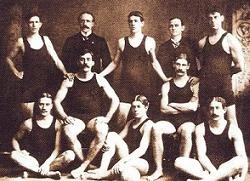
.- Luigi de Breda, a U.S. citizen of Italian origin, was the son of the personal butler of Popes Leo XIII and Pius X. In 1904 he participated in the sport of water polo in the Olympic Games at St. Louis in the United States, where he won the gold medal. The Vatican newspaper L’Osservatore Romano recently published an article recounting the story of Breda, who “at least ideally, made Vatican City present at the Games.”
Amidst the expectations over the opening of the Olympic Games in Beijing, L’Osservatore recalled the story of the son of Francis Montague Handley, who was the private butler of Pope Leo XIII and Pope Pius X.
Luigi was born on February 14, 1874 in Rome. According to the article by Maria Maggi, “He was friendly, with ruffled hair, physically well-built and a gentleman. He spoke Italian, English, French, Spanish and a little Latin and Greek.”
Luigi de Breda was not able to participate in the St. Louis Games as an Italian, despite having lived in Italy for 22 years, but only as an American under the name of Lou Handley.
Luigi, or Lou, used to swim in the Tevere River when it was still uncontaminated by pollution, Maggi explained, since at that time there were no swimming pools. “Historian Bill Mallon in his Encyclopedia of American Olympians would later recall that Lou triumphed in a mixed competition that consisted of six tests: walking, water polo, horsemanship, cycling, canoeing and swimming. Lou had already set a US swimming record in the 440-yard freestyle.”
“He was exceptional, above all, in water polo. He perfected a new shot, raising himself out of the water, which came to be known as ‘the salmon jump’,” Maggi wrote.
She noted that Lou “played water polo very well much before Johnny Weismuller—famous for playing the role of Tarzan—who won the bronze at the Paris Games of 1924, or Carlo Pedersoli—known more by the Italians as Bud Spencer—who was a key player in Italy’s 5-0 victory over Spain in 1955.”
Luigi Breda was the first coach for women’s water polo at the Anveres Games of 1920 and again at the Paris Games in 1924. He also joined the Swimming Association of New York and remained a member for 40 years. He wrote five books on sports and contributed to writing the section on swimming for the Encyclopedia Britannica. He died in New York on December 28, 1956.President Bush tells China not to ‘fear the influence of a loving religion’
.- Sunday morning in Beijing, President Bush attended the Beijing Kuanjie Protestant Christian Church. After the government-established church service, the U.S. president gently encouraged the Chinese government to consider granting religious freedom to its citizens, telling them not to fear Christianity.
The president expressed that he and his wife experienced “great joy and privilege of worshiping here in Beijing, China.” Bush explained that the service showed “that God is universal, and God is love, and no state, man or woman should fear the influence of loving religion.”
He also thanked the pastor and the choir for the warm welcome he and the first lady received. “I want to thank the pastor for his hospitality, and I want to thank this beautiful choir for singing Amazing Grace and Edelweiss. It was a touching moment. It has been a joy to worship here…God bless you.”
According to China Aid Association Inc, the church’s regular parishioners were not allowed to attend the Sunday service with President Bush. The organization claims that high-ranking officials from the Public Security Bureau, the Bureau of Security, the Bureau of Religion and TSPM/China Christian Council met to ensure that only security people, political workers and people trained to pose as Christians attended the service.
One man who was baptized two decades ago in the Protestant church lamented, “Whether you are a believer or not, no one is allowed to enter the church. When President Bush comes tomorrow, where can we do our Sunday service?”
The organization also reports that the Chinese government agencies went so far as to arrest two men while riding their bikes on the way to the service.
The men, who claimed that they had the right to attend the service and see President Bush, are affiliated with an underground Christian church and have been under the close eye of the government in the time leading up to the Olympics.
Sunday, August 10, 2008
Sorting Out Coffee’s Contradictions
When Howard D. Schultz in 1985 founded the company that would become the wildly successful Starbucks chain, no financial adviser had to tell him that coffee was America’s leading beverage and caffeine its most widely used drug. The millions of customers who flock to Starbucks to order a double espresso, latte or coffee grande attest daily to his assessment of American passions.
Although the company might have overestimated consumer willingness to spend up to $4 for a cup of coffee — it recently announced that it would close hundreds of underperforming stores — scores of imitators that now sell coffee, tea and other products laced with caffeine reflect a society determined to run hard on as little sleep as possible.
But as with any product used to excess, consumers often wonder about the health consequences. And researchers readily oblige. Hardly a month goes by without a report that hails coffee, tea or caffeine as healthful or damns them as potential killers.
Can all these often contradictory reports be right? Yes. Coffee and tea, after all, are complex mixtures of chemicals, several of which may independently affect health.
Caffeine Myths
Through the years, the public has been buffeted by much misguided information about caffeine and its most common source, coffee. In March the Center for Science in the Public Interest published a comprehensive appraisal of scientific reports in its Nutrition Action Healthletter. Its findings and those of other research reports follow.
Hydration. It was long thought that caffeinated beverages were diuretics, but studies reviewed last year found that people who consumed drinks with up to 550 milligrams of caffeine produced no more urine than when drinking fluids free of caffeine. Above 575 milligrams, the drug was a diuretic.
So even a Starbucks grande, with 330 milligrams of caffeine, will not send you to a bathroom any sooner than if you drank 16 ounces of pure water. Drinks containing usual doses of caffeine are hydrating and, like water, contribute to the body’s daily water needs.
Heart disease. Heart patients, especially those with high blood pressure, are often told to avoid caffeine, a known stimulant. But an analysis of 10 studies of more than 400,000 people found no increase in heart disease among daily coffee drinkers, whether their coffee came with caffeine or not.
“Contrary to common belief,” concluded cardiologists at the University of California, San Francisco, there is “little evidence that coffee and/or caffeine in typical dosages increases the risk” of heart attack, sudden death or abnormal heart rhythms.
In fact, among 27,000 women followed for 15 years in the Iowa Women’s Health Study, those who drank one to three cups a day reduced their risk of cardiovascular disease by 24 percent, although this benefit diminished as the quantity of coffee rose.
Hypertension. Caffeine induces a small, temporary rise in blood pressure. But in a study of 155,000 nurses, women who drank coffee with or without caffeine for a decade were no more likely to develop hypertension than noncoffee drinkers. However, a higher risk of hypertension was found from drinking colas. A Johns Hopkins study that followed more than 1,000 men for 33 years found that coffee drinking played little overall role in the development of hypertension.
Cancer. Panic swept this coffee-dependent nation in 1981 when a Harvard study tied the drink to a higher risk of pancreatic cancer. Coffee consumption temporarily plummeted, and the researchers later concluded that perhaps smoking, not coffee, was the culprit.
In an international review of 66 studies last year, scientists found coffee drinking had little if any effect on the risk of developing pancreatic or kidney cancer. In fact, another review suggested that compared with people who do not drink coffee, those who do have half the risk of developing liver cancer.
And a study of 59,000 women in Sweden found no connection between coffee, tea or caffeine consumption and breast cancer.
Bone loss. Though some observational studies have linked caffeinated beverages to bone loss and fractures, human physiological studies have found only a slight reduction in calcium absorption and no effect on calcium excretion, suggesting the observations may reflect a diminished intake of milk-based beverages among coffee and tea drinkers.
Dr. Robert Heaney of Creighton University says that caffeine’s negative effect on calcium can be offset by as little as one or two tablespoons of milk. He advised that coffee and tea drinkers who consume the currently recommended amount of calcium need not worry about caffeine’s effect on their bones.
Weight loss. Here’s a bummer. Although caffeine speeds up metabolism, with 100 milligrams burning an extra 75 to 100 calories a day, no long-term benefit to weight control has been demonstrated. In fact, in a study of more than 58,000 health professionals followed for 12 years, both men and women who increased their caffeine consumption gained more weight than those who didn’t.
Health Benefits
Probably the most important effects of caffeine are its ability to enhance mood and mental and physical performance. At consumption levels up to 200 milligrams (the amount in about 16 ounces of ordinary brewed coffee), consumers report an improved sense of well-being, happiness, energy, alertness and sociability, Roland Griffiths of the Johns Hopkins School of Medicine reported, although higher amounts sometimes cause anxiety and stomach upset.
Millions of sleep-deprived Americans depend on caffeine to help them make it through their day and drive safely. The drug improves alertness and reaction time. In the sleep-deprived, it improves memory and the ability to perform complex tasks.
For the active, caffeine enhances endurance in aerobic activities and performance in anaerobic ones, perhaps because it blunts the perception of pain and aids the ability to burn fat for fuel instead of its carbohydrates.
Recent disease-related findings can only add to coffee’s popularity. A review of 13 studies found that people who drank caffeinated coffee, but not decaf, had a 30 percent lower risk of Parkinson’s disease.
Another review found that compared with noncoffee drinkers, people who drank four to six cups of coffee a day, with or without caffeine, had a 28 percent lower risk of Type 2 diabetes. This benefit probably comes from coffee’s antioxidants and chlorogenic acid.
Related:
Friday, August 8, 2008
Parents have the right to home school, state court says
 |
| PRESIDENTIAL VISIT Redemptorist Father Joseph H. Maier and U.S. President George W. Bush pose with children during the president's visit to the Mercy Centre and Human Development Foundation in the Klong Toey slum of Bangkok, Thailand, Aug. 7. Father Maier, a native of Longview, Wash., started the foundation almost 40 years ago and now runs several programs in the slum. (CNS/Reuters) Link |
"The first rock concert I ever went to was in 1980. It was at Madison Square Garden and the group was "The Police". The opener that night was "The Go-Gos". Last night I came full circle and went to the last ever Police concert. Their reunion tour concluded at Madison Square Garden and the opener this time was the incredible "B-52s". They got the place jumpin' with wonderful renditions of their hits "Living in Your Own Private Idaho", "Roam", "Love Shack" and others but the roof almost came off the place when they went into "Rock Lobster"!
Then The Police took over and the Garden went nuts. Two of the really cool parts of the evening were the inclusion of the New York Police Department band for "Message in a Bottle" and the roadies seeing to it that one of them dressed as the proverbial fat lady came out and sang at the end. Sting had grown a beard all during this tour and in between the end of the concert and the encores he went backstage and shaved it off. We could see all this on the jumbotron screens..." - Fr. Selvester


Catholics to make 57-mile pilgrimage to Shrine of Our Lady of Czestochowa
 In Poland many of the faithful walk hundreds of miles on foot to Jasna Gora monastery in Czestochowa, which since 1384 has hosted the icon called the Black Madonna. The icon, whose creation is attributed to the evangelist St. Luke, depicts Poland’s patron saint, Our Lady of Czestochowa, bearing a darkened face.
A similar pilgrimage has taken place in the United States since 1988, with more than 2,000 pilgrims trekking to the National Shrine last year, the Associated Press says. Most of the pilgrims walk 57 miles to Doylestown from Great Meadows, though smaller groups take shorter routes from Trenton and Philadelphia.
 Pilgrims remain largely unseen as they pray, sing, and walk along rural back roads in lines that often stretch for miles.
"It's amazing," commented one pilgrim, 25-year-old Jolanta Derkacz. "You get to see how much stronger you are as a person, how you can adapt to your surroundings, and the things you feel -- it can change your life."
According to the Associated Press, Derkacz said she has made the pilgrimage since she was nine, explaining that it helps strengthen her faith and her ties with Polish immigrants.
"It bonds people together," she explained. "You hear people say; 'I would love to hear your story.' It shows you wonderfully the power of God -- you meet somebody you may have never talked to because they sat 10 aisles away from you in church."
According to Derkacz, the pilgrims sometimes attract stares and insults while other passersby wave, take pictures, or applaud when the pilgrims move through small towns in New Jersey and Pennsylvania.
Some towns along the pilgrimage route provide participants with a police escort or stop traffic to let them pass. Homeowners and farmers allow pilgrims to camp on their property each night.
At some locations, nuns nicknamed “Sister Blister” treat pilgrims’ tired feet.
While pilgrims often sing in Polish and are of Polish background, the dark-complexioned Black Madonna icon has attracted groups of Haitians from Brooklyn, New York and elsewhere to the pilgrimage. They reportedly see in the icon’s complexion and distinctive cheek scars, a reference to their African heritage.
Prayers in Creole, English and Spanish are often heard from pilgrims’ lips.
Bozena Bienkowska, a Polish native now living in Trenton, said she did not have a chance to take part in the pilgrimage while growing up because of the then-ruling communist government, according to the Associated Press. She made her first pilgrimage when she immigrated to New Jersey 20 years ago.
"In Poland, I didn't go, I was dreaming and hoping that one day I would join," she said. "I never dreamt we could have this here in the United States. As you see, here, any dream can come true."
According to the pilgrimage web site, the pilgrimage is planned to end on Sunday with a 2 pm Mass at the National Shrine of Our Lady of Czestochowa.
Thursday, August 7, 2008
Astronomy Picture of the Day

At the Sun's Edge
Credit & Copyright: Catalin Beldea (Descopera Magazine)
Explanation: A train trip on the Trans-Siberian railway to Novosibirsk resulted in this stunning view along the edge of the Sun recorded during the August 1st total solar eclipse. The picture is a composite of two images taken at special moments in the eclipse sequence, corresponding to the very beginning and the very end of the total eclipse phase. Those times are known to eclipse chasers as 2nd and 3rd contact. Bright beads around the Moon's dark silhouette are rays of sunlight shining through lunar valleys at the edge of the lunar disk. But the composite view also captures solar prominences, looping structures of hot plasma suspended in magnetic fields, extending beyond the Sun's edge.
Wednesday, August 6, 2008
Beijing Taxis Are Rigged for Eavesdropping

By SHAI OSTER and GORDON FAIRCLOUGH
August 6, 2008; Page A7
BEIJING -- Tens of thousands of taxi drivers in Beijing have a tool that could become part of China's all-out security campaign for the Olympic Games. Their vehicles have microphones -- installed ostensibly for driver safety -- that can be used to listen to passengers remotely.
The tiny listening devices, which are connected to a global positioning system able to track a cab's location by satellite, have been installed in almost all of the city's 70,000 taxis over the past three years, taxi drivers and industry officials say... the machines can even remotely shut off engines...

Summorum Pontificum One Year Later
Brian Mershon |
| REMNANT COLUMNIST, Texas |
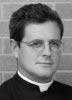 In conjunction with Michael Matt’s exclusive report from the priestly ordinations performed May 30 by Darío Cardinal Castrillón Hoyos for the Priestly Fraternity of St. Peter (FSSP) in the Cathedral of Lincoln, Neb., The Remnant provides this exclusive interview with Fr. John Berg, Superior General of the FSSP.
Fr. Berg outlines the current growth in apostolates for the FSSP both in the U.S. and worldwide, along with his impressions of the deeper significance behind the recent ordinations by high-ranking members of the Roman curia.
He also provides an update on the FSSP’s role in assisting with the education of diocesan and religious priests wishing to learn the Traditional Roman rite. In addition, Fr. Berg touches on some controversial issues regarding concelebration and the “cross-pollination” of the two forms of the Roman rite.
B. Mershon: With Cardinal Castrillón and Archbishop Ranjith performing priestly and diaconate ordinations in Lincoln, Nebraska, and in Wigratzbad, Germany, do you believe this is a significant sign from the Holy See in light of the heightened attention given to the Traditional Latin Mass and sacraments since the promulgation of Summorum Pontificum?
Fr. Berg: Sure. I think there is overall a kind of greater acceptance. We also have Cardinal Rode, who is the head of the Congregation for the Religious, who performed ordinations in Wigratzbad on the 28th of June.
So, yes, I have found the Roman curia has had much more openness to coming and doing ordinations and in offering the extraordinary form in general.
But Cardinal Hoyos did come one time before to do them for us in Wigratzbad, I think 2 or 3 years ago. He has also done them for a couple other groups; for instance, for the Institute of the Good Shepherd and the Institute of St. Phillip Neri.
He has been quite active since becoming head of the Pontifical Commission Ecclesia Dei to get around and do a lot of traditional Masses.
B. Mershon: Has this been the first time that someone like Cardinal Castrillón has come to the United States specifically to perform traditional ordinations?
Fr. Berg: Yes. This is the first time that anyone has come to the United States to do them.
B. Mershon: Summorum Pontificum one year later… What is your assessment so far? Has it been primarily beneficial or have the results been mixed?
Fr. Berg: That is a good question. I would say that overall it has been positive but that it varies greatly depending upon the area of where it is in the United States and in North America. It has been very well received in certain parts of Europe; Italy, for example, at least in certain places. Although I do know a number of other countries have been less receptive. I think there has been an application of it that has been very limited—like just applying it on a Sunday here and there, and not giving much more than that.
So there has been [a positive response], obviously, in those countries where there has been a greater increase in Masses. And I think if you look at just the sheer numbers, it looks pretty good in a lot of areas where it has increased, it looks pretty good for the availability of a Sunday Mass. But when you factor in the ability of priests to do other work [aligned with Summorum Pontificum] that a priest has to do within the diocese, sometimes those results are not nearly as good. And then you kind of evaluate if there is a stable presence and how it has really grown in those situations where it is just allowed on Sunday, it is difficult to see how—unless it really is presented in a positive manner or unless the priest really wants to do it—it will be sustained and how it will continue to grow.
So it’s pretty mixed—at least at the level of where it has been allowed for the Mass to take place within the diocese.
But then again, to really ascertain the fruits of the motu proprio after only one year, I suppose we must consider the different ways of measuring it—to find out whether it has been positive or negative thus far. One of the ways is certainly simply to add up the number of new Sunday Masses. Another way is to look at places where it has really become accepted and where it has really become a part of the parish life, like in places where a chaplaincy or a new apostolate has been set up, for example.
And there is another way of looking at it. That is by looking at the number of priests who offer the Ordinary form on a regular basis but who now have begun to say the Extraordinary form.
And a third way to evaluate it would be with priests who have gone around to different places. I think one of the reactions of our priests has been about how much easier it has been and how much more welcome they are when they go to different pilgrimage sites or different churches to celebrate the Mass in different countries wherever they might be. The fact they offer the Mass [extraordinary form] isn’t such a strange thing anymore.
Certainly, I think the acceptance among the number of priests who ordinarily offer the new rite has been really well received in that way based on the numbers.
B. Mershon: One example is that Fr. Robert Ferguson, professor at the FSSP’s seminary in Denton, Neb., has conducted training sessions both for Raleigh and Charlotte dioceses where he has educated 20 or more priests in the Traditional liturgy. Are there other examples where the Fraternity has been called upon?
Fr. Berg: I know we did a session in New Orleans. And we did one in Lafayette, as well. We also did one in Scranton.
It has been a question for us going into this next year whether we may have a priest next year dedicated to doing this training exclusively or not. We’re a little bit stretched as far as the number of priests and the resources that we have.
I know that about 100 have been trained at our sessions in Denton [home of the FSSP seminary near Lincoln, Neb.]. There have been a good number of invites from bishops. A lot of those have been priest study days, which are only one- or two-day sessions. They recognize we’re not going to do the full training, but it provides the spirit of things and gives the foundation for them to continue their study.
B. Mershon: So based upon your growth and the challenges of priestly resources, do you foresee the FSSP continuing to do this training in the future?
Fr. Berg: We will certainly continue the sessions at the seminary. But I don’t think we’ll do it as much elsewhere, just due to the number of priests it requires and the additional demands we’ve had from other new dioceses. We’re going to try to place those priests in new apostolates we’re going to be opening up this summer.
B. Mershon: There has been much said about the so-called potential “gravitational pull” and “cross-pollination” of the two forms of the one Roman rite. With the new Good Friday prayer, the allowance of vernacular readings (even without the corresponding Latin text being read by the priest) and other rumored changes such as new prefaces, it seems the pull has thus far only been in one direction—from the Novus Ordo into the Traditional Latin Mass.
Is this accurate and will the pull also occur in the other direction? For instance—Cardinal Medina once mentioned the possibility of the use of the Traditional offertory as an option for the Novus Ordo? What about the elimination of communion in the hand? Communion under both species? Altar girls? The habitual abuse of extraordinary ministers on a weekly basis when administering Holy Communion?
Fr. Berg: I think that the old rite is certainly held up as a standard in that it has fixed norms. It doesn’t have a lot of options, so it is easier to hold it up as a standard in a certain way. I think the new rite could have some of those introduced.
If you go back and read Summorum Pontificum, I don’t think it was the intention of the Holy Father nor was it spelled out as to the meaning of mutual enrichment in either of the rites. I think we also could to some extent be slipping into a “spirit of Summorum Pontificum” similar to “the spirit of Vatican II” by taking liberties and making certain changes with regard to the rubrics in one direction or the other as something that was allowed or was intended or even the “vision” of the Holy Father.
Some liturgical “experts” like to think that this whole thing is ultimately about creating one rite way down the road. But I think that if you understand that one of the primary principles of the liturgy is to be subservient to the liturgy—not that it is something that is your own, but you being obedient to the liturgy and to the prayer of the Church, not your individual prayers, but the prayer of the Church.
What that involves is following the rubrics and the guidelines as they are written. So I think it would be disastrous if anyone were to take it upon himself, as you have already mentioned, to think they are going to take the first steps to move these two forms of the rite together.
Of course the document itself clearly says that the vernacular can be used in the readings, but just because that is allowed does not mean it is required or that there are a host of other things in the document that allow other changes.
B. Mershon: To be fair, in some places over the past 40 years and even prior to the Second Vatican Council, the lesson and Gospel were both read in the vernacular, right?
Fr. Berg: In both France and Germany, it was a completely standard practice prior to 1962.
B. Mershon: Because Latin is the norm for the liturgical language of the Latin Church, even if the readings are in the vernacular, doesn’t it make perfect sense to have the priest say the prayers in Latin simultaneously, or even better, have him read them from the ambo in the vernacular (outside of the liturgy) during the sermon? And a related question, since the ideal liturgy is the Solemn High Mass, or at least the Missa Cantata, it certainly makes sense for the readings to be sung in Latin, right?
Fr. Berg: True. To me, that goes back to jumping on that clause of the motu proprio. As far as the Fraternity of St. Peter goes, the general norm in those places where we have been serving in English-speaking countries for 20 years is to pray the readings at the outset in Latin and then to read them in the vernacular prior to the sermon.
I think you have to be careful of falling into that tendency, which has been very prevalent in the liturgy for the past 30 years, where priests come into a church and think they know what the faithful need, or they know what they want.
For me personally, I went to Thomas Aquinas College and that was the first time I ever experienced the liturgy in Latin. And after that, I started to go to the Mass in Latin.
So I think it would be a real mistake to think that just because the readings are read in Latin, they are less followed or somehow more difficult to follow. My personal experience both as a pastor at a church in California and attending the Mass as a layman, is that even children before their first Communion can quite easily follow along from a hand missal.
I think it is a mistake to just walk in and think, “Oh this group is not used to the Latin Mass, so we should do the readings in the vernacular.” I just don’t think that is necessarily true—that you’re going to get a greater following of the Gospel texts.
B. Mershon: There has been much discussion, both online and elsewhere, on the issue of the so-called second (or third) Confiteor prayed by the altar boys prior to Holy Communion. Some have even gone so far to state that the Pontifical Commission Ecclesia Dei has disallowed its use. How do you respond, and what has been the FSSP’s practice in this regard?
Fr. Berg: While I certainly think that the internet and the blogging world is a good source of information, I think it would be a real mistake to think that the Commission is going to hand down decisions on liturgical practice through blogs X, Y or Z. It is an abnormal world that we live in when we think that Rome is going to speak officially through internet blogmasters.
If the Commission wants to make a statement on this question, then it will. Maybe that will be part of this Instruction document that has been promised; but, then again, that will happen on the date of publication. Until that time, as far as we understand and what we have received from the Commission from the beginning, including conversations with the Cardinal, we have been told to keep the practice as we have found it in the places we serve. So when it comes to the second Confiteor, we have a mixed usage within the Fraternity in the United States, depending upon what the communities had as a regular practice before we arrived.
There is no use to rock the boat one way or the other. So, yes, to a certain degree, it varies by country and it varies much more in North America and England and in English-speaking countries. We keep the practice as it is [and will continue to do so] unless or until the time of further clarification.
One example: The Commission brought Campos and Msgr. Rifan back into full communion in the Church and the second Confiteor is used there. They didn’t ask for any kind of change within the liturgical practice there.
I think that some may be getting a little ahead of themselves.
B. Mershon: How do you respond to priests or bishops who still question the FSSP priests regarding concelebration of the Novus Ordo at the annual Chrism Mass with the bishop? Some bishops in the past have used this as a sort of test. Do you have examples of how this has been handled with the FSSP in various dioceses?
Fr. Berg: One, I think this is kind of before my time, by and large. During the time I have been doing this, I haven’t run into any bishops who have made it a sine qua non in order to come into the diocese. Again, if we look back at the liturgical changes and we see that for 1,000 years this [concelebration] didn’t take place, ecclesial unity was obviously achieved through other elements.
So I think there is a seeking of those elements of unity for communion with other priests and the bishop and the faithful in the diocese that runs much deeper than one annual liturgical action. It hasn’t been set up as a sine qua non.
My response to the bishop is that I have been given this responsibility and put in this position to govern and not to legislate, and I must do what the Holy See has asked me to do with what the Fraternity is able and allowed to do within the diocese.
B. Mershon: So in your tenure thus far, you haven’t had any bishops categorically state that your priests must concelebrate or you aren’t going to be allowed in our diocese?
Fr. Berg: No, I haven’t had that happen in any country.
B. Mershon: Do you have any final thoughts or comments?
Fr. Berg: think that with regard with the motu proprio, one of the things that it has made us do is to refocus on our own priests and on our own constitutions. Therein it is stated that in addition to doing parish work, we will be at the service of other priests and this includes the training of other priests—whether it is a matter of training seminarians in the seminary or holding retreats and inviting priests and seminarians into Fraternity houses for theological discussions or if they want to learn the Mass.
So the motu proprio has certainly provided us the opportunity to do some things which really are part of our overall mission, especially this priest training and especially that which we provide at the seminary. I think it really runs much deeper than simply saying to the priests that come to us: “You move your left foot. You move your right foot. You put your hand here. You put your hand there.”
Our task is to give him a more profound reading of the rubrics and everything else that comes with it and what lies underneath it—the spirituality of the Mass—the sacred priesthood and its relationship to the Holy Sacrifice of the Mass.
That I believe has been a real opportunity and now we have followed that up with a DVD that was just completed recently. It has given a new scope to what we’re trying to do to benefit the Church, not just being in each diocese where there is a need, but inviting those priests and helping those dioceses serve the needs of the faithful.
And frankly, we enjoy helping serve the needs of the priests even if they are going to be saying this rite just privately on a regular basis.
Tuesday, August 5, 2008
Pope Benedict tells China: open up to Christianity
OIES, Italy (AP) — Pope Benedict XVI urged China Tuesday to open up to Christianity as he visited the birthplace of a 19th century saint who died as a missionary there 100 years ago.
China's officially atheistic Communist Party forced Chinese Catholics to cut ties with the Vatican in 1951, and the two sides have not restored formal relations. Many of the country's estimated 12 million Catholics worship in congregations outside the state-approved church and often are arrested or harassed.
"It is important for this great country to open itself to the Gospel," said Benedict, who has made the improvement of relations with China a priority of his papacy.
The pope sent a special letter to Catholics in China last year, praising the underground church, but also urging the faithful to reconcile with followers of the official church.
During a public prayer Sunday, the pope sent greetings to the Chinese people ahead of the Olympics and said he hoped the games would offer an example of coexistence among people from different countries.
On Tuesday, Benedict flew by helicopter to the remote hamlet of Oies, nestled in the Dolomite Alps in northeastern Italy, from where 130 years ago Joseph Freinademetz took off for China where he worked as a missionary until his death in 1908.
Benedict, who was accompanied by his elder brother Georg, visited an old farmhouse where Freinademetz grew up as one of 13 children. The home features a small museum with memorabilia from the missionary's life in China, including portraits of the saint depicting him with the pointed beard and round cap typical of Chinese culture in his time.
Freinademetz was proclaimed a saint by Pope John Paul II in 2003.
Several thousand people had walked through fields and woods to reach the village and greet the pope, who is spending a two-week vacation at the seminary in the nearby town of Bressanone.
Addressing them in front of the house, Benedict noted the increasing importance of China in the world.