From The Eponymous Flower:
"Editor: The modernist Monastery's new blog entry written by Father Ruff reveals an unsteady and uncertain hand. He says that the more conservative, new upcoming clergy are afraid and sneers about what he believes is a costume party, really and truly misjudging the motives of traditionalist clergy and their laity. If anyone is afraid, it's Father Ruff. Why is Father Ruff afraid? Probably because he knows that if he entered a debate with anyone, like say, Father Z at www.wdtprs.com, he'd be shown up for what he is.
Could it be that the Abbey to which he belongs has an average age well into the 60s and doesn't attract any new vocations? The devil fears Holy things, like birettas, Catholic practices and Sacramentals, Rosaries, ancient practices, because they remind him of his fall and Christ's saving power. Do progressive Catholics fear those traditional things because they are reminded of what they've lost or never had in the first place? Father Ruff's condescending string of untrue statements do more than show fear, they show real insecurity...."

Monday, July 26, 2010


Vampire Logic
 With the issuing of the third movie in the Twilight series I have to speak out about our culture's twisted fascination with vampires. I don't hesitate to tell people that I am totally disgusted with the new fad sweeping over our youth culture these days. It is not just kids that are taken up with the wiles of the dark world either: many moms of teens are swooning for them too. I think that these seductive creatures are simply the spawn of the Harry Potter culture that has for over a decade now been indoctrinating kids to think that the occult world is normal and that all this evil messaging is harmless when dressed up as entertainment. That's vampire logic - and just what the devil wants us to think.
Gone are the days of Bella Lugosi's Dracula (1931) where good was good and evil was evil. A crucifix would drive Dracula away and then he had to go into his infernal coffin when the first streaks of dawn appeared. He was in every way presented as a creature of evil, dark of heart and dread to encounter. He drank human blood too, a feature that was supposed to strike terror in every person who valued his life's essence. The image of a blood-sucking creature who lives in slime and darkness and will pounce on you to drain out your very essence should terrorize every decent person. This is because vampires used to be images of demons. That's what demons are all about: the vanquishing of all human decency and life. They represent the spiritual vortexes of the demon world that drag down to the depths of hell all who fall prey to their wiles.
But, my, how vampires have come up in the world these days.
Nowadays vampires are divided into good and bad - no longer intrinsically evil. The good ones rescuevulnerable women instead of biting them and, allegedly, drink only animal blood (well, we haven't seen the last Twilight movie yet...). And crucifixes? Don't think you'll see any of those driving away bad guys in these movies. The heroes are the "good" vampires, not the Church or religious faith in Christ.
These super-star vampires also walk around in sunlight and, as a matter of fact, their skin just happens to glisten like diamonds when exposed to direct sunlight. Isn't that wonderful? The glam vamps are gentlemen, chaste and well-intentioned, yet they are always hovering around the edge of "falling" and in seductive situations which cause young people to think that they are capable, like their hero vampire, Edward Cullen, of going just so far and pulling back, out of self-control. That's teaching them to play with fire, not a real chastity message for kids.
The worst part of this fascination with vampires from a faith point of view, however, is its blasphemy of the Eucharist. "Unless you eat my flesh and drink my blood you have no life in you," said our Blessed Lord in Chapter 6 of John's Gospel. He is the One who offers His flesh and blood for the life of the world. The vampires eat (bite) the flesh and drink the blood of victims rather than give their own to redeem others. Their bites corrupt and transform their victims into vampires like themselves. They have no life in them. They are the "living dead" by their own estimate.
How sad that this generation has been so taken in by those who represent the very antithesis of the core reality of our Faith - the Eucharist. Vampire logic is anti-Eucharistic logic, and it's very dangerous for our kids. In their obsessive fascination with such darkness, kids (and adults) turn their backs on the One who actually died for them.
To those who say, "Oh, Father, it's only harmless entertainment," I say simply: You've been warned.
Sincerely,

Rev. Thomas J. Euteneuer
President, Human Life International
Super Ranjith

From Rorate and here are Father Z's comments:
"Our worthy friends at Rorate have posted a piece by His Excellency Most Rev. Malcolm Ranjith, once Secretary of the CDW and now Archbishop of Colombo in Sri Lanka.
Archbp. Ranjith demonstrates why he was the right man for the CDW and why he was so hated by the lefties.
Archbp. Ranjith is setting out to reform the liturgical worship of the Archdiocese entrusted to his care. He has declared a year of the Eucharist for the diocese and has issued directives in a "Liturgical Guardian". Now he explains the situation to everyone.
You can read the whole thing at Rorate but here are some salient excerpts with my emphases and comments."
"2.1 The Liturgical Guardian of the Archdiocese of Colombo which has already been given to the priests in the Archdiocese, and which will be made available for all others from 29th August 2010, is the main point of reference in all matters pertaining to liturgical celebrations within the Archdiocese of Colombo. Please abide by its stipulations faithfully without trying to implement personal views and opinions. Those wishing to do things as they wish make themselves like God himself, and that is self-idolatry. [!] During this Year we shall concentrate very specially towards eliminating all erroneous practices regarding the celebration of the most holy Eucharist, the Sacraments and the Liturgy of the Hours. I would draw your attention also to the renovation and construction of churches which need to be done according to the guidelines set forth in the Guardian. In order to deepen our understanding about the Eucharist I wish to appeal to all parish priests, heads of institutions, principals of schools, superiors of religious houses to organise liturgical formation sessions on the Eucharist, sacraments and the Liturgy of the Hours. Please pay special attention to the training of lectors which is conducted in the Archdiocese as a deanery level training session, formation of choristers and training of church organists while not neglecting other ministries.
2.2 I appeal to all rectors of seminaries, administrators of archdiocesan shrines, superiors of institutions and directors of archdiocesan apostolates to very specially cooperate in this effort. While not exempting others, in such places we cannot tolerate liturgical errors. [Do I hear an "Amen!"?] [...]
2.3 An effort will be made to make common Latin chants popular during this year. [Do I hear an "Amen!"?] With this aim in mind the Archdiocesan Coordinator for Liturgy, together with Mr Francis D’ Almeida will be organising sessions of practice in all 15 deaneries and teach all choirs some basic Latin chants which could be used in parishes and institutions. Once these practice sessions take place parishes may sing at least the Kyrie, Gloria, Sanctus and Agnus Dei at parish Sunday Masses on the first Sunday of the month. No. 36 of the Constitution on the Sacred liturgy clearly sets forth the principles in this regard. Latin still remains the main liturgical language of the Church. In Sri Lanka we made a mistake in abandoning the language of our worship altogether. [For this part alone, Archbp. Ranjith should be made Cardinal as soon as possible.] Let this Eucharistic Year be an occasion for us to resuscitate this lost tradition at least to some extent. I appeal to all priests, religious and laity to cooperate.
I also wish to affirm that as indicated in the Motu Proprio Summorum Pontificum of 7th July 2007 priests and institutions are now permitted to celebrate, where it is appropriate, the Tridentine Mass and the Sacraments in that rite. In this case it is best that the faithful be prepared for it beforehand. [There is no hint of restriction here at all. Priests may take the initiative themselves to implement Summorum Pontificum in their parishes. But, there is a commonsensical admonition: prepare people beforehand so that they are not blind-sided.] I myself hope to celebrate a solemn Eucharist in that rite sometime in the near future at the Archdiocesan Cathedral."
• • • • • •
Sunday, July 25, 2010
Islam in the Vatican
From Orbis Catholicus:


Photo taken today in St. Peter's Square.
"Christopher Columbus called it the 'sect of Mahomet.' He was not a big fan.
Meanwhile we have killed our own future with contraception and abortion and now the easy and cheap remedy is immigration of Third World whomever.
Make abortion illegal and save what's left of our civilization before it is too late."
Church of England bishop converts to Rome
By Damian Thompson
 The former assistant Bishop of Newcastle, Paul Richardson, has been received into full communion with the Holy See, I am pleased to reveal. Richardson – also a former Anglican bishop in Papua New Guinea and diocesan bishop of Wangaratta in Australia – was received into the Church at the chaplaincy at Durham University last month.
He tells me that his conversion is not the product of recent controversies. “I would have become a Catholic even if the Church of England wasn’t ordaining women bishops,” he says. “In a sense I feel it’s what I’ve always been, so this is like coming home.”
Richardson, 63, is not planning to join the Ordinariate, but hasn’t ruled out ordination as a Catholic priest – “You can’t just jump in and say ‘I want to be ordained’. I think I have to let the Church guide me over that,” he says...
The former assistant Bishop of Newcastle, Paul Richardson, has been received into full communion with the Holy See, I am pleased to reveal. Richardson – also a former Anglican bishop in Papua New Guinea and diocesan bishop of Wangaratta in Australia – was received into the Church at the chaplaincy at Durham University last month.He tells me that his conversion is not the product of recent controversies. “I would have become a Catholic even if the Church of England wasn’t ordaining women bishops,” he says. “In a sense I feel it’s what I’ve always been, so this is like coming home.”
Richardson, 63, is not planning to join the Ordinariate, but hasn’t ruled out ordination as a Catholic priest – “You can’t just jump in and say ‘I want to be ordained’. I think I have to let the Church guide me over that,” he says...
Church minister to tweet Holy Communion to the faithful
A church minister is to conduct the first communion service on Twitter, the social networking site.
By Jonathan Wynne-Jones, Religious Affairs Correspondent

By Jonathan Wynne-Jones, Religious Affairs Correspondent
Hundreds of people have already registered to follow the service Photo: Alamy
In a modern spin on Christianity's most sacred rite, worshippers are being invited to break bread and drink wine or juice in front of their computers as they follow the service online.
Churches usually require a priest to take the Eucharist, but the Rev Tim Ross, a Methodist minister, will send out a prayer in a series of Tweets – messages of up to 140 characters – to users of Twitter.
Those following the service are asked to read each tweet out loud before typing Amen as a reply at the end.
The move is likely to upset traditionalists, but the Rev Mr Ross argues that it is an important step in uniting Christians around the world and reaching those who might not normally go to church.
Hundreds of people have already registered to follow the service and Mr Ross hopes that thousands will have signed up by the time he sends out the groundbreaking tweets next month.
"Twitter offers unique possibilities for communication for the Church," he said.
"It's a community that's as real and tangible as any local neighbourhood and we should be looking to minister to it.
"The perception of church is often that it is rusting away in antiquated buildings and not in touch with the world around us, but this is a statement that we're prepared to embrace the technological revolution."
He added: "Those who are from a high [traditional] church background might be concerned about whether this is a valued form of communion, but this is for a global community."
Last year, the Most Rev Vincent Nichols, the Archbishop of Westminster, warned that social networking websites such as Facebook and MySpace could encourage teenagers to view friendship as a "commodity" and claimed the internet was "dehumanising" community life.
However, the Church of England has tried to appeal to the internet generation by setting up an online church which offers prayers and worship.
Following its launch in 2006, a number of other internet churches have been set up, creating opportunities for people to talk online.
Saturday, July 24, 2010
Two nuns go on run over threat to send them to retirement home
Two fugitive nuns in their 80s have gone on the run in France to escape being sent to a retirement home by their Mother Superior.

(The Telegraph) Sister Marie-Daniel, 86, and Sister Saint-Denis, 82, fled their nunnery two weeks ago after convent officials said they were being sent to a remote mountain retreat 250 miles away.
The pair vanished from the Sisters of Saint-Joseph convent in Roquebrune-Cap-Martin, on the French Riviera convent, on July 12 and have not been seen since.
A third 89-year-old nun, Sister Maurice-Marie, has revealed she also wanted to flee but broke her leg four days before the two elderly sisters disappeared.
A convent insider had told France-Soir newspaper that the nuns were furious at being "put out to grass" in a retirement home after 50 years at the nunnery.
They said: "They decided they wanted to jump before they were pushed.
"They would rather take their chances out in the world than have to live out their days in some far away rest home."
Sister Colette Philibert, the region's chief nun, said: "All we want is for our two dear sisters to make contact with us and return to the convent."


Friday, July 23, 2010

Pope To Be Protected From Arrest On UK Visit
11:30am UK, Friday July 23, 2010
The Government has moved to prevent the possibility of an arrest warrant being issued against the Pope during his state visit this autumn.

The Government wants to avoid diplomatic embarrassment
Sky News understands that Whitehall officials have been "seriously concerned" that campaigners would use international criminal rules to try to detain the Pontiff while he is in the UK.
Richard Dawkins, Christopher Hitchens and human rights lawyer Geoffrey Robertson QC were among those campaigners reported to be looking at the options for bringing a private prosecution in relation to the Pope's alleged cover-up of sexual abuse in the Catholic Church.
Now Justice Secretary Ken Clarke has proposed changes to the rules on universal jurisdiction, a law that allows individuals to be prosecuted in the UK for serious offences such as war crimes, crimes against humanity and torture even if they were carried out abroad.

Justice Secretary Clarke to limit foreign leaders being brought to UK courts
This would effectively mean taking that power out of the hands of the courts.
Ministers say the current rules are open to abuse because the evidence required to get a warrant is far below the threshold that would be needed to bring a prosecution.
This has meant the rules are often used by those who wish to make a political statement or to cause embarrassment.
The most recent attempt to obtain an arrest warrant for a foreign dignitary was ahead of the visit by former Israeli foreign minister Tzipi Livni who cancelled her trip at the last minute to avoid embarrassment.

Former Israeli Foreign Minister Tzipi Livni refused to travel to UK
"It is important, however, that universal jurisdiction cases should be proceeded with in this country only on the basis of solid evidence that is likely to lead to a successful prosecution - otherwise there is a risk of damaging our ability to help in conflict resolution or to pursue a coherent foreign policy.
"The Government has concluded, after careful consideration, that it would be appropriate to require the consent of the Director of Public Prosecutions before an arrest warrant can be issued to a private prosecutor in respect of an offence of universal jurisdiction."
The state visit this September will be the first visit by a Pope to the UK since 1982.
Protestant Bibles
457. Is there any difference between a Roman Catholic Bible, and a Protestant Bible?
Yes. The Protestant Bible omits several Books of the Old Testament which are contained in the Catholic Bible. It omits the Books of Tobias, Judith, Wisdom, Sirach, the two Books of Machabees, and various sections of other Books. Moreover, in those sections of the Bible which the Protestant Version has retained, there are many mistranslations.
458. Has the Protestant Bible undergone any alterations since the Reformation period?
Yes. As soon as Henry VIII broke away from the Catholic Church in 1534 and established the Church of England under his own supremacy, Cranmer ordered an English translation to be made. The Bible had been translated into English long before this, but he wanted his own special translation. In 1539 the resultant Protestant translation was published, and called the "Great Bible." In the same year also there was published a Version by Richard Taverner. In 1560 another English translation was published at Geneva, to be known as the "Geneva Bible." As these translations revealed many errors, in 1568 a revised edition was published and called the "Bishops' Bible." This Bible was reprinted in 1572 with many corrections and amendments, and called "Matthew Parker's Bible." In 1611 the "King James' Bible," or what is usually called the "Authorized Version" was published; but even this Version was corrected in 1683, 1769, and 1806. Critics, however, pointed out many errors still in the "Authorized Version," and in 1885 a "Revised Version" was completed which contains over 35,000 alterations from the "Authorized Version."
459. You say that Protestants have omitted several Old Testament Books. From what Old Testament is the Catholic Canon taken?
The Books of the Old Testament contained in the Catholic Canon are those contained in the Greek Septuagint translation of the Hebrew Bible — a translation made at Alexandria, in Egypt, by the Jews residing there. This translation was made during the three centuries before the birth of Christ. The Jews, even of Palestine, accepted the Septuagint Canon, or list of Books, and our Lord Himself used it in conversing with them. The Jews began to deny its authenticity only about a century after Christ because they could not resist the arguments drawn from it and used against them by the Christians. They therefore said that it was a bad translation; that it did not agree with the Hebrew text; and they rejected it. But the use the Jews themselves had made of it for nearly four hundred years rendered their rejection of it too late. And their motives, of course, are evident. Their interest was not critical, but polemical.
460. From what Old Testament is the Protestant Canon taken?
When the Protestant reformers abandoned the Catholic Church, they adopted the same policy as the Jews had adopted against the early Christians, and tried to cast doubt upon the Catholic Versions of Scripture. They too, therefore, rejected the Septuagint Canon, and accepted the current Hebrew copies of the Old Testament Books. The Hebrew manuscripts omitted several of the Books contained in the Septuagint, and the Protestants therefore followed suit.
461. Which Bible did Christ and the Apostles treat as the standard version?
Christ and the Apostles used both the Hebrew Palestinian Canon and the Greek Septuagint Canon. Both were familiar to, and were accepted at that time by the Jews.
462. From which Old Testament did the New Testament writers most quote when writing their Books?
They quoted most often from the Greek Septuagint. In fact, of some 350 quotations, nearly 300 are taken from the Septuagint. In his "Introduction to the Sacred Scriptures," Thomas Hartwell Horne, a Protestant writer, says that the New Testament writers had to quote from the Greek Septuagint because many for whom they wrote were ignorant of Hebrew, whereas the Greek Version was generally known and read. If the Septuagint was erroneous, and its Canon false, then far from quoting from it, the Apostles should have denounced it, and warned Christians not to use it, but to use exclusively the Palestinian Canon. The Apostles did not do so. They sanctioned the use of the Canon accepted by the Catholic Church and rejected by the Protestant reformers.
463. Do Catholics say that the Protestant Bible, whether "Authorised" or "Revised," is not a true translation of the originals, and are of no value?
We do not say that they are of no value. And it is certain that, on the whole, they are correct translations. But both Versions omit complete Books from the Old Testament, and both are very imperfect translations, on the admissions of scholars amongst Protestants themselves. The Rev. Frank Ballard, in his book "Which Bible to Read" urges Protestants to use the "Revised Version," and not the "Authorized Version." On page 23 of his book he says that an honest answer admits the imperfections of the "Authorized Version" on the following points — (1) It is based on a faulty text; (2) Words are given wrong meanings; (3) Archaic expressions obscure the sense; (4) Grammatical errors abound; (5) The sacred writers are misrepresented. He rightly says therefore that the "Revised Version" is a great improvement; but Protestant scholars agree that a further revision will have to be made. And it is to be noted that the various corrections of the Protestant Version have been in the direction of closer harmony with the Catholic Douay Version.
Thursday, July 22, 2010
Anglican Priestess Gives Communion to Dog!

Noor Javed
Staff Reporter
St. Peter’s Anglican Church has long been known as an open and inclusive place.
So open, it seems, they won’t turn anyone away. Not even a dog.
That’s how a blessed canine ended up receiving communion from interim priest Rev. Marguerite Rea during a morning service the last Sunday in June...
Rev. Rea was contacted numerous times about the incident, but did not want to comment.
“She is quite embarrassed by it,” said Yu.
But congregants of the church say the act wasn’t meant to be controversial. Peggy Needham, the deputy people’s warden was sitting near the front of the church when the dog was given the wafer.
It was the first time Needham had seen the man and his dog in church. He had been invited to the service after an incident where police heckled him as he sat peacefully on the steps of the church early one morning during the G20 weekend.
Angry over the experience, he called the church to vent. They invited him to come to church, and he did, bringing his dog with him.
When it was time for communion, the man went up to receive the bread and the wine, with the dog. “I am sure for Marguerite that was a surprise, like it was for all of us,” said Needham. “But nobody felt like it was a big deal, because it wasn’t a big deal...”
Wednesday, July 21, 2010
Russian Orthodox patriarch praises Pope, rips Protestant compromises with secularism
Patriarch Kirill of Moscow and All Russia, the head of the Russian Orthodox Church, praised Pope Benedict and blasted Protestant bodies that have accepted women’s ordination and caved in to the secular culture on homosexuality.
Noting that the Pope is criticized by “liberal theologians and liberal mass media in the West,” Patriarch Kirill said that “on many public and moral issues his approach fully coincides with the approach of the Russian Orthodox Church. This gives us an opportunity to advocate Christian values together with the Catholic Church, in particular at international organizations and on the international arena.”
On the other hand, some Protestant bodies have “let sinful elements of the world enter their internal world and justify these elements, if they are offered by secular society … secular philosophical liberal stock phrases are repeated within Protestant churches and take root in religious thinking.”
For example, “the word of God is distorted to please the secular liberal standard” on homosexuality, the patriarch noted. “It is written in black and white that it is a sin.”
Source(s):
Russian Orthodox patriarch praises Pope, rips Protestant compromises with secularism
Prophecies of Our Lady of Good Success About Our Times

From TFP.org
Our Lady’s Prophecies About the Twentieth Century
During the fifteenth and sixteenth centuries, Our Lady of Good Success appeared in Quito, Ecuador to a Spanish nun whose little-known but extraordinary life has a direct connection with our days.
The Pope’s “infallibility will be declared a dogma of Faith by the same Pope chosen to proclaim the dogma of the mystery of my Immaculate Conception. He will be persecuted and imprisoned in the Vatican through the usurpation of the Pontifical States and through the malice, envy, and avarice of an earthly monarch.”
“Unbridled passions will give way to a total corruption of customs because Satan will reign through the Masonic sects, targeting the children in particular to insure general corruption.
Unhappy, the children of those times! Seldom will they receive the sacraments of Baptism and Confirmation. As for the sacrament of Penance, they will confess only while attending Catholic schools, which the devil will do his utmost to destroy by means of persons in authority.
“The same will occur with Holy Communion. Oh, how it hurts me to tell you that there will be many and enormous public and hidden sacrileges!
“In those times, the sacrament of Extreme Unction will be largely ignored.… Many will die without receiving it, being thereby deprived of innumerable graces, consolation, and strength in the great leap from time to eternity.
“The sacrament of Matrimony, which symbolizes the union of Christ with the Church, will be thoroughly attacked and profaned. Masonry, then reigning, will implement iniquitous laws aimed at extinguishing this sacrament. They will make it easy for all to live in sin, thus multiplying the birth of illegitimate children without the Church’s blessing…
“Secular education will contribute to a scarcity of priestly and religious vocations."
“The holy sacrament of Holy Orders will be ridiculed, oppressed, and despised, for in this both the Church and God Himself are oppressed and reviled, since He is represented by His priests.
The devil will work to persecute the ministers of the Lord in every way, working with baneful cunning to destroy the spirit of their vocation and corrupting many. Those who will thus scandalize the Christian flock will bring upon all priests the hatred of bad Christians and the enemies of the One, Holy, Roman Catholic, and Apostolic Church. This apparent triumph of Satan will cause enormous suffering to the good pastors of the Church...and to the Supreme Pastor and Vicar of Christ on earth who, a prisoner in the Vatican, will shed secret and bitter tears in the presence of God Our Lord, asking for light, sanctity, and perfection for all the clergy of the world, to whom he is King and Father.”
“Unhappy times will come wherein those who should fearlessly defend the rights of the Church will instead, blinded despite the light, give their hand to the Church’s enemies and do their bidding. But when [evil] seems triumphant and when authority abuses its power, committing all manner of injustice and oppressing the weak, their ruin shall be near. They will fall and crash to the ground.
“Then will the Church, joyful and triumphant like a young girl, reawaken and be comfortably cradled in the arms of my most dear and elect son of those times. If he lends an ear to the inspirations of grace – one of which will be the reading of these great mercies that my Son and I have had toward you – we shall fill him with graces and very special gifts and will make him great on earth and much greater in Heaven. There we have reserved a precious seat for him because, heedless of men, he will have fought for truth and ceaselessly defended the rights of the Church, deserving to be called ‘martyr.’”
“At the end of the nineteenth century and throughout a great part of the twentieth, many heresies will be propagated in these lands.…
“The small number of souls who will secretly safeguard the treasure of Faith and virtues will suffer a cruel, unspeakable, and long martyrdom. Many will descend to their graves through the violence of suffering and will be counted among the martyrs who sacrificed themselves for the country and the Church.
“To be delivered from the slavery of these heresies, those whom the merciful love of my Son has destined for this restoration will need great will-power, perseverance, courage, and confidence in God. To try the faith and trust of these just ones, there will be times when all will seem lost and paralyzed. It will then be the happy beginning of the complete restoration….
“In those times the atmosphere will be saturated with the spirit of impurity which, like a filthy sea, will engulf the streets and public places with incredible license…Innocence will scarcely be found in children, or modesty in women.
“He who should speak seasonably will remain silent.
“There shall be scarcely any virgin souls in the world. The delicate flower of virginity will seek refuge in the cloisters.…Without virginity, fire from heaven will be needed to purify these lands.…
“Sects, having permeated all social classes, will find ways of introducing themselves into the very heart of homes to corrupt the innocence of children. The children’s hearts will be dainty morsels to regale the devil.…
“Religious communities will remain to sustain the Church and work with courage for the salvation of souls.… The secular clergy will fall far short of what is expected of them because they will not pursue their sacred duty. Losing the divine compass, they will stray from the way of priestly ministry mapped out for them by God and will become devoted to money, seeking it too earnestly.
“Pray constantly, implore tirelessly, and weep bitter tears in the seclusion of your heart, beseeching the Eucharistic Heart of my most holy Son to take pity on His ministers and to end as soon as possible these unhappy times by sending to His Church the Prelate who shall restore the spirit of her priests”
Priest in English diocese sees ‘great excitement’ ahead of papal visit to UK
 .- A priest in England’s Catholic Diocese of Clifton says the upcoming papal visit has caused “great excitement” among those in the diocese, especially as more than 4,000 of its people will be able to see and hear Pope Benedict XVI. He also noted a “growing awareness” about how unique the beatification of Cardinal Newman will be.
Fr. Michael McAndrew, papal visit coordinator for the diocese, described the growing enthusiasm in an interview published on the website of the papal visit and summarized in a press release from the Catholic Bishops’ Conference of England and Wales (CBCEW).
Fr. McAndrew said that one third of the Diocese of Clifton’s priests have said they would like to be considered to concelebrate at John Henry Cardinal Newman’s Beatification Mass. Thirty-five pilgrim leaders have volunteered to lead each pilgrim group, which the priest called “a really positive response.”
The Pope will not visit the west coast diocese, but it has been allocated 2,300 pilgrim passes for the Sept. 18 prayer vigil at Hyde Park in London and another 1,700 pilgrim passes for the Beatification Mass at Cofton Park in Birmingham on Sept. 19.
The priest said the vigil promises to be “a moment of profound Christian witness.” It will begin with a procession of 3,000 people, led by the young. Participants will carry banners through central London to offer “a visible witness of the Catholic communities in our country.”
The Holy Father will preach and pray at the vigil in the early evening.
“Pope Benedict has a great gift for breaking open the Word of God and teaching the Gospel in a very simple and profound way. That's something people are looking forward to very much,” Fr. McAndrew noted.
He also described a “growing awareness” that Cardinal Newman’s beatification is “a unique event.”
“It's the first beatification that's ever happened in England,” Fr. McAndrew explained. “It's also the case that Pope Benedict doesn't usually preside at beatifications - but he's making an exception for us.”
According to the priest, he made the exception “because of his great, personal love and interest in John Henry Newman and also his appreciation of his writings and the huge influence that this great Englishman has had on the whole worldwide Church.”
“I think what is really capturing the imagination is that the Pope comes among us as a pilgrim. We are invited to take part in this event in the same spirit - we travel as pilgrims,” he continued, calling this a reminder that Catholics’ “journey of faith” is “lived in the communion of the Church.”
In Fr. McAndrew’s view, the Mass of Beatification will remind Catholics of two things: its celebration by the Pope will remind them of his leadership of the Catholic Church, and that the Church is not only earthly but stretches “into eternal life, into Heaven.”
“Pope Benedict is not coming to the Diocese of Clifton but it seems to me Clifton will go to see him and hear him and we are preparing very enthusiastically to welcome Pope Benedict to our land,” he concluded.
The website for the papal visit to the U.K. is http://www.thepapalvisit.org.uk
Loome Theological Bookseller Video Tour


Tuesday, July 20, 2010
Exsurge Domine
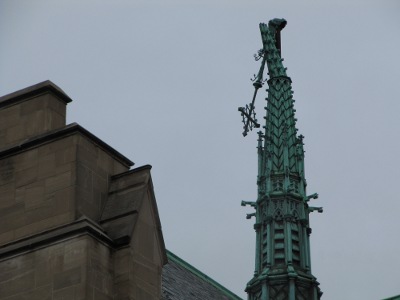
By Swissmiss
The older I get the more I understand that since I've been a Catholic all my life, not necessarily a good or practicing Catholic mind you, but raised and surrounded by Catholics and constantly confirming my belief in the Church as an adult, I realize that I cannot fully see things from any other perspective, specifically relating to my in-laws. It's hard to put my finger on it; I will never have the perspective of a non-Catholic.
To sum it up, since faith and reason are united in Truth, why don't my in-laws move in my direction? Why, quite recently, would a close relation proudly proclaim his desire to leave the Church to become a Lutheran pastor? Why would he think, telling me a Catholic from beginning and to hopeful end, I would react with anything but sadness?
Rock of ages
Cleft into innumerable bits
'Visions, Trips and Crowded Rooms' David Kessler's latest book chronicles what we experience before we die.
By R. W. Dellinger
David Kessler had to author three books on grief, the needs of the dying and death, meet Mother Teresa and work with acclaimed thanatologist Elisabeth Kübler-Ross before he could develop the maturity and muster the courage to write "Visions, Trips and Crowded Rooms - Who and What You See Before You Die."
"When you're starting out in your professional life, you want to make sure that you're doing credible work," says the vice president of patient support care services, which includes overseeing end-of-life care, pastoral care and social work, at Citrus Valley Health Partners. "If I would have said to anyone early on, 'You know, I've been noticing there's some visions going on here with our dying patients,' they would have thought I was crazy.
"After writing three books and being around people like Kübler-Ross and Mother Teresa, I hope that people will realize I'm just always reporting from what's happening at the end of life. I mean, if anything, I see myself as an end-of-life reporter because I know everybody's not going to be around the bedsides of the dying.
"I think there's a part of me that's become more courageous and more mature to say: 'You know what? Not only should I find the courage to share these stories, but it's actually a disservice by letting you believe your grandfather or grandmother, who was a very sane person, became crazy in his or her last moments of life,'" he points out. "I actually have a responsibility to say: 'Nope. This is a common phenomenon. I can't explain it. Don't have any interest in arguing about it. Accept it or don't.'"
The 51-year-old modern-day student of death, who runs the Citrus Valley Hospice program for the group of three hospitals in the San Gabriel Valley, conducted in-depth interviews with healthcare professionals, members of the clergy as well as individuals who had lost loved ones. They told him what it was like being at the deathbed of a patient, relative or close friend.
Eyes fixed on mom
The first shared experience reportedly was deathbed visions, most often of the dying person's mother or mother figure. Their eyes became fixed on something no one else in the room could see as they reached out their hands passionately, according to many witnesses of deathbed scenes.
A hospital supervisor who Kessler calls Nina in the 168-page book said her dying husband suddenly started talking to someone in his hospital room, although no one else was present. She clearly heard him say, "Mom, I can't believe you're here." Then he told his dead mother all about his living family. But the supervisor said the "most amazing part" was how her husband kept his eyes focused upward on a particular spot, like his mother was hovering there.
An oncologist was at the bedside of his brother, who had terminal cancer, with their mother. The patient began talking as if there was somebody right in front of him. And it soon became apparent that he was speaking to his father's parents, whom he'd been particularly close to. The conversation lasted for a couple of hours, with the patient smiling and calling both of his grandparents by name.
"As a doctor, it's very easy to dismiss this sort of thing until you see it firsthand," the oncologist told Kessler, adding, "Before the episode, there was a sense of struggle and tension in the air, but now there seemed to be only peace surrounding my brother. I truly believe that it was a result of my grandparents' visit as he died."
Kessler found that deathbed vision happenings shared a number of things. First, death had to be imminent, within at least a week and sometimes the same day. Only really dying people, in short, had visions. And these end-of-life visions were remarkably similar, with mothers or mother-like figures being the most likely apparitions.
"The more I thought about it, I wasn't as surprised as I might have been, because our mother ushers us through this threshold into life - and wouldn't she be there at the end?" he muses.
The healthcare administrator and former nurse stresses that the visions were more than hallucinations or the result of oxygen deprivation. He explains that hallucinations feel unsafe and don't make a lot of sense. The same can be said for the ramblings of people who are oxygen deprived. But the deathbed witnesses he talked to reported that the dying patient carried on a coherent conversation with the unseen visitor and then had no trouble switching back to people in the room.
Standing room only
Dying people spoke a lot about getting ready for a trip, which was the second commonly shared deathbed experience, Kessler found. And he emphasizes that the journey was a real concrete trip versus an abstract notion of heading into eternity. People asked "Where's my ticket?" or "What happened to my passport?" not "I'm about to go into the abyss of death."
A social worker at a major hospital shared a story about a woman in her 80s dying of congestive heart failure. After not talking for days, she sat up, waving at her daughter to look where she was pointing. "Don't you see them?" she declared in a steady voice.
"See who?" the daughter asked.
"I see a dock; and there are your dad, grandmother, grandfather and uncle."
When the daughter said she still didn't see anybody, her mother exclaimed, "Well, they're all there! They're standing on the dock, waiting for me to come across." After a pause, her gaze fixed again on the wall, she directly addressed the people in her vision. "There's no boat at the dock," she said. "How can I get to you?"
The next day, the elderly frail woman uttered her last words with an expression of complete contentment: "The boat is finally at the pier."
The final kind of deathbed experience reported to Kessler was crowds and crowded rooms, or what he likes to call the "standing-room-only experience." The dying often reported being in a room - or about to enter one - full of people, some of whom they didn't even recognize.
"We may think we only have a handful of friends, but what about all the people we've interacted with or shared a kindness with during our life?" he notes. "What if there's a lineage that we do gather with once again in the afterlife, in heaven? There was an awe of how many people were present for many of the dying."
Like the account a hospital chaplain told him of a middle-age woman who was losing her battle with ovarian cancer. Focusing her eyes upward at a corner of her bedroom, she said, "Oh, it's a door. A lovely golden door."
Then she told her mother, who was present, there were more and more people trying to push the door open. "Mom, look how many are here for me," she said. "They're going to help me."
The chaplain, who was also at her bedside, remarked at how happy she looked, especially when her mother said, "Dorothy, you can go with these folks if it's time."
Placing her hand on the dying woman, the chaplain assured her, "It's all right to go. I'll take care of your mom."
Shortly after, Dorothy died peacefully.
'It changes everything'
"You hear people say, 'we're born alone, we die alone,' but from the deathbed it doesn't seem like a lonely experience," observes David Kessler. "It feels like we're not going into the emptiness but arriving into a fullness."
After a moment, he confides, "One of the most starling things for me in hearing these stories is what if death isn't that lonely experience that we should all fear? What if we are comforted and loved and cared for - and there is standing room only? It changes everything. I mean, it reaffirms our faith."
Subscribe to:
Posts (Atom)