An Interview with Fr. John Berg, Superior General of the Priestly Fraternity of St. Peter
Brian Mershon |
| REMNANT COLUMNIST, Texas |
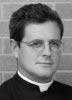 In conjunction with Michael Matt’s exclusive report from the priestly ordinations performed May 30 by Darío Cardinal Castrillón Hoyos for the Priestly Fraternity of St. Peter (FSSP) in the Cathedral of Lincoln, Neb., The Remnant provides this exclusive interview with Fr. John Berg, Superior General of the FSSP.
Fr. Berg outlines the current growth in apostolates for the FSSP both in the U.S. and worldwide, along with his impressions of the deeper significance behind the recent ordinations by high-ranking members of the Roman curia.
He also provides an update on the FSSP’s role in assisting with the education of diocesan and religious priests wishing to learn the Traditional Roman rite. In addition, Fr. Berg touches on some controversial issues regarding concelebration and the “cross-pollination” of the two forms of the Roman rite.
B. Mershon: With Cardinal Castrillón and Archbishop Ranjith performing priestly and diaconate ordinations in Lincoln, Nebraska, and in Wigratzbad, Germany, do you believe this is a significant sign from the Holy See in light of the heightened attention given to the Traditional Latin Mass and sacraments since the promulgation of Summorum Pontificum?
Fr. Berg: Sure. I think there is overall a kind of greater acceptance. We also have Cardinal Rode, who is the head of the Congregation for the Religious, who performed ordinations in Wigratzbad on the 28th of June.
So, yes, I have found the Roman curia has had much more openness to coming and doing ordinations and in offering the extraordinary form in general.
But Cardinal Hoyos did come one time before to do them for us in Wigratzbad, I think 2 or 3 years ago. He has also done them for a couple other groups; for instance, for the Institute of the Good Shepherd and the Institute of St. Phillip Neri.
He has been quite active since becoming head of the Pontifical Commission Ecclesia Dei to get around and do a lot of traditional Masses.
B. Mershon: Has this been the first time that someone like Cardinal Castrillón has come to the United States specifically to perform traditional ordinations?
Fr. Berg: Yes. This is the first time that anyone has come to the United States to do them.
B. Mershon: Summorum Pontificum one year later… What is your assessment so far? Has it been primarily beneficial or have the results been mixed?
Fr. Berg: That is a good question. I would say that overall it has been positive but that it varies greatly depending upon the area of where it is in the United States and in North America. It has been very well received in certain parts of Europe; Italy, for example, at least in certain places. Although I do know a number of other countries have been less receptive. I think there has been an application of it that has been very limited—like just applying it on a Sunday here and there, and not giving much more than that.
So there has been [a positive response], obviously, in those countries where there has been a greater increase in Masses. And I think if you look at just the sheer numbers, it looks pretty good in a lot of areas where it has increased, it looks pretty good for the availability of a Sunday Mass. But when you factor in the ability of priests to do other work [aligned with Summorum Pontificum] that a priest has to do within the diocese, sometimes those results are not nearly as good. And then you kind of evaluate if there is a stable presence and how it has really grown in those situations where it is just allowed on Sunday, it is difficult to see how—unless it really is presented in a positive manner or unless the priest really wants to do it—it will be sustained and how it will continue to grow.
So it’s pretty mixed—at least at the level of where it has been allowed for the Mass to take place within the diocese.
But then again, to really ascertain the fruits of the motu proprio after only one year, I suppose we must consider the different ways of measuring it—to find out whether it has been positive or negative thus far. One of the ways is certainly simply to add up the number of new Sunday Masses. Another way is to look at places where it has really become accepted and where it has really become a part of the parish life, like in places where a chaplaincy or a new apostolate has been set up, for example.
And there is another way of looking at it. That is by looking at the number of priests who offer the Ordinary form on a regular basis but who now have begun to say the Extraordinary form.
And a third way to evaluate it would be with priests who have gone around to different places. I think one of the reactions of our priests has been about how much easier it has been and how much more welcome they are when they go to different pilgrimage sites or different churches to celebrate the Mass in different countries wherever they might be. The fact they offer the Mass [extraordinary form] isn’t such a strange thing anymore.
Certainly, I think the acceptance among the number of priests who ordinarily offer the new rite has been really well received in that way based on the numbers.
B. Mershon: One example is that Fr. Robert Ferguson, professor at the FSSP’s seminary in Denton, Neb., has conducted training sessions both for Raleigh and Charlotte dioceses where he has educated 20 or more priests in the Traditional liturgy. Are there other examples where the Fraternity has been called upon?
Fr. Berg: I know we did a session in New Orleans. And we did one in Lafayette, as well. We also did one in Scranton.
It has been a question for us going into this next year whether we may have a priest next year dedicated to doing this training exclusively or not. We’re a little bit stretched as far as the number of priests and the resources that we have.
I know that about 100 have been trained at our sessions in Denton [home of the FSSP seminary near Lincoln, Neb.]. There have been a good number of invites from bishops. A lot of those have been priest study days, which are only one- or two-day sessions. They recognize we’re not going to do the full training, but it provides the spirit of things and gives the foundation for them to continue their study.
B. Mershon: So based upon your growth and the challenges of priestly resources, do you foresee the FSSP continuing to do this training in the future?
Fr. Berg: We will certainly continue the sessions at the seminary. But I don’t think we’ll do it as much elsewhere, just due to the number of priests it requires and the additional demands we’ve had from other new dioceses. We’re going to try to place those priests in new apostolates we’re going to be opening up this summer.
B. Mershon: There has been much said about the so-called potential “gravitational pull” and “cross-pollination” of the two forms of the one Roman rite. With the new Good Friday prayer, the allowance of vernacular readings (even without the corresponding Latin text being read by the priest) and other rumored changes such as new prefaces, it seems the pull has thus far only been in one direction—from the Novus Ordo into the Traditional Latin Mass.
Is this accurate and will the pull also occur in the other direction? For instance—Cardinal Medina once mentioned the possibility of the use of the Traditional offertory as an option for the Novus Ordo? What about the elimination of communion in the hand? Communion under both species? Altar girls? The habitual abuse of extraordinary ministers on a weekly basis when administering Holy Communion?
Fr. Berg: I think that the old rite is certainly held up as a standard in that it has fixed norms. It doesn’t have a lot of options, so it is easier to hold it up as a standard in a certain way. I think the new rite could have some of those introduced.
If you go back and read Summorum Pontificum, I don’t think it was the intention of the Holy Father nor was it spelled out as to the meaning of mutual enrichment in either of the rites. I think we also could to some extent be slipping into a “spirit of Summorum Pontificum” similar to “the spirit of Vatican II” by taking liberties and making certain changes with regard to the rubrics in one direction or the other as something that was allowed or was intended or even the “vision” of the Holy Father.
Some liturgical “experts” like to think that this whole thing is ultimately about creating one rite way down the road. But I think that if you understand that one of the primary principles of the liturgy is to be subservient to the liturgy—not that it is something that is your own, but you being obedient to the liturgy and to the prayer of the Church, not your individual prayers, but the prayer of the Church.
What that involves is following the rubrics and the guidelines as they are written. So I think it would be disastrous if anyone were to take it upon himself, as you have already mentioned, to think they are going to take the first steps to move these two forms of the rite together.
Of course the document itself clearly says that the vernacular can be used in the readings, but just because that is allowed does not mean it is required or that there are a host of other things in the document that allow other changes.
B. Mershon: To be fair, in some places over the past 40 years and even prior to the Second Vatican Council, the lesson and Gospel were both read in the vernacular, right?
Fr. Berg: In both France and Germany, it was a completely standard practice prior to 1962.
B. Mershon: Because Latin is the norm for the liturgical language of the Latin Church, even if the readings are in the vernacular, doesn’t it make perfect sense to have the priest say the prayers in Latin simultaneously, or even better, have him read them from the ambo in the vernacular (outside of the liturgy) during the sermon? And a related question, since the ideal liturgy is the Solemn High Mass, or at least the Missa Cantata, it certainly makes sense for the readings to be sung in Latin, right?
Fr. Berg: True. To me, that goes back to jumping on that clause of the motu proprio. As far as the Fraternity of St. Peter goes, the general norm in those places where we have been serving in English-speaking countries for 20 years is to pray the readings at the outset in Latin and then to read them in the vernacular prior to the sermon.
I think you have to be careful of falling into that tendency, which has been very prevalent in the liturgy for the past 30 years, where priests come into a church and think they know what the faithful need, or they know what they want.
For me personally, I went to Thomas Aquinas College and that was the first time I ever experienced the liturgy in Latin. And after that, I started to go to the Mass in Latin.
So I think it would be a real mistake to think that just because the readings are read in Latin, they are less followed or somehow more difficult to follow. My personal experience both as a pastor at a church in California and attending the Mass as a layman, is that even children before their first Communion can quite easily follow along from a hand missal.
I think it is a mistake to just walk in and think, “Oh this group is not used to the Latin Mass, so we should do the readings in the vernacular.” I just don’t think that is necessarily true—that you’re going to get a greater following of the Gospel texts.
B. Mershon: There has been much discussion, both online and elsewhere, on the issue of the so-called second (or third) Confiteor prayed by the altar boys prior to Holy Communion. Some have even gone so far to state that the Pontifical Commission Ecclesia Dei has disallowed its use. How do you respond, and what has been the FSSP’s practice in this regard?
Fr. Berg: While I certainly think that the internet and the blogging world is a good source of information, I think it would be a real mistake to think that the Commission is going to hand down decisions on liturgical practice through blogs X, Y or Z. It is an abnormal world that we live in when we think that Rome is going to speak officially through internet blogmasters.
If the Commission wants to make a statement on this question, then it will. Maybe that will be part of this Instruction document that has been promised; but, then again, that will happen on the date of publication. Until that time, as far as we understand and what we have received from the Commission from the beginning, including conversations with the Cardinal, we have been told to keep the practice as we have found it in the places we serve. So when it comes to the second Confiteor, we have a mixed usage within the Fraternity in the United States, depending upon what the communities had as a regular practice before we arrived.
There is no use to rock the boat one way or the other. So, yes, to a certain degree, it varies by country and it varies much more in North America and England and in English-speaking countries. We keep the practice as it is [and will continue to do so] unless or until the time of further clarification.
One example: The Commission brought Campos and Msgr. Rifan back into full communion in the Church and the second Confiteor is used there. They didn’t ask for any kind of change within the liturgical practice there.
I think that some may be getting a little ahead of themselves.
B. Mershon: How do you respond to priests or bishops who still question the FSSP priests regarding concelebration of the Novus Ordo at the annual Chrism Mass with the bishop? Some bishops in the past have used this as a sort of test. Do you have examples of how this has been handled with the FSSP in various dioceses?
Fr. Berg: One, I think this is kind of before my time, by and large. During the time I have been doing this, I haven’t run into any bishops who have made it a sine qua non in order to come into the diocese. Again, if we look back at the liturgical changes and we see that for 1,000 years this [concelebration] didn’t take place, ecclesial unity was obviously achieved through other elements.
So I think there is a seeking of those elements of unity for communion with other priests and the bishop and the faithful in the diocese that runs much deeper than one annual liturgical action. It hasn’t been set up as a sine qua non.
My response to the bishop is that I have been given this responsibility and put in this position to govern and not to legislate, and I must do what the Holy See has asked me to do with what the Fraternity is able and allowed to do within the diocese.
B. Mershon: So in your tenure thus far, you haven’t had any bishops categorically state that your priests must concelebrate or you aren’t going to be allowed in our diocese?
Fr. Berg: No, I haven’t had that happen in any country.
B. Mershon: Do you have any final thoughts or comments?
Fr. Berg: think that with regard with the motu proprio, one of the things that it has made us do is to refocus on our own priests and on our own constitutions. Therein it is stated that in addition to doing parish work, we will be at the service of other priests and this includes the training of other priests—whether it is a matter of training seminarians in the seminary or holding retreats and inviting priests and seminarians into Fraternity houses for theological discussions or if they want to learn the Mass.
So the motu proprio has certainly provided us the opportunity to do some things which really are part of our overall mission, especially this priest training and especially that which we provide at the seminary. I think it really runs much deeper than simply saying to the priests that come to us: “You move your left foot. You move your right foot. You put your hand here. You put your hand there.”
Our task is to give him a more profound reading of the rubrics and everything else that comes with it and what lies underneath it—the spirituality of the Mass—the sacred priesthood and its relationship to the Holy Sacrifice of the Mass.
That I believe has been a real opportunity and now we have followed that up with a DVD that was just completed recently. It has given a new scope to what we’re trying to do to benefit the Church, not just being in each diocese where there is a need, but inviting those priests and helping those dioceses serve the needs of the faithful.
And frankly, we enjoy helping serve the needs of the priests even if they are going to be saying this rite just privately on a regular basis.


