Showing posts with label annulment. Show all posts
Monday, September 7, 2015
Pope Francis Reforms Roman Catholic Marriage Annulment Procedures
(Reuters) VATICAN CITY — Pope Francis has reformed the Roman Catholic Church's cumbersome procedures for marriage annulments, a decision keenly awaited by many couples around the world who have divorced and remarried outside the church.
The Vatican said Monday that the pope had written a document known as a Motu Proprio, Latin for "by his own initiative," which changes the way Catholics get annulments.
The details of the document, which is expected to streamline and simplify the procedure, will be released Tuesday at a Vatican news conference.
An annulment, formally known as a "decree of nullity," is a ruling that a marriage was not valid according to church law because certain prerequisites, such as free will, psychological maturity and openness to having children, were lacking.
The 1.2 billion-member church does not recognize divorce. Catholics who divorce and remarry outside the church in civil services are considered to be still married to their first spouses and living in a state of sin. This bars them from receiving sacraments such as communion.
The new procedures follow the pope's appointment a year ago of an 11-member commission of lawyers and theologians to propose reform of the process. The Vatican said at the time that he wanted to "simplify and streamline" the procedure while "safeguarding the principle of the indissolubility of marriage."
The situation of divorced and remarried Catholics who want to fully participate in the church is a topic of great debate, particularly in countries such as the U.S. and Germany, and it will be a main topic at a synod of bishops from around the world at the Vatican next month.
Making it easier for divorced couples to receive annulments would allow them to return to the sacraments.
Progressive bishops want the church to be more merciful toward Catholics whose first marriages have failed.
One Vatican expert on marriage annulments said that the new rules would not change the criteria for getting annulments but that they would make the procedures easier.
Link:
Friday, January 23, 2015
Pope Francis says he wants all annulments to be free
By David Gibson | Religion News Service
Pope Francis on Friday (Jan. 23) warned the Vatican’s top marriage judges that they should not “lock the salvation of persons within the straits of legalism” and indicated he wants the church to no longer charge for the sometimes onerous and expensive annulment process.
“This is a point I want to emphasize: the sacraments are free,” Francis told jurists of the Roman Rota, the church’s final court of appeals for annulments.
“The sacraments give us grace,” he said. “And a marriage proceeding” — like an annulment — “touches on the sacrament of marriage...” (continued)
Link:
Pope Francis on Friday (Jan. 23) warned the Vatican’s top marriage judges that they should not “lock the salvation of persons within the straits of legalism” and indicated he wants the church to no longer charge for the sometimes onerous and expensive annulment process.
“This is a point I want to emphasize: the sacraments are free,” Francis told jurists of the Roman Rota, the church’s final court of appeals for annulments.
“The sacraments give us grace,” he said. “And a marriage proceeding” — like an annulment — “touches on the sacrament of marriage...” (continued)
Link:
Labels:
annulment,
free,
legalism,
marriage,
Pope Francis,
Roman Rota
Sunday, October 19, 2014
Pope Benedict’s private secretary speaks on Synod, divorce, same-sex relations
Pope Emeritus Benedict XVI, left, waits for Pope Francis, second from
right, at the beatification of Pope Paul VI and a mass for the closing
of a two-week synod on family issues. (Gregorio Borgia / Associated
Press)
By John-Henry Westen
(LifeSiteNews) Pope Benedict’s private secretary has given a surprise interview on some of the hot-button issues at the Vatican’s Extraordinary Synod on the Family, advancing views aligned with those expressed by Pope Benedict during his time as cardinal and pope.
In the interview published in the print edition of Chi magazine last week, Archbishop Georg Gänswein said, "The Church has always declared, based on the Scriptures and tradition, that homosexual acts are intrinsically disordered.” The acts, he said, “are contrary to natural law, because they prevent the gift of life, the purpose of the sexual act.”
Gänswein went on to acknowledge that for people experiencing same-sex attraction the inclination can be a trial. “These people,” he said, “are called to live the will of God in their life and if they are Christians, to unite their sacrifice to the cross of the Lord, with the difficulties they meet because of their condition.”
The remarks echo the language of the Catechism of the Catholic Church, which was published in 1992, when Cardinal Joseph Ratzinger headed the Vatican’s Congregation for the Doctrine of the Faith (CDF). They also bear marked similarity to the language of the 1986 Letter to the Bishops of the Catholic Church on the Pastoral Care of Homosexual Persons, published by the CDF and signed by Cardinal Ratzinger.
“Basing itself on Sacred Scripture, which presents homosexual acts as acts of grave depravity, tradition has always declared that ‘homosexual acts are intrinsically disordered,’” says the Catechism. “They are contrary to the natural law. They close the sexual act to the gift of life.”
In the 1986 letter on the pastoral care of homosexuals, Cardinal Ratzinger had written, “What, then, are homosexual persons to do who seek to follow the Lord? Fundamentally, they are called to enact the will of God in their life by joining whatever sufferings and difficulties they experience in virtue of their condition to the sacrifice of the Lord's Cross.”
While Archbishop Gänswein did not directly address Cardinal Walter Kasper’s much-discussed proposal to allow divorced and remarried Catholics to receive communion in some circumstances, he left a clear impression that he opposed it. Even if a married couple separates, he said, "starting a new union contradicts what the Lord has indicated."
When asked directly if Catholics who have been divorced and subsequently entered a second marriage should be permitted to receive Holy Communion, Archbishop Ganswein said, "This is a very delicate question. According to Catholic doctrine, the sacrament of marriage is indissoluble, just like God's love for man.”
"The Church doesn't close Her eyes to the difficulties of the Faithful who live in delicate and thorny situations," Ganswein added. "Nevertheless, the Church must offer sincere answers which directs, not towards the spirit of the times, but to the Gospel, to the word of Jesus Christ, who is the Son of God.
"The evangelical message takes much effort but it is worthwhile to live it," he said. "God welcomes, forgives, this is true, but it is also true He asks for conversion."
Vatican watchers told LifeSiteNews this would not be the first time that Pope Emeritus Benedict's private secretary has hinted at Benedict's own thoughts. Most notably, in an interview on German television in March of this year, Archbishop Ganswein revealed that Pope Benedict had written a 4-page critique of Pope Francis’ controversial interview with a Jesuit magazine wherein the pope had said the Church, “cannot insist only on issues related to abortion, gay marriage and the use of contraceptive methods.”
The release of the interview with Archbishop Georg Gänswein came on the heels of the surprise publication of an interview with Pope Francis, which was unknown to the Vatican press office prior to its release, by the Argentine newspaper La Nacion on the opening day of the Synod.
In the interview, published October 5, Pope Francis was asked about the cardinals who have criticized Cardinal Kasper’s proposal to allow Communion for divorced-and-remarried Catholics. In response, he indicated that he is not in agreement with the “very conservative” bishops, but said he still enjoys “debating” them as long as they are “intellectually well-formed.”
The pope also said that the Church must not “stigmatize” and “impugn” those who are living together in what the Church calls “irregular” situations outside of marriage.
“We have to approach social conflicts, new and old, and try to give a hand of comfort, not to stigmatize and not to just impugn,” Pope Francis said.
“So many young people prefer to live together without marrying,” he added. “What should the Church do? Expel them from its breast? Or, instead, approach them, embrace them and try to bring them the word of God? I’m with the latter position.”
Link:
By John-Henry Westen
(LifeSiteNews) Pope Benedict’s private secretary has given a surprise interview on some of the hot-button issues at the Vatican’s Extraordinary Synod on the Family, advancing views aligned with those expressed by Pope Benedict during his time as cardinal and pope.
In the interview published in the print edition of Chi magazine last week, Archbishop Georg Gänswein said, "The Church has always declared, based on the Scriptures and tradition, that homosexual acts are intrinsically disordered.” The acts, he said, “are contrary to natural law, because they prevent the gift of life, the purpose of the sexual act.”
Gänswein went on to acknowledge that for people experiencing same-sex attraction the inclination can be a trial. “These people,” he said, “are called to live the will of God in their life and if they are Christians, to unite their sacrifice to the cross of the Lord, with the difficulties they meet because of their condition.”
The remarks echo the language of the Catechism of the Catholic Church, which was published in 1992, when Cardinal Joseph Ratzinger headed the Vatican’s Congregation for the Doctrine of the Faith (CDF). They also bear marked similarity to the language of the 1986 Letter to the Bishops of the Catholic Church on the Pastoral Care of Homosexual Persons, published by the CDF and signed by Cardinal Ratzinger.
“Basing itself on Sacred Scripture, which presents homosexual acts as acts of grave depravity, tradition has always declared that ‘homosexual acts are intrinsically disordered,’” says the Catechism. “They are contrary to the natural law. They close the sexual act to the gift of life.”
In the 1986 letter on the pastoral care of homosexuals, Cardinal Ratzinger had written, “What, then, are homosexual persons to do who seek to follow the Lord? Fundamentally, they are called to enact the will of God in their life by joining whatever sufferings and difficulties they experience in virtue of their condition to the sacrifice of the Lord's Cross.”
While Archbishop Gänswein did not directly address Cardinal Walter Kasper’s much-discussed proposal to allow divorced and remarried Catholics to receive communion in some circumstances, he left a clear impression that he opposed it. Even if a married couple separates, he said, "starting a new union contradicts what the Lord has indicated."
When asked directly if Catholics who have been divorced and subsequently entered a second marriage should be permitted to receive Holy Communion, Archbishop Ganswein said, "This is a very delicate question. According to Catholic doctrine, the sacrament of marriage is indissoluble, just like God's love for man.”
"The Church doesn't close Her eyes to the difficulties of the Faithful who live in delicate and thorny situations," Ganswein added. "Nevertheless, the Church must offer sincere answers which directs, not towards the spirit of the times, but to the Gospel, to the word of Jesus Christ, who is the Son of God.
"The evangelical message takes much effort but it is worthwhile to live it," he said. "God welcomes, forgives, this is true, but it is also true He asks for conversion."
Vatican watchers told LifeSiteNews this would not be the first time that Pope Emeritus Benedict's private secretary has hinted at Benedict's own thoughts. Most notably, in an interview on German television in March of this year, Archbishop Ganswein revealed that Pope Benedict had written a 4-page critique of Pope Francis’ controversial interview with a Jesuit magazine wherein the pope had said the Church, “cannot insist only on issues related to abortion, gay marriage and the use of contraceptive methods.”
The release of the interview with Archbishop Georg Gänswein came on the heels of the surprise publication of an interview with Pope Francis, which was unknown to the Vatican press office prior to its release, by the Argentine newspaper La Nacion on the opening day of the Synod.
In the interview, published October 5, Pope Francis was asked about the cardinals who have criticized Cardinal Kasper’s proposal to allow Communion for divorced-and-remarried Catholics. In response, he indicated that he is not in agreement with the “very conservative” bishops, but said he still enjoys “debating” them as long as they are “intellectually well-formed.”
The pope also said that the Church must not “stigmatize” and “impugn” those who are living together in what the Church calls “irregular” situations outside of marriage.
“We have to approach social conflicts, new and old, and try to give a hand of comfort, not to stigmatize and not to just impugn,” Pope Francis said.
“So many young people prefer to live together without marrying,” he added. “What should the Church do? Expel them from its breast? Or, instead, approach them, embrace them and try to bring them the word of God? I’m with the latter position.”
Link:
Tuesday, October 14, 2014
Revolution on the Way - Synod Coverage
UPDATE: Blindsided: Press received document before synod fathers
Link:
Related:
- “The truly bizarre document that the Vatican released Monday”
- Cardinal Burke says statement from Pope Francis defending Catholic teaching is ‘long overdue’
- Cardinal Burke: Synod's mid-term report "lacks a solid foundation in the Sacred Scriptures and the Magisterium"
- Confused, Contradictory Chaos in Rome
- Magister: Pitched Battle on a Mad Monday at the Synod, Our conclusion: Bruno Forte made up homosexuality paragraphs by himself
- Press Grill Vatican on Divorce, Remarriage, and Homosexuality
- VIDEO: Card. Burke’s clear, articulate, blunt answers about divorce, remarriage, Card. Kasper
Cardinal Burke says statement from Pope Francis defending Catholic teaching is ‘long overdue’
By Patrick B. Craine
(LifeSiteNews.com) In a candid interview Monday, Cardinal Raymond Burke voiced the concerns of many of his brothers in the Synod hall and lay Catholic activists throughout the world that the public presentation of the Synod has been manipulated by the organizers in the General Secretariat.
He strongly criticized yesterday’s Relatio post disceptationem, or “report after the debate,” which the Catholic lay group Voice of the Family had called a “betrayal,” saying it proposes views that "faithful shepherds ... cannot accept," and betrays an approach that is "not of the Church." He called on Pope Francis to issue a statement defending Catholic teaching.
“In my judgment, such a statement is long overdue,” he told Catholic World Report’s Carl Olsen.
“The debate on these questions has been going forward now for almost nine months, especially in the secular media but also through the speeches and interviews of Cardinal Walter Kasper and others who support his position.”
“The faithful and their good shepherds are looking to the Vicar of Christ for the confirmation of the Catholic faith and practice regarding marriage which is the first cell of the life of the Church,” he added.
The relatio, he said, proposes views that many Synod fathers “cannot accept,” and that they “as faithful shepherds of the flock cannot accept.”
The document, among its most controversial propositions, asks whether “accepting and valuing [homosexuals’] sexual orientation” could align with Catholic doctrine; proposes allowing Communion for divorced-and-remarried Catholics on a “case-by-case basis”; and says pastors should emphasize the “positive aspects” of lifestyles the Church considers gravely sinful, including civil remarriage after divorce and premarital cohabitation.
“Clearly, the response to the document in the discussion which immediately followed its presentation manifested that a great number of the Synod Fathers found it objectionable,” Burke told Olsen.
“The document lacks a solid foundation in the Sacred Scriptures and the Magisterium. In a matter on which the Church has a very rich and clear teaching, it gives the impression of inventing a totally new, what one Synod Father called ‘revolutionary’, teaching on marriage and the family. It invokes repeatedly and in a confused manner principles which are not defined, for example, the law of graduality.”
Burke lamented that the bishops’ interventions are not published, while the General Secretariat chose to publish the controversial relatio, which was intended as a merely provisional summary of the first week that is under review by the fathers this week.
“All of the information regarding the Synod is controlled by the General Secretariat of the Synod which clearly has favored from the beginning the positions expressed in the Relatio post disceptationem of yesterday morning,” he said.
“While the individual interventions of the Synod Fathers are not published, yesterday’s Relatio, which is merely a discussion document, was published immediately and, I am told, even broadcast live. You do not have to be a rocket scientist to see the approach at work, which is certainly not of the Church.”
While critics of Burke's public interventions in the Synod debates have portrayed him as representing a fringe, he was elected by his brother bishops to moderate one of the three English-speaking small groups discussing the relatio this week.
Link:
Related:
- “The truly bizarre document that the Vatican released Monday”
- Revolution on the Way - Synod Coverage
- Cardinal Burke: Synod's mid-term report "lacks a solid foundation in the Sacred Scriptures and the Magisterium"
- Confused, Contradictory Chaos in Rome
- Magister: Pitched Battle on a Mad Monday at the Synod, Our conclusion: Bruno Forte made up homosexuality paragraphs by himself
- Press Grill Vatican on Divorce, Remarriage, and Homosexuality
- VIDEO: Card. Burke’s clear, articulate, blunt answers about divorce, remarriage, Card. Kasper
Monday, October 13, 2014
Confused, Contradictory Chaos in Rome
Related:
- Cardinal Burke says statement from Pope Francis defending Catholic teaching is ‘long overdue’
- Press Grill Vatican on Divorce, Remarriage, and Homosexuality
- Magister: Pitched Battle on a Mad Monday at the Synod, Our conclusion: Bruno Forte made up homosexuality paragraphs by himself
- Press Grill Vatican on Divorce, Remarriage, and Homosexuality
- VIDEO: Card. Burke’s clear, articulate, blunt answers about divorce, remarriage, Card. Kasper
Press Grill Vatican on Divorce, Remarriage, and Homosexuality
By Austin Ruse
(Breitbart) VATICAN CITY, Vatican-- Today, the Vatican released the controversial compilation document that will guide the Synod of Bishops next year. The document was put together by a committee and was intended as a distillation of the speeches given by Bishops and laymen last week.
At the press conference today no other section of the document received more questions for three Cardinals and an Archbishop than the section called “Welcoming Homosexuals.”
The section begins by asserting, “Homosexuals have gifts and qualities to offer the Christian community; are we capable of welcoming these people, guaranteeing them a fraternal space in our communities? Often they wish to encounter a Church that offers them a welcoming home. Are our communities capable of providing that, accepting and valuing their sexual orientation, without compromising Catholic doctrine of the family and matrimony?”
The document goes on, “The question of homosexuality leads to a serious reflection on how to elaborate realistic paths of affective growth and human and evangelical maturity integrating the sexual dimension…”
The opening question of the packed press conference was from noted Rome-based journalist Sandro Magister who asked what the term “sexual dimension” meant. He wanted to know if it referred to the orientation of same-sex desire or sexual relations between those of the same sex.
Cardinal Peter Erdo of Hungary and who is the head communicator for the Synod said the term came about as a result of consultation during the previous week and then started talking about education in general. Magister and many others in the room were left obviously confused since Erdo didn’t’ come close to answering the question.
One questioner pointed out that this is the first time the concept of homosexuality has occurred in a Synod document and wondered if homosexual couples should be given a place at next year’s Synod. Cardinal Antony Tagle of Manila, described by one seasoned Vatican observer as friendly to liberation theology, started talking about the “spirit of Vatican II” and “dialoging with the world.” He also did not answer the question.
Michael Voris, from the conservative Church Militant TV in Michigan, asked a pointed question about whether Synod fathers were proposing that the “gifts and qualities” of homosexuals to the Church flow from their homosexuality. Archbishop Bruno Forte from the diocese of Chieti and Vasto in Italy joked, “It is not easy to answer such an ‘ontological discussions’ but that we must respect the dignity of all human persons quite separate from their sexual orientation.”
The other controversial topic that received great attention today was on the Church’s attitude toward divorced and civilly remarried Catholics. The Church teaches that marriage is forever and that remarriage after divorce are not allowed unless the Church agrees that the first marriage was invalid. The new document suggests this Church teaching could change and allow for such persons to receive communion after a taking a “penitential path.”
Delia Gallagher of CNN wanted to know what this “penitential path” might be. Archbishop Forte said it would be similar to the debate in the early Church about whether widows could remarry and that the Church allowed after she had trod a “penitential path.” Forte did not answer the question.
This was the feeling of many of the journalists afterwards; that the document is not only controversial but also confusing and the press conference did not clear up much of anything.
Respected Vatican journalist John Allen of the Boston Globe said the document is promoting a kind of “lifestyle ecumenism” similar to the ecumenism that grew out of the Second Vatican Council where the Church recognized the partial truth existing in other Christian denominations and even other religions while understanding the whole truth resides in the Catholic Church.
In this document and in the subsequent Synod, Allen is suggesting that the Church will maintain that a married man and women with children is the Church teaching and the gold standard but that the Church will recognize at least the partial the truth and goodness in other couplings including the divorced and civilly remarried and homosexual couples.
The document presented today will inform the rest of this week’s meetings where the bishops will divide into language groups and make further recommendations for the whole Synod to take place next year.
Link:
(Breitbart) VATICAN CITY, Vatican-- Today, the Vatican released the controversial compilation document that will guide the Synod of Bishops next year. The document was put together by a committee and was intended as a distillation of the speeches given by Bishops and laymen last week.
At the press conference today no other section of the document received more questions for three Cardinals and an Archbishop than the section called “Welcoming Homosexuals.”
The section begins by asserting, “Homosexuals have gifts and qualities to offer the Christian community; are we capable of welcoming these people, guaranteeing them a fraternal space in our communities? Often they wish to encounter a Church that offers them a welcoming home. Are our communities capable of providing that, accepting and valuing their sexual orientation, without compromising Catholic doctrine of the family and matrimony?”
The document goes on, “The question of homosexuality leads to a serious reflection on how to elaborate realistic paths of affective growth and human and evangelical maturity integrating the sexual dimension…”
The opening question of the packed press conference was from noted Rome-based journalist Sandro Magister who asked what the term “sexual dimension” meant. He wanted to know if it referred to the orientation of same-sex desire or sexual relations between those of the same sex.
Cardinal Peter Erdo of Hungary and who is the head communicator for the Synod said the term came about as a result of consultation during the previous week and then started talking about education in general. Magister and many others in the room were left obviously confused since Erdo didn’t’ come close to answering the question.
One questioner pointed out that this is the first time the concept of homosexuality has occurred in a Synod document and wondered if homosexual couples should be given a place at next year’s Synod. Cardinal Antony Tagle of Manila, described by one seasoned Vatican observer as friendly to liberation theology, started talking about the “spirit of Vatican II” and “dialoging with the world.” He also did not answer the question.
Michael Voris, from the conservative Church Militant TV in Michigan, asked a pointed question about whether Synod fathers were proposing that the “gifts and qualities” of homosexuals to the Church flow from their homosexuality. Archbishop Bruno Forte from the diocese of Chieti and Vasto in Italy joked, “It is not easy to answer such an ‘ontological discussions’ but that we must respect the dignity of all human persons quite separate from their sexual orientation.”
The other controversial topic that received great attention today was on the Church’s attitude toward divorced and civilly remarried Catholics. The Church teaches that marriage is forever and that remarriage after divorce are not allowed unless the Church agrees that the first marriage was invalid. The new document suggests this Church teaching could change and allow for such persons to receive communion after a taking a “penitential path.”
Delia Gallagher of CNN wanted to know what this “penitential path” might be. Archbishop Forte said it would be similar to the debate in the early Church about whether widows could remarry and that the Church allowed after she had trod a “penitential path.” Forte did not answer the question.
This was the feeling of many of the journalists afterwards; that the document is not only controversial but also confusing and the press conference did not clear up much of anything.
Respected Vatican journalist John Allen of the Boston Globe said the document is promoting a kind of “lifestyle ecumenism” similar to the ecumenism that grew out of the Second Vatican Council where the Church recognized the partial truth existing in other Christian denominations and even other religions while understanding the whole truth resides in the Catholic Church.
In this document and in the subsequent Synod, Allen is suggesting that the Church will maintain that a married man and women with children is the Church teaching and the gold standard but that the Church will recognize at least the partial the truth and goodness in other couplings including the divorced and civilly remarried and homosexual couples.
The document presented today will inform the rest of this week’s meetings where the bishops will divide into language groups and make further recommendations for the whole Synod to take place next year.
Link:
Monday, September 22, 2014
The annulment argument: a quick quide to the two sides
By Dr. Edward Peters
(In the Light of the Law) There are basically two groups agitating for annulment reform, one saying that there are too many annulments, the other saying that there are too few. Let me suggest that (a) the first group is mistaken if it thinks the annulment problem lies in the annulment process (ie, Book VII of the 1983 Code and Dignitas connubii) and (b) the second group seeks not so much reform of the annulment process as its effective abolishment.
The first group (those holding that there are too many annulments), can scarcely suggest any procedural reforms (short of requiring tribunals to stamp DENIED on every annulment petition) for nothing about current canon and special law makes declaring marriage nullity easy. Under current ecclesiastical law, nullity must be proven, on specific grounds, based on sworn declarations and testimony, over the arguments of an independent officer, and confirmed on appeal. There are, that I can see, no gaps in the process through which marriage cases may slip quietly but wrongly into nullity. Not even the oft-reviled Canon 1095 (the “psychological” canon upon which most annulments around the world are based) can be written off as a mere legislative novelty for it articulates (as best positive law can) jurisprudence developed by the Roman Rota itself over the last 60 or 70 years.
No, the objections of the first group to the number of annulments being declared is, I suggest, not to the annulment process but to the people running that process. Tribunal officers are, it is alleged, too naive, too heterodox, or just too lazy to reach sound decisions on nullity petitions; they treat annulments as tickets to a second chance at happiness owed to people who care enough to fill out the forms. How exactly members of this first group can reach their conclusion without extended experience in tribunal work and without adverting to the cascade of evidence that five decades of social collapse in the West and a concomitant collapse of catechetical and canonical work in the Church is wreaking exactly the disastrous effects on real people trying to enter real marriages that the Church has always warned about, escapes me. Nevertheless that is essentially their claim: the process needs no major reform, processors do.
Neither can the second group (those holding that there are too few annulments) credibly point to specific reforms of the annulment process for (with two exceptions noted below) every phase of the current annulment process is required by natural law to serve the ends of justice (and, as Pope St. John Paul II repeatedly reminded us, the annulment process is about justice—not mercy, not charity, not warm fuzzy feelings, but justice); to eliminate any of these steps would be to gut the unavoidably juridic nature of the annulment process. Natural law requires that presumptions (here, of validity) be overturned only for specific reasons (here, grounds) demonstrated by objective information (here, declarations and testimony) weighed by independent minds (here, judges) subject to review by superiors (here, appeal). Remove any of these steps and, whatever ‘process’ one is left with, it’s not a legal one. Thus I say, push proponents of the second school to be clear, and what most of them must admit seeking is the “de-juridicization” of the annulment process. It’s their right, of course, to make such a proposal, but one should not confuse calls tantamount to elimination of a process with calls for reform of a process. More about that call, below.
First, though, it must be acknowledged that two aspects of the current annulment process are not required by natural law to achieve justice, namely... (continued)
Link:
Labels:
annulment,
Dr. Edward Peters,
marriage,
Pope Francis,
reform
Thursday, December 20, 2012
Question of the Day: Prenuptial Agreements?
From Our Sunday Visitor:
Prenuptial Agreements?
Q. Sometimes when couples marry they sign a prenuptial agreement. What is the Catholic Church’s official position on prenuptial agreements?
W.M., via e-mail
A. Here is a reply from Father Francis Hoffman, J.C.D.:
The Church has no official position on prenuptial agreements. However, the Church teaches that marriage is indissoluble, which means the couple is married “until death do us part.” If a prenuptial agreement signals that the spouses do not regard marriage as indissoluble, that is a bad sign, and potentially grounds for declaration of nullity. Marriage is forever.
Link:
Friday, October 5, 2012
Marriage and Family: All You Need is Love
By Dr. Marcellino D'Ambrosio
Is annulment just a Catholic Divorce? This article explains the unpopular Roman Catholic position on marital intimacy, divorce, remarriage, and the meaning of a decree of nullity.
(The Crossroads Initiative) The Beatles wrote a song that was the sensation of 1967, “All you need is love.” This the same point made a few years earlier by an ecumenical council of the Catholic Church.
Gadium et Spes 24, Vatican II’s Constitution on the Church in the Modern World, says this: God is Trinity, a communion of persons who pour themselves out in love to one another from all eternity. If we human beings are made in the image and likeness of God, then we are clearly designed for love. In fact, we really can’t find ourselves without giving ourselves in love sincerely and completely.
That’s also the central point of this Sunday’s readings. Genesis 2 shows Adam in paradise, surrounded by splendor and comfort, but nevertheless unfulfilled. God creates the animals as companions. He can enjoy their company and be their loving master. But he cannot have communion, true fellowship, with them.
So God fashions woman from his own flesh. When he wakes up and sees her, he is thrilled. In every way, she is a perfect fit–in body, soul, and spirit. She complements and completes him. But she is not created as a commodity for his use, much less a disposable one to be used and discarded. The love that makes us like God is a communion that is the fruit not of taking, but of giving. And it is not about partial giving, but giving of one’s entire self.
Now one of the characteristics of human beings is that we have a future. Total self-giving means giving ourselves not only in the present moment, but giving our entire future as well. For this reason, the relationship of authentic marriage founded on true love, has to be “till death do us part.” This is why Jesus, in this Sunday’s gospel, is so uncompromising on this point, and why the Catholic Church to this day maintains the Lord’s unpopular position against divorce and remarriage.
Ah, but what about that “Catholic Divorce” known as annulment? A decree of nullity is not “Catholic divorce.” Divorce means the splitting apart of those who have become one body and one spirit. But what makes a man and woman one flesh and one spirit is not a ceremony presided over by judge or priest. It is the sincere gift of self on the part of both parties that is free, total, exclusive, permanent, and open to a further act of self-giving love called parenthood. A decree of nullity means that, after an extensive investigation by Church authorities, it has been discovered that despite the ceremony, something essential was lacking in the gift of self of one or both of the spouses and therefore the bond was not forged.
It could be that one or the other of the spouses did not intend this union to be “till death do us part,” but rather “till it becomes inconvenient.” Or it could also be because one or the other never intended to accept children lovingly from God and planned from the outset to use every means to thwart such fruitfulness. Such an arrangement is not marriage, in the biblical and Catholic meaning of the term, despite what society thinks.
But here’s another question–if we are made for love, and Adam was incomplete until he found fulfillment in marriage, then what does that say about those who never marry? Are they doomed to unhappiness and a life that is not fully human?
Far from it. The Lord Jesus was the perfect man and, Da Vinci Code fantasy aside, was never married. He poured himself out in suffering love “till death do us part.”
Many follow in his footsteps in consecrated celibacy. Others follow in his footsteps in a more hidden way, without canonical vows, but quietly and tirelessly giving of themselves to family, friends, patients, clients, and those in need who come to them.
The Beatles were right. Love is all you need. But, though God created marital intimacy and called it good, the essence of love is not romance but rather self-giving.
Link:
Labels:
annulment,
Beatles,
Crossroads Initiative,
divorce,
Genesis 2,
love,
Marcellino D'Ambrosio,
marriage
Thursday, March 1, 2012
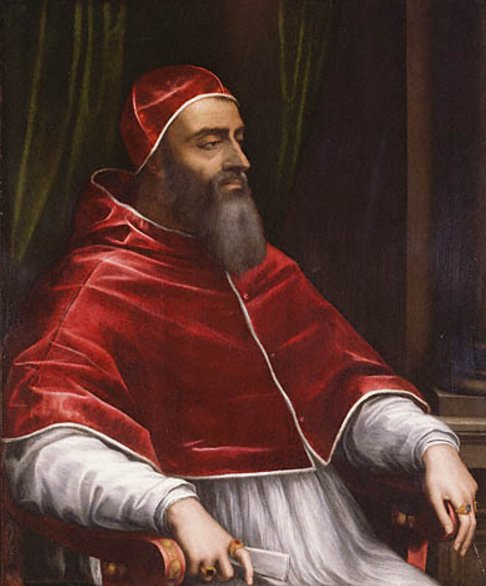
Henry VIII's Nobles Threatened Pope Clement VII Over Annulment
Secret letter from Vatican archives unveiled
By Nick Squires, Daily Telegraph
(Vancouver Sun) English nobles threatened "extreme remedies" against the Roman Catholic Church unless the Pope annulled Henry VIII's marriage to Catherine of Aragon, a letter from the Vatican Secret Archives discloses.
The nine-metre wide parchment, with 81 wax seals and red silk ribbons, made public for the first time this week, was sent on Henry's orders to Pope Clement VII in 1530. It was signed by members of the English Parliament, bishops, abbots and the archbishops of York and Canterbury.
They urged the Pope to annul the king's marriage to Catherine so that he could marry Anne Boleyn, one of her ladies-in-waiting, in the hope of producing a male heir. "If the Pope is unwilling, we are left to find a remedy elsewhere. Some remedies are extreme, but a sick man seeks relief in any way he can find," the lords wrote in a barely veiled threat.
The letter is one of the highlights of an exhibition of 100 documents chronicling more than 1,200 years of the Vatican's dealings with kings, conquerors and caliphates.
Henry had fallen in love with Boleyn in 1526 and was desperate for his first marriage to be annulled - a struggle that he referred to as his "great matter."
He married Boleyn in 1533 but Clement VII declared the union invalid and five years later the king was excommunicated. The confrontation led to a split from the Catholic Church and fuelled the English Reformation.
The letter was consigned to the Secret Archives, in a palazzo at the heart of the Vatican City State, but went missing in the late 19th century. It was rediscovered in 1926, hidden in a small chest beneath a chair.
Many of the archive's documents are written in ornate Latin script but other languages include Arabic, Persian and Chippewa - the tongue of a North American Indian tribe that wrote to the Vatican on birch bark in the 19th century.
They include the world's oldest document in Mongolian - an order made in 1279 by a khan granting safe conduct to papal ambassadors.
The exhibition in Rome marks the 400th anniversary of the Secret Archives in their present form - they were established in 1612 by Pope Paul V. They originally comprised just three rooms, but now line more than 55 miles of shelves.
Monsignor Sergio Pagano, the prefect of the Secret Archives, said that the aim of the exhibition was to "shed light on this ancient institution."
By Nick Squires, Daily Telegraph
(Vancouver Sun) English nobles threatened "extreme remedies" against the Roman Catholic Church unless the Pope annulled Henry VIII's marriage to Catherine of Aragon, a letter from the Vatican Secret Archives discloses.The nine-metre wide parchment, with 81 wax seals and red silk ribbons, made public for the first time this week, was sent on Henry's orders to Pope Clement VII in 1530. It was signed by members of the English Parliament, bishops, abbots and the archbishops of York and Canterbury.
They urged the Pope to annul the king's marriage to Catherine so that he could marry Anne Boleyn, one of her ladies-in-waiting, in the hope of producing a male heir. "If the Pope is unwilling, we are left to find a remedy elsewhere. Some remedies are extreme, but a sick man seeks relief in any way he can find," the lords wrote in a barely veiled threat.
The letter is one of the highlights of an exhibition of 100 documents chronicling more than 1,200 years of the Vatican's dealings with kings, conquerors and caliphates.
Henry had fallen in love with Boleyn in 1526 and was desperate for his first marriage to be annulled - a struggle that he referred to as his "great matter."
He married Boleyn in 1533 but Clement VII declared the union invalid and five years later the king was excommunicated. The confrontation led to a split from the Catholic Church and fuelled the English Reformation.
The letter was consigned to the Secret Archives, in a palazzo at the heart of the Vatican City State, but went missing in the late 19th century. It was rediscovered in 1926, hidden in a small chest beneath a chair.
Many of the archive's documents are written in ornate Latin script but other languages include Arabic, Persian and Chippewa - the tongue of a North American Indian tribe that wrote to the Vatican on birch bark in the 19th century.
They include the world's oldest document in Mongolian - an order made in 1279 by a khan granting safe conduct to papal ambassadors.
The exhibition in Rome marks the 400th anniversary of the Secret Archives in their present form - they were established in 1612 by Pope Paul V. They originally comprised just three rooms, but now line more than 55 miles of shelves.
Monsignor Sergio Pagano, the prefect of the Secret Archives, said that the aim of the exhibition was to "shed light on this ancient institution."
Labels:
Anne Boleyn,
annulment,
England,
Henry VIII,
Pope Clement VII
Thursday, March 24, 2011
Annulment Nation
By Jeff Ziegler @ The Catholic World Report
...In 1970, the bishops of the United States obtained permission from the Holy See to modify canonical procedures in the adjudication of marriage cases. One judge, and not three, could render a decision, and cases could be heard in the diocese of the person seeking the annulment; in addition, appeal of a declaration of nullity to another court became discretionary rather than obligatory. The latter provision lapsed with the promulgation of the new Code of Canon Law in 1983, which expanded the grounds of invalid consent: “they are incapable of contracting marriage…who are not capable of assuming the essential obligations of matrimony due to causes of a psychic nature” (canon 1095).
Partly for these reasons, the number of annulments granted annually in the United States soared from 338 in 1968, to 28,918 in 1974, to a peak of 63,933 in 1991. By 2004 the number had fallen to 46,330, and it fell even further, to 35,009, in 2007—a remarkable decline of 24 percent in three years.
Despite this decline, the United States, with 5.9 percent of the world’s Catholics, still accounts for 60 percent of the Church’s 58,322 declarations of nullity...
In their annual addresses to the Roman Rota, Popes John Paul II and Benedict XVI have offered blunt criticism of the large number of annulments granted worldwide, particularly on the grounds of defect of consent.
“For the canonist the principle must remain clear that only incapacity and not difficulty in giving consent and in realizing a true community of life and love invalidates a marriage,” said Pope John Paul in 1987. “Only the most severe forms of psychopathology impair substantially the freedom of the individual,” he said the following year, as he called upon defenders of the bond to prevent “tensions and difficulties, inevitably involved in the choice and achievement of the ideals of marriage, from being confused with the signs of a serious pathology.”
In 2009, Pope Benedict, quoting Pope John Paul, spoke of the “urgent need” of “preserving the ecclesial community from the scandal of seeing the value of Christian marriage being destroyed in practice by the exaggerated and almost automatic multiplication of declarations of nullity, in cases of the failure of marriage, on the pretext of some immaturity or psychic weakness on the part of the contracting parties.”
“We concur with those statements by both popes,” says Leary. “The current statistics on annulments mandated by US tribunals are truly a scandal, and I have appreciated the popes making these statements…Save Our Sacrament receives many, many requests for help from mostly women respondents. Many of these respondents are good, upstanding Catholics who have three or more grown children, and whose husbands are simply going through midlife crises and want an easy way to remarry in the Roman Catholic Church, which is, more often than not, granted.”
“Scandal is an attitude or behavior that leads others to do evil,” says MacFarlane, whose husband left her and pursued a civil divorce without her consent. “Tribunal judges give scandal to the general public, priests, and dissatisfied spouses.… Exaggerated multiplication of annulments is diocesan-sanctioned cooperation with the evil of no-fault divorce.”
“When tribunals require civil divorce, and then issue nearly automatic annulments, the public concludes the Church has no objection whatsoever to divorce,” MacFarlane adds. “Dissatisfied spouses are scandalized by the prevalent annulment mentality of local tribunals. Therefore, they choose divorce rather than persevering through difficult times.… Priests and deacons are scandalized if they are taught by their local tribunal staff that any spouse who feels his or her marriage has ‘failed’ has a right to an annulment on the basis of immaturity or psychic weakness. These priests will erroneously counsel a dissatisfied spouse to get divorced, which results in the mutilation of an intact family.”
“I do not believe that either Venerable John Paul II or His Holiness Pope Benedict XVI was pointing his critiques at the United States specifically,” Strickland says. “Instead, I believe that both pontiffs were addressing those disreputable canonists around the world who will proudly assert that they can find grounds to annul any marriage.”
Bishop Olmsted, on the other hand, believes that “it is very likely that both John Paul II and Pope Benedict XVI have in mind the United States when making these kinds of comments, particularly in light of the busy activity of American tribunals and also the influence of the American Catholic Church in the last few decades in the English-speaking world.… The popes have been vigilant in their duty to remind bishops and canonists that there is no such thing as an ‘automatic’ annulment. Moreover, the popes have recently reminded us of the immense harm that is done when seemingly all annulments are granted affirmative decisions...”
...In 1970, the bishops of the United States obtained permission from the Holy See to modify canonical procedures in the adjudication of marriage cases. One judge, and not three, could render a decision, and cases could be heard in the diocese of the person seeking the annulment; in addition, appeal of a declaration of nullity to another court became discretionary rather than obligatory. The latter provision lapsed with the promulgation of the new Code of Canon Law in 1983, which expanded the grounds of invalid consent: “they are incapable of contracting marriage…who are not capable of assuming the essential obligations of matrimony due to causes of a psychic nature” (canon 1095).
Partly for these reasons, the number of annulments granted annually in the United States soared from 338 in 1968, to 28,918 in 1974, to a peak of 63,933 in 1991. By 2004 the number had fallen to 46,330, and it fell even further, to 35,009, in 2007—a remarkable decline of 24 percent in three years.
US statistics
In their annual addresses to the Roman Rota, Popes John Paul II and Benedict XVI have offered blunt criticism of the large number of annulments granted worldwide, particularly on the grounds of defect of consent.
“For the canonist the principle must remain clear that only incapacity and not difficulty in giving consent and in realizing a true community of life and love invalidates a marriage,” said Pope John Paul in 1987. “Only the most severe forms of psychopathology impair substantially the freedom of the individual,” he said the following year, as he called upon defenders of the bond to prevent “tensions and difficulties, inevitably involved in the choice and achievement of the ideals of marriage, from being confused with the signs of a serious pathology.”
In 2009, Pope Benedict, quoting Pope John Paul, spoke of the “urgent need” of “preserving the ecclesial community from the scandal of seeing the value of Christian marriage being destroyed in practice by the exaggerated and almost automatic multiplication of declarations of nullity, in cases of the failure of marriage, on the pretext of some immaturity or psychic weakness on the part of the contracting parties.”
“We concur with those statements by both popes,” says Leary. “The current statistics on annulments mandated by US tribunals are truly a scandal, and I have appreciated the popes making these statements…Save Our Sacrament receives many, many requests for help from mostly women respondents. Many of these respondents are good, upstanding Catholics who have three or more grown children, and whose husbands are simply going through midlife crises and want an easy way to remarry in the Roman Catholic Church, which is, more often than not, granted.”
“Scandal is an attitude or behavior that leads others to do evil,” says MacFarlane, whose husband left her and pursued a civil divorce without her consent. “Tribunal judges give scandal to the general public, priests, and dissatisfied spouses.… Exaggerated multiplication of annulments is diocesan-sanctioned cooperation with the evil of no-fault divorce.”
“When tribunals require civil divorce, and then issue nearly automatic annulments, the public concludes the Church has no objection whatsoever to divorce,” MacFarlane adds. “Dissatisfied spouses are scandalized by the prevalent annulment mentality of local tribunals. Therefore, they choose divorce rather than persevering through difficult times.… Priests and deacons are scandalized if they are taught by their local tribunal staff that any spouse who feels his or her marriage has ‘failed’ has a right to an annulment on the basis of immaturity or psychic weakness. These priests will erroneously counsel a dissatisfied spouse to get divorced, which results in the mutilation of an intact family.”
“I do not believe that either Venerable John Paul II or His Holiness Pope Benedict XVI was pointing his critiques at the United States specifically,” Strickland says. “Instead, I believe that both pontiffs were addressing those disreputable canonists around the world who will proudly assert that they can find grounds to annul any marriage.”
Bishop Olmsted, on the other hand, believes that “it is very likely that both John Paul II and Pope Benedict XVI have in mind the United States when making these kinds of comments, particularly in light of the busy activity of American tribunals and also the influence of the American Catholic Church in the last few decades in the English-speaking world.… The popes have been vigilant in their duty to remind bishops and canonists that there is no such thing as an ‘automatic’ annulment. Moreover, the popes have recently reminded us of the immense harm that is done when seemingly all annulments are granted affirmative decisions...”
Subscribe to:
Posts (Atom)