Traditional Mass Returns to Historic Church of St. Agnes
Michael J. Matt |
| Editor, The Remnant |
Father John Ubel Offers the Traditional Mass
at St. Agnes for the first time in 40 Years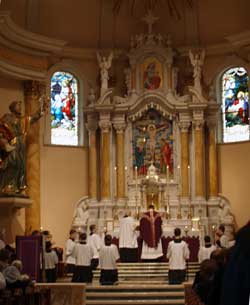
SAINT PAUL—The First Sunday in Advent (November 30, 2008) was an historic day here in the Archdiocese of St. Paul and Minneapolis. After forty years, the traditional Latin Mass returned to the altar of the grand and historic Church of St. Agnes here in Minnesota’s capital city.
After the passing of longtime pastor of St. Agnes, Monsignor Richard Schuler on April 20, 2007, the future of one of Minnesota’s most tradition-minded diocesan churches became uncertain. An inner city parish, St. Agnes now draws the majority of its parishioners from the suburbs and beyond. For decades, Catholic families have traveled from all over the state to find orthodox sermons, Latin Masses (Novus Ordo), Gregorian chant, and the traditional parish life (complete with frequent confession, Tuesday night devotions, Sunday vespers, etc.) for which St. Agnes is famous.
Over the years, the late Monsignor Schuler did significantly more than most to preserve the traditional dignity and sacrality of the Roman Rite here in Minnesota. Though he eventually came to offer the New Mass, his Church of St. Agnes was the only one in Minnesota to preserve at least one Latin Mass every Sunday. The Holy Week services at St. Agnes, for example, were (and are still) internationally recognized events, since they remained comparatively unchanged and retained much of the spirit and character of the old days.
After the Council, Monsignor Schuler eventually began offering the New Mass but in the manner he believed had been intended by the Council Fathers. There were no altar girls at St. Agnes...ever! There were (and are) no women in the sanctuary, no ‘sign of peace’, no Communion in the hand, no guitars, pianos, balloons or clowns. For this reason, thousands of Catholics (traditionalists and conservatives alike) came to appreciate Monsignor Schuler's stand against the liturgical experimentation that eventually led to wide scale loss of Faith, church closings, and empty seminaries. Not surprisingly, St. Agnes inspired more vocations to the priesthood in recent decades than any other diocesan parish in Minnesota.
Father John L. Ubel, the current pastor of St. Agnes, is doing his part to carry on the work of liturgical preservation at St. Agnes.
Church of St. Agnes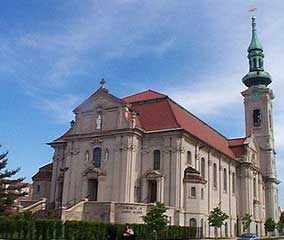
On November 30, 2008, St. Agnes took an historic step in the all important campaign to reestablish Catholic identity throughout this archdiocese and around the world. Upon request from a stable group of his parishioners, and thus in accordance with the wishes of Pope Benedict XVI, Father Ubel has restored the Traditional Mass to St. Agnes. After months of extensive training of St. Agnes’ famous altar server corps, Father Ubel used the First Sunday in Advent to inaugurate St. Agnes’ latest effort to preserve the traditional heritage of the Catholic Church here in Minnesota. The Mass was as beautiful as it was historic.
For this writer, the first Traditional Mass at St. Agnes was special on a number of fronts. My grandfather served on the building and planning committee of St. Agnes a hundred years ago. My father was baptized there and attended St. Agnes grade school. I attended St. Agnes grade school, as well, and received my first Holy Communion from Monsignor Schuler. This is a great day! The return of the Traditional Mass to this historic landmark means a great deal to us and to countless Catholic families here in Minnesota. May it bring an abundance of grace and even more vocations to the archdiocese! And may it come to pass one day soon that all the Masses in this beautiful, traditional building will be celebrated according to the liturgical tradition of the Roman Rite--the most beautiful thing this side of heaven.
To thank Father Ubel for his decision to generously respond to the Holy Father’s wishes where the Traditional Mass is concerned, send him an email at: rectory@stagnes.net


