Wednesday, April 13, 2011

Some Gaudium and No Spes - George Cardinal Pell

h/t to Fr. Cory Sticha , from The Swag:


By George Cardinal Pell

Father Eric Hodgens’ piece on the Gaudium et Spes priests gives us plenty of food for thought. It is well written and provocative, as you would expect of a priest who described his own cohort as possessing “the biggest proportion of intelligent, educated and competent leaders”. But it is unbalanced, misguided, selective and sometimes inaccurate.

Recently I have been concerned by the theological extremism of some Swag contributions, and am grateful for the opportunity to state the case for the orthodox mainstream. I am not ordering anyone to “withdraw to the fortress and sing the old song”, but my best lines are still from the New Testament with its ancient truths and melodies.

Eric sees himself now as “a presbyter called and ordained by the Church – the People of God” rather than as “a priest called and consecrated by God”. It is difficult to know exactly what this means, but it might point us to a number of fundamental issues.

More cards have been laid on the table than in Father Hodgens’ earlier writings. While it would be interesting to know whether he still has any jokers up his sleeve, it is more important to recognize that many of the cards cannot be identified accurately. We do not know, for example, his answers to the nine questions he lists. We do not know the limits to his hostility to some ancient devotions such as adoration of the Blessed Sacrament and veneration of Our Lady. We do not know whether his opposition to the papacy and episcopate touches these institutions themselves or simply the style of recent incumbents. So too with priesthood and traditional Christian teaching on marriage, divorce and sexuality.

We cannot be sure whether Eric’s theological position is typical of a liberal or a radical Protestantism. But as an exercise in loyal dissent it moves beyond the limits of orthodox Catholicism.

Let me attempt to state the issue in the most basic terms.

We find no evidence in Eric’s article that the Catholic Church is the recipient of divine revelation, “God’s message not some human thinking” (1 Thess 2.13); nor that the Catholic Church was founded by the Son of God “the Word who was with God . . . the Word who was God” (Jn 1.1), Jesus the Christ, the son of Mary with a divine as well as a human nature. If Christ is divine, New Testament teachings have a unique authority.
Eric writes with the genuine anguish of most of us older Catholics who grew up at an unusually high tide of faith and practice and lived through the radical decline which followed the social revolution of the 1960s in the First World. But some of the damage was self-inflicted.

One major point of difference is that in my view Eric’s prescriptions are a significant cause of our problems. His solutions were put into practice after the Council, to some degree in Australia, but especially in Belgium, Holland and French-speaking Canada. They emptied the Churches there.

Pope Paul VI appointed no bishops who were opposed to the ethos of Vatican II, and for various reasons the good bishops appointed in Holland were overwhelmed, tossed aside by the liberal gales. This brings me to another contemporary fact, which I never anticipated as a young seminarian in Rome during the Council or as a young priest. The now aged liberal wing of the Church, which dominated discussion after the Council and often the bishops and the emerging Church bureaucracies, has no following among young practising Catholics, priests or religious. This is not only true in Australia, but everywhere in the Western world. In these different countries dominated by a secular media and intelligentsia, liberalism has no young Catholic progeny.

On reflection we should not find this surprising, as growth is tied to Gospel fidelity, to faith, love and sacrifice. After Vatican II many of us overestimated our cultural strengths and underestimated the virulence of anti-Christian forces. You need strong Christian foundations to participate productively in “open dialogue”. Without these roots the end of the road is agnosticism.

I should conclude with a few words in defence of the four popes who were mauled, especially Paul, John Paul II and Benedict. Incidentally it is a matter of historical record that at the 1971 Synod of Bishops, Pope Paul offered to the bishops the option of ordaining married men to the priesthood and the bishops declined to accept this.

All three popes were prolific writers, while John Paul II and Benedict were professional academics with a record of scholarly and popular publications rarely if ever equalled by any Australian priest. I believe Pope Benedict is now our most distinguished living theologian.

The charges against the Holy Father do not amount to too much e.g. instituting a special year to honour priests (which was well received by priests and people), continuing with a new translation of the Roman Missal, and encouraging the Tridentine Mass to be celebrated. He did not receive back the bishops of the Society of St. Pius X, but only lifted their excommunication. They are still in schism.

Pope John Paul provokes a special hostility, allegedly an abuser of power, out of touch in scripture, limited in theology, a bad listener. It is a surprise that anyone came to his funeral. In particular he is denounced for emasculating the leadership of the Church, who are clerical and compliant, “low on creativity, leadership, education and even intelligence”.

In an astonishing example of provincial arrogance, Hodgens claims that “the more intelligent and better educated” bishops (only “some” to be sure) are corrupt and have sold their soul for advancement. Me thinks he protests too much.

Pope John Paul and Pope Benedict were not hostile to intelligence, education or competence, but they have striven regularly to appoint bishops who will defend the apostolic tradition and strive to implement policies which will strengthen the Catholic position, not white-ant it.

Hodgens’ misunderstanding of the magisterium is typical of his position. The magisterium refers primarily to the teaching authority of the pope together with the bishops (Vatican II’s collegiality). The baptised faithful share in this and so do the theologians with priests and religious.

Certainly the teaching authority of the bishops was recognized early by St. Ignatius of Antioch (+107 A.D.) and St Irenaeus, Bishop of Lyons (+200 A.D.) with his apostolic succession lists of bishops to defend the apostolic tradition. The ancient teaching chair of the bishop exemplifies this, predating by many centuries any groups of professional theologians in the medieval universities. In Pope John Paul’s 27 years of pontificate 24 individuals were disciplined for their theological views, including eight who were silenced or removed, in the worldwide Catholic community of more than one billion believers. Father Hodgens himself escaped any reign of terror and so did many hundreds of dissidents.

Eric is a bit too generous to his generation, to which I belong. Many were formidable, but we coincided with a period of decline probably unparalleled since the Reformation.

“Reflections on an ordination golden anniversary” is thought provoking. I am glad Father Hodgens has enjoyed his years of priesthood. Unfortunately much of the analysis is mistaken since his solutions, to the extent we can identify them, are less than Catholic and would make a difficult situation worse.

Civil War: The Catholic Story

Scholar reflects on Catholic contributions to the War Between the States

(Fathers For Good) April 12th is the 150th anniversary of the beginning of the U.S. Civil War. The firing on Fort Sumter, S.C., that day led to one of the bloodiest conflicts in history and a war that pitted brother against brother. Yet after five years, the union was preserved and slavery was abolished.

Civil WarTo draw some insights on the war from a Catholic perspective, we reached out to John Barnes, recently elected president of the Houston Civil War Roundtable, and author of Ulysses S. Grant on Leadership: Executive Lessons from the Front Lines (Crown, 2001). Barnes and his wife, Mary, are members of the Knights of Malta and are the parents of Mary Elizabeth, 10, and John Paul, 5. Barnes spoke recently with John Burger.
Fathers for Good: Obviously, there were soldiers in the Civil War who came from Catholic families. Is there any new scholarship in this area?

Barnes: There has been scholarship in this area. Of course, Catholics were a rising force in the United States in the 1860s, mostly propelled by Irish immigration, but also a significant number of Germans. German Catholics emigrated to the United States around the same time, after the 1848 revolutions. Many of them were political refugees. So Catholics were a rising presence in the United States, viewed of course with great suspicion by the overwhelmingly Protestant majority in the country at the time.

But there was significant Catholic involvement, not only by soldiers — of course, there were many Catholic soldiers in the war, mostly on the northern side; there were some on the southern side, but there were relatively few Catholics in the South at that time. And there were a number of Catholic clerics who were very prominent on both sides in the war.

FFG: What side did the bishops take? How did the Vatican figure in?

Barnes: The archbishop of New York, “Dagger” John Hughes, who built St. Patrick’s Cathedral, was a very important figure in the northern war effort. He supported the Union. Abraham Lincoln consulted him a number of times during the war. And he was instrumental in calming New York after the draft riots.

On the southern side, there was the bishop of Charleston, S.C., Patrick Neeson Lynch. He was born in Ireland and emigrated to the United States as a young man and was ordained a priest in Charleston and ultimately became the bishop. He was a quite unapologetic Confederate, a strong supporter of the confederacy. In fact, the day Fort Sumter fell, he presided over a high Mass of thanksgiving in the cathedral. He, in a kind of mirror image of the way Lincoln treated Hughes, was quite influential in his own way in the Confederacy.

Jefferson Davis consulted him and actually sent him on a ship, through the blockade, to Rome to meet with Pope Pius IX and try to persuade him to diplomatically recognize the Confederacy. Now Pius IX was polite; he heard Lynch out. And he did write a letter that was complimentary of Lynch and of Davis. And Lynch brought this back with him, and Davis tried to use this letter as a way of claiming that the Vatican had recognized the Confederacy. Of course the Vatican had done no such thing. The pope was just being polite.
So both sides were vying for the support of the Holy See. It wouldn’t have been as significant as, for instance, Britain or France or one of the major European military powers. But the pope’s recognition was a sought-after commodity during the war. But Pius IX had bigger fish to fry at that time, with the Italian unification movement going on … He probably thought one war at a time is enough.

Then there was Father Abram Joseph Ryan. He looks almost like a southern version of John Brown in some ways. He didn’t have a beard, but he had this wild mane of hair. He was actually born in Maryland. His parents were Irish immigrants. And he was a very active component of the Confederacy. He wrote a number of poems, mostly after the war, which lauded the Confederate cause and were quite widely published. He was called the poet priest of the confederacy or the poet laureate of the Confederacy.

So yes, there was a significant Catholic presence, and of course on the Union side there was the chaplain of the Irish Brigade, Father Corby. I think he was twice president of Notre Dame after the war. He gave a famous benediction to the Irish Brigade before they went into action at Gettysburg. The statue of him on the battlefield is of him with his hand raised in benediction on the spot where he is said to have given the benediction.

FFG: You’ve written about leadership lessons. Are there lessons we can draw from that can help us find our way through today in a very polarized society?

Barnes: I know some people might say that what we’re experiencing is akin to a civil war. I wouldn’t go that far. There are always issues that divide societies, especially democratic societies. It’s kind of an easy analogy to make to say that it’s kind of a cultural civil war. I’m not quite sure it’s that bad, with people actually seriously thinking about shooting at each other or anything like that. It doesn’t rise to that level.

But Ulysses Grant actually said in the last chapter of his memoirs … the definition of a civil war is that one side or the other had to yield principles that each held dearer than life itself. So it was settled by clash of arms, and one side was forced to yield.

Was there reconciliation after the war? Yes, there was. But the thing I’ve always pointed out is that, yes, there was reconciliation between northerners and white southerners. The people who were forgotten in all this, of course, were the freed slaves. They had to pay the price of all this good feeling between the north and the south after the war, and of course that came to a head 50 years ago with the beginning of the civil rights movement.

So I wouldn’t liken what we’re going through today to a civil war. The Civil War left a lot of bitterness in the country. White American southerners are the only English-speaking people in history to experience defeat in a total war. English-speaking people don’t lose wars. If you travel through the South, you still encounter that bitterness sometimes. Churchill said it takes a country 200 years to get over a civil war. By this time we have another 50 years to go.

John Burger is news editor of the National Catholic Register.

Why Can't There be More Like Him?


Politics and the Devil

by Charles J. Chaput

April 11, 2011

http://www.dioceseoftulsa.org/img.aspx?image=images/photos/Archbishop_Charles_J_Chaput_St_John_Vianney_Seminary_CNA_US_Catholic_News_3_3_11.jpeg&size=243A healthy democracy depends on people of conviction working hard to advance their ideas in the public square—respectfully and peacefully, but vigorously and without apologies. We cannot simultaneously serve the poor and accept the legal killing of unborn children.

I have chosen to address the theme of “politics and the devil,” not because I plan to suggest that anyone in our national political life has made a pact with Lucifer—although, given the current environment, you never know; it’s not the sort of thing you’d put in a press release—but because it is the title of an essay by the late University of Chicago philosopher Leszek Kolakowski. Kolakowski was a former Marxist, a very gifted scholar, and a skeptic about many things—but not about the reality of evil or the nature of the devil. One of the disturbing things for Kolakowski’s secular colleagues was that he talked about Satan not as a metaphor or legend or the figment of neurotic imaginations, but as a living actor in history. That deserves some discussion, but let’s start at the beginning.

Politics often works like a virus. The simpler a political slogan is, the faster people absorb it, the faster they transmit it, and the less likely they are to really think about it—which means they don’t develop an immunity to its content.

For example, a theme we’ve heard from many of our cultural leaders over the past few years—at least when they’re not battling over the economy or health care—goes like this. America needs to return science to its “rightful place” in public life. And of course, who can argue with that? Science does an enormous amount of good. Obviously, science should have its rightful place alongside every other important human endeavor. But one thing that this theme often means, in practice, is that we need to spend a lot more money on research. Especially the controversial kind. And while we’re at it, we should stop asking so many annoying ethical questions, so that science can get on with its vital work.

I want to focus on those words “rightful place,” an interesting phrase. A “rightful” place suggests that there is also a wrongful place, a bad alternative. And words like right and wrong, good and bad, are loaded with moral judgment. A “good” law embodies what somebody thinks is right. A “bad” public policy embodies what somebody thinks is wrong, or at least inadequate.

All law in some sense teaches and forms us, while also regulating our behavior. The same applies to our public policies, including the ones that govern our scientific research. There is no such thing as morally neutral legislation or morally neutral public policy. Every law is the public expression of what somebody thinks we “ought” to do. The question that matters is this: Which moral convictions of which somebodies are going to shape our country’s political and cultural future—including the way we do our science?

The answer is pretty obvious: if you and I as citizens don’t do the shaping, then somebody else will. That is the nature of a democracy. A healthy democracy depends on people of conviction working hard to advance their ideas in the public square—respectfully and peacefully, but vigorously and without apologies. Politics always involves the exercise of power in the pursuit of somebody’s idea of the common good. And politics always and naturally involves the imposition of somebody’s values on the public at large. So if a citizen fails to bring his moral beliefs into our country’s political conversation, if he fails to work for them publicly and energetically, then the only thing he ensures is the defeat of his own beliefs.

We also need to remember that most people—not everyone, of course, but most of us—root our moral convictions in our religious beliefs. What we believe about God shapes what we think about the nature of men and women, the structure of good human relationships, and our idea of a just society. This has very practical consequences, including the political kind. We act on what we really believe. If we don’t act on our beliefs, then we don’t really believe them.

As a result, the idea that the “separation of Church and state” should force us to exclude our religious beliefs from guiding our political behavior makes no sense at all, even superficially. If we don’t remain true in our public actions to what we claim to believe in our personal lives, then we only deceive ourselves. Because God certainly isn’t fooled. He sees who and what we are. God sees that our duplicity is really a kind of cowardice, and our lack of courage does a lot more damage than simply wounding our own integrity. It also saps the courage of other good people who really do try to publicly witness what they believe. And that compounds a sin of dishonesty with a sin of injustice.

Dwelling on the issue of science for just another moment, let me present some thoughts from two very different sources. Here’s the first source:
Science, by itself, cannot establish the ends to which it is put. Science can discover vaccines and cures for diseases, but it can also create infectious agents; it can uncover the physics of semiconductors, but also the physics of the hydrogen bomb. Science [as] science is indifferent to whether data are gathered under rules that scrupulously protect the interest of human research subjects . . . [or by] bending the rules or ignoring them altogether. A number of the Nazi doctors who injected concentration camp victims with infectious agents or tortured prisoners by freezing or burning them to death were in fact legitimate scientists who gathered real data that could potentially be put to good use.
The same source goes on to worry that, today, many of the bioethicists who claim to counsel and guide the moral course of American science “have become nothing more than sophisticated (and sophistic) justifiers of whatever it is the scientific community wants. . . . In any discussion of cloning, stem-cell research, gene-line engineering and the like, it is usually the professional bioethicist who can be relied on to take the most permissive position of anyone in the room.”
Now, from my second source:
What is our contemporary idiocy? What is the enemy within the [human] city? If I had to give it a name, I think I would call it ‘technological secularism.’ The idiot today is the technological secularist who knows everything . . . about the organization of all the instruments and techniques of power that are available in the contemporary world—and who, at the same time, understands nothing about the nature of man or about the nature of true civilization.
The words from my first source appeared in 2002 from the author and scholar Francis Fukuyama. If you know his work, you know that Fukuyama clearly supports the benefits of science and technology. He is not—to my knowledge—a religious believer, and based on his writings, he seems to have little use for Christianity. But he’s also not a fool. He sees exactly where our advances in biotechnology could lead us if we don’t find an ethical way of guiding them.

The words from my second source were written exactly 50 years ago, in 1961. They come from John Courtney Murray, the great Jesuit priest and Christian scholar. Murray was a thoughtful man, and he chose his language very carefully. He used the word “idiot” in the original Greek sense of the term, which is quite different from its meaning in modern slang.

For the Greeks, the “idiot” was not a mentally deficient man. Rather, he was a man who did not possess a proper public philosophy, or as Murray says, “a man who is not master of the knowledge and skills that underlie the life of a civilized city. The idiot, to the Greek, was just one stage removed from the barbarian. He is the man who is ignorant of the meaning of the word ‘civility’.”

As I said, these two sources are very different. One was a believer. The other is not. Father Murray died more than four decades ago, long before today’s stem-cell and cloning debates. But both men would agree that science and technology are not ends in themselves. They’re enormously valuable tools. But they’re tools that can undermine human dignity—and even destroy what it means to be “human”—just as easily as they can serve human progress. Everything depends on who uses them, and how. Fools with tools are still fools; and the more powerful the tools, the more dangerous the fools. Or to put it another way, neither science nor technology requires a moral conscience to produce results. The evidence for that fact is the record of the last century.

Now I’ve talked about these things so far for a simple reason. The moral and political struggle we face today in defending human dignity is becoming more complex. I believe that abortion is the foundational human rights issue of our lifetime. We can’t simultaneously serve the poor and accept the legal killing of unborn children. We can’t build a just society, and at the same time, legally sanctify the destruction of generations of unborn human life. The rights of the poor and the rights of the unborn child flow from exactly the same human dignity guaranteed by the God who created us.

Of course, working to end abortion doesn’t absolve us from our obligations to the poor. It doesn’t excuse us from our duties to the disabled, the elderly and immigrants. In fact, it demands from us a much stronger commitment to materially support women who find themselves in a difficult pregnancy.

All of these obligations are vital. God will hold us accountable if we ignore them. But none of these other duties can obscure the fact that no human rights are secure if the right to life is not. Unfortunately, abortion is no longer the only major bioethical threat to that right in our culture. In fact, the right to life has never, at any time in the past, faced the range of challenges it faces right now, and will face in the coming decades.

Physician-assisted suicide, cloning, brain-computer interface (BCI) research, genetic screening of unwanted fetuses, genetic engineering of preferred physical and intellectual traits, cross-species experimentation, and developments in neuroscience—these things already raise serious questions about the definition of “human nature” and the protection of human dignity in the years ahead.

In Europe and the United States, our knowledge classes like to tell us that we live in an age of declining religious belief. But that isn’t quite true. A culture that rejects God always invents another, lesser godling to take His place. As a result, in the words of the great Jewish bioethicist Leon Kass, we live in an age of “salvific science.” In the place of the God who became man, “we have man become as god.” And in place “of a God who—it is said—sent his son who would, through his own suffering, take away the sins of the world, we have a scientific savior who would take away the sin of suffering altogether.”

The irony is this: the search for human perfection implied in modern science—or at least, the kind of science accountable to no moral authority outside of itself—leads all too easily to a hatred of imperfection in the real human persons who embody it with their disabilities. The simplest way to deal with imperfections is to eliminate the imperfect. In our daily lives, Kass warns, “the eugenic mentality is taking root, and we are subtly learning with the help of science to believe that there really are certain lives unworthy of being born. . . . [T]he most pernicious result of our technological progress . . . [is] the erosion, perhaps the final erosion, of the idea of man as noble, dignified, precious or godlike, and its replacement with a view of man [as] mere raw material for manipulation and homogenization.”

Dr. Kass made those remarks at the U.S. Holocaust Memorial Museum, itself a monument to the murderous and genuinely satanic misuse of science and politics in the last century. But he wasn’t speaking about genocide in the past, in some faraway, alien dictatorship. He was talking about the temptations we face today in our own democratic societies, the temptations to create “a more perfect human”—and, in the process, to pervert science and attack our own humanity.

This brings us back to politics and the devil, and also, to the very important question: How does one live as a Catholic in the world as it now is?

The great French scholar Jacques Maritain once wrote that “the devil hangs like a vampire on the side of history. History moves forward nonetheless, and [it] moves forward with the vampire.” The devil is condemned to work within time. He works in the present to capture our hearts and steal our future. But he also attacks our memory, the narrative of our own identity. And he does it for a very good reason. The way we remember history conditions how we think and choose today, in our daily lives. That’s why one of the first things we need to do, if we want to “live as Catholics,” is to remember what being “Catholic” really means—and we need to learn that lesson in our identity not from the world; not from the tepid and self-satisfied; and not from the enemies of the Church, even when they claim to be Catholic; but from the mind and memory of the Church herself, who speaks through her pastors.

Jacques Maritain and Leszek Kolakowski came from very different backgrounds. Maritain was deeply Catholic. Kolakowski was in no sense an orthodox religious thinker. But they would have agreed that good and evil, God and the devil, are very real—and that history is the stage where that struggle is played out, both in our personal choices and in our public actions; where human souls choose their sides and create their futures. In Kolakowski’s own words, “we are not passive observers or victims of this contest, but participants as well, and therefore our destiny is decided on the field on which we run.”

Politics is the exercise of power; and power—as Jesus himself saw when Satan tempted him in the desert—can very easily pervert itself by doing evil in the name of pursuing good ends. But this fact is never an excuse for cowardice or paralysis. Christ never absolved us from defending the weak, or resisting evil in the world, or from solidarity with people who suffer. Our fidelity as Christians is finally to God, but it implies a faithfulness to the needs of God’s creation. That means we’re involved—intimately—in the life of the world, and that we need to act on what we believe: always with humility, always with charity, and always with prudence—but also always with courage. We need to fight for what we believe. As Kolakowski wrote, “Our destiny is decided on the field on which we run.”

I have two final thoughts. First, nothing we do to defend the human person, no matter how small, is ever unfruitful or forgotten. Our actions touch other lives and move other hearts in ways we can never fully understand in this world.

Don’t ever underestimate the beauty and power of the witness you give in your pro-life work. One thing we learn from Scripture is that God doesn’t have much use for the vain or the prideful. But He loves the anawim—the ordinary, simple, everyday people who keep God’s Word, who stay faithful to his commandments, and who sustain the life of the world by leavening it with their own goodness. That’s the work we are called to do. Don’t ever forget it. If you speak up for the unborn child in this life, someone will speak up for you in the next, when we meet God face to face.

Second, a friend once shared with me the unofficial motto of the Texas Rangers: “No man in the wrong can stand up against a fella that’s in the right, and keeps a-comin.” The message is true. Virtue does matter. Courage and humility, justice and perseverance, do have power. Good does win, and the sanctity of human life will endure. It will endure because if “God so loved the world that He gave his only Son” (Jn 3:16), then the odds look pretty good, and it’s worth fighting for what is right.

Charles J. Chaput, O.F.M. Cap., is the Roman Catholic Archbishop of Denver and the author of Render Unto Caesar: Serving the Nation by Living our Catholic Beliefs in Political Life. This essay is adapted from the keynote address Archbishop Chaput delivered as part of the University of Notre Dame student-organized Right to Life lecture series.

Tuesday, April 12, 2011

Painting the chapel and Passion Sunday

From the SONS OF THE MOST HOLY REDEEMER:

Over the last week we have taken the opportunity of painting Our Lady's Chapel on Stronsay in preparation for Easter. We decided to change it from the all-white it had been and try and give it some character.

Brothers painting the ceiling.


Br. Nicodemus Mary, F.SS.R. gives a second coat.


The first stars are sprayed. They are the eight-pointed star from the veil of Our Mother of Perpetual Succour.

Marking the positions of the stars.


As the job approaches, the sanctuary can begin to be cleared.

The last star...

...very satisfying!

Mass of Passion Sunday on Stronsay.
https://blogger.googleusercontent.com/img/b/R29vZ2xl/AVvXsEiKtYzSQsxmtQ5IVxilBlGS6EMD5RWgiedOv9a6ZHR7YhiOzeUwdpJLIAfFDpW8qBGF_w_r3D-vEl6tWm_Z9sfh8xIPsdedtq3lisoGtFx3gdIEQzPpqyXEsRdZTLpldqdt4-JAib1Cv0U/s1600/13.jpg
O, Most Precious Blood of Jesus, Be our salvation!

Monkeys riding dogs herding goats at a baseball game

Chicago school bans some lunches brought from home

To encourage healthful eating, Chicago school doesn't allow kids to bring lunches or certain snacks from home — and some parents, and many students, aren't fans of the policy

A Little Village Academy student cringes at an enchilada dish served at his school. Many students throw away their entrees uneaten and say they would rather bring food from home. The school, though, does not allow students to bring in their own lunches, unless they have a medical condition or a food allergy. (Monica Eng, Chicago Tribune / February 17, 2011)

(Chicago Tribune)

...At his public school, Little Village Academy on Chicago's West Side, students are not allowed to pack lunches from home. Unless they have a medical excuse, they must eat the food served in the cafeteria.

Principal Elsa Carmona said her intention is to protect students from their own unhealthful food choices.

"Nutrition wise, it is better for the children to eat at the school," Carmona said. "It's about the nutrition and the excellent quality food that they are able to serve (in the lunchroom). It's milk versus a Coke. But with allergies and any medical issue, of course, we would make an exception..."

"This is such a fundamental infringement on parental responsibility," said J. Justin Wilson, a senior researcher at the Washington-based Center for Consumer Freedom, which is partially funded by the food industry.

"Would the school balk if the parent wanted to prepare a healthier meal?" Wilson said. "This is the perfect illustration of how the government's one-size-fits-all mandate on nutrition fails time and time again. Some parents may want to pack a gluten-free meal for a child, and others may have no problem with a child enjoying soda.."

Michael Voris / RealCatholicTV Response


Monday, April 11, 2011

A Tale Of Two Musicians...

 http://photos1.blogger.com/blogger2/1835/3420/1600/Mac%20mantilla%20small.jpg

From Mulier Fortis:

"Well, ok... one musician and one hymn-composer. I'm being generous with the term 'hymn.'
Joseph Shaw has an excellent rebuttal of the rather mean-spirited (and rather skewed) comments from Paul Inwood on how there are dreadful priests who should be taken to task by their bishops when they do things to the liturgy which the people don't like.

The problem lies in one's idea of what liturgy actually is, of course.

If one believes liturgy to be people coming together to have a good time and a bit of a sing-along to praise God, then yes, the views of the people would matter. But, if (as happens to be the case) the liturgy is the official worship of God by the Church, then the personal likes and dislikes of the people don't actually come into play.

The Ordinary Form and the Extraordinary Form are two valid forms of the one Roman Rite. Both forms should be available for the people of God. Naturally, in the average parish, this means that one Mass is likely to have to be changed: it's up to the Parish Priest to decide which one that should be..."

Taliban Catholic blognic in Rome

From His Hermeneuticalness, Father Tim Finigan:

[FatherZ-Hermeneuticalness-Longenecker-Vincenzo-Sancte-Pater.jpg]"Today's invitation from Hilary White: Hey "Taliban Catholic" Bloggers!! Come to the *Other* Rome Catholic Blognic.

Well someone had to do it - and Hilary is just the girl! Michael Voris will be keynote speaker which sets the tone more or less unambiguously. There will be pizza and beer; and if you absent-mindedly leave your computer and turn up in pyjamas that will probably not be noticed too much. It will be happening on 3 May from 1-5 pm at a location yet to be determined since Hilary only had the idea on Friday.

I'm on the invite list, quite high up. Drat! My ecclesiastical career prospects were looking so hopeful and all. Well, since my cover is blown, I will freely admit that I was in on the conspiracy at an early stage (the beer & pizza bit was mine.) Unfortunately, I have already booked to go to Rome the week after and I can't just swan off from the parish at the drop of a hat. However, I think I will be allowed to participate in some way by Skype.

You can sign up on Facebook at the group for The *Other* Rome Catholic Blognic. If you have got fed up with Facebook and napalmed your profile, you can just put a comment on Hilary's blog.

By the way, this is not a spoof. It is actually going to happen. There will be video. If you are in Rome on 3 May and you are a Catholic blogger you really don't want to miss it. (Unless you are hoping to be a Monsignor, or get a job at Eccleston Square etc.) "


Radio Replies Second Volume: Principle of Private Interpretation

466. Have not Catholics to read even their own Douay Version subject to the direction of their Church?

They read the Bible with the conviction that any sense which would be opposed to the express teaching of the Catholic Church would undoubtedly be an erroneous interpretation. And they know that their Church alone is the only ultimate and infallible interpreter of its pages. Individual readers are ever liable to be mistaken; but the Catholic Church cannot fall into error in any express definitions concerning the contents of Sacred Scripture. Our conviction is that God confided the inspired writings to the guardianship of a living and infallible Church. The written pages cannot explain themselves. The living voice of an authentic interpreter is necessary. And God has provided that in the Catholic Church.

467. Surely any person with the capacity to read and understand the law of our country would be able to read and understand the Bible.

How many men have the capacity to read and understand the law of our country? An ordinary man might manage some of the easier and simpler laws; but highly trained lawyers could wrangle for weeks over individual laws, and even then differ as to their right interpretation. Yet even though the average man could fully understand human legislation, the Bible is God's revelation of a supernatural order of truth far deeper than the product of human thinking; and conflicting conclusions are proof that men have not managed to understand it.

468. Can it be interpreted safely only by Catholic priests?

Not always by them. Priests have made mistakes again and again in the interpretation of Scripture. In many cases the only really safe guide is the authentic ruling of the Catholic Church, to which priests and laity alike must submit. The ordinary priests do not constitute the teaching authority of the Church. The Bishops collectively and in union with the Pope constitute the authoritative Catholic teaching body. And their guidance is often needed, even in what would seem to be most obvious. For example, the few words, "This is my body," seem clear enough. Yet men have proposed a dozen conflicting interpretations of those words!

469. If God is the Author of Scripture, was He incapable of making it so clear that no one could doubt its meaning?

To that I must say that even God could not make written words so clear that no one could doubt their meaning. But the fault is not on God's side. It is due to the limitations of men. I have studied Aristotelian philosophy for years, and have taught that subject. Whose fault would it be if I could not write a treatise on the metaphysics of Aristotle totally devoid of obscurity for a class of children whose ages ranged from eight to ten years old? The fault would lie in the lack of capacity in the children. And the distance between the supernatural mysteries of revelation and the highest natural wisdom is infinitely greater than between the metaphysics of Aristotle and the mind of an untrained child.

470. Did God designedly make the Bible so obscure that people would be forced to seek guidance of the Church to understand it?

No. The establishing of a teaching Church was not a consequence of the obscurity of Scripture, as if God had really intended the Bible to be the guide of men, but found that it would not work, and then decided to establish the Church. Scripture was never intended to be the final guide of men. God primarily intended to have a body of men appointed to teach in His name. Thus, in the Old Law, He says, "The lips of the priest shall keep knowledge, and they shall seek the law at his mouth." As long as the Old Law obliged, Christ referred the people to that authority. In Mt 23:2, He says, "The Scribes and Pharisees have sitten on the chair of Moses. All things whatsoever they shall say to you, observe and do." In the New Law He substituted the Apostolic body and their successors as teachers in His name. Some years after the Catholic Church had commenced her work of teaching mankind, a secondary record of some of the events of Christ's life, and of some of His teachings and of those of the Apostles was made. That secondary record is contained in the New Testament; and its collected Books are the "family papers" of the Catholic Church. She owns them, and alone has the right to give the authentic interpretation of their meaning.
Fathers Rumble & Carty
1940. Imprimatur Joannes Gregorius Murray, Archiepiscopus Sancti Pauli. The second of three. A classic. Often recommended and consulted source of apologetic material.

    Radio Replies Second Volume: Need of Tradition

    471. I accept the 6th of the Anglican Articles of Religion, as do all good Protestants.

    That Article says: "Holy Scripture containeth all things necessary, so that whatsoever is not read therein, nor may be proved thereby, is not to be required of any man." But that Article is itself quite unscriptural! The last verse of St. John's Gospel tells us that not all concerning our Lord's work is contained in Scripture. St. Paul tells us that much of Christian teaching is contained in oral traditions. Scripture tells us also that the Church must teach all nations whatsoever Christ taught the Apostles. He who believes in Scripture as his only guide ends by believing in his own mistaken interpretations of the Bible, and that means belief in the infallibility of his own judgment — which is not belief in the authority of Christ. The Protestant rule of faith is incomplete, is most uncertain, and has led to hundreds of conflicting sects. The Catholic rule of faith has preserved unity amongst millions of adherents. And Christ surely gave a rule of faith calculated to preserve unity rather than produce diversity.

    472. Do you place more reliance on Catholic dogma and tradition than on the Bible?

    As remote sources of Christian doctrine Catholics accept equally the Bible and authentic Christian tradition. These constitute the written and unwritten Word of God. The immediate guide of Catholics is the official teaching of the Catholic Church. That Church expresses from time to time in a dogma the exact sense of some doctrine contained either in Scripture or tradition. As divine tradition can never be opposed to Scripture, and Catholic dogma can never be opposed to either Scripture or tradition, there can never be any question of placing more reliance on one than on the others. Of course, where a person's private interpretation of Scripture conflicts with a dogma of the Church, I would certainly place more reliance on the dogma of the Church than upon that person's private interpretation of Scripture.

    473. Tradition is no more reliable as evidence than mere gossip or rumor.

    You are using the word tradition in a sense other than that intended by the Church in this matter. We intend, as a source of Christian truth, that divine tradition which is the collection of doctrines taught by Christ and the Apostles, but which were not written in the New Testament. They have been written in various "Creeds," and "Professions of Faith," and are supported by the unanimous consent of the Fathers who lived in the first centuries and knew the Apostolic teaching. St. Paul said to Timothy, "The things you have heard of me by many witnesses, the same commend to faithful men who will be fit to teach others also." 2 Tim 2:2. The early ecclesiastical writers recorded the teachings of these "faithful men"; and those teachings are an authentic source of the revelation of Christ to be transmitted to posterity. Later, and merely human traditions, have nothing to do with this divine tradition, which has been specially safeguarded by the Holy Spirit.

    474. You admit a misdirection in the Calendar.

    I admit that the various compilers of our Calendar made mistakes in their calculations, and that the year of Christ's birth was earlier than the authors of our Calendar believed. But this error in the computation of time in no way affects Christianity, as a religion, nor the facts of Christianity. If a schoolboy makes a mistake as to the date when King Richard the First died, that makes no difference to the fact that he died when he did.

    475. Does this involve the Catechism's disclosure that Christ lived on earth thirty-three years?

    No. It must be noticed, of course, that the Catechism gives merely the accepted approximate estimate of the life of Christ. It is not a defined Article of Faith that Christ lived exactly thirty-three years. If Christ was born four years before we think He was, then He died four years before we think He did. The thirty-three years would remain as the most probable estimate of the length of His life. However, we do not claim more than probability in this matter, and the question is not of any vital importance.

    476. The misdirection seems eloquent of the inaccuracy of Apostolic tradition as against the handing down of the written word.

    The Calendar, whether accurate or inaccurate, in no way comes under the definition of Apostolic tradition as one of the sources of revelation. No argument based on the Calendar has any bearing, therefore, on the subject of tradition.
    Fathers Rumble & Carty
    1940. Imprimatur Joannes Gregorius Murray, Archiepiscopus Sancti Pauli. The second of three. A classic. Often recommended and consulted source of apologetic material.

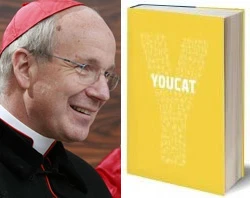
      Cardinal Schonborn's World Youth Day catechism suggests endorsement of ‘contraceptive methods’

      Update: Carl Olson: "(Mark Brumley, President of Ignatius Press writes: "The problem did not originate with the German text--at least not if the Italian translation is based on the same German text as that on which Ignatius Press based its translation... (read more)


      Cardinal Christoph Schonborn and the YouCat catechism
      .- A new Vatican-sponsored catechism intended for youth suggests that Christian couples “can and should” use “contraceptive methods” when deciding on how many children to have.

      The revelation comes two days before the eve of the official launch of the so-called “YouCat,” produced specially for the Church’s World Youth Day event, to be held in Madrid this coming August.

      The Vatican’s spokesman, Father Federico Lombardi, SJ, told CNA April 11, “I have not yet seen the text of YouCat and am therefore unable to comment further.”

      The Vatican has scheduled a press conference for April 13 to officially release the text.

      Organizers of World Youth Day have already ordered 700,000 copies of YouCat to give to young pilgrims along with a sleeping bag, map and other accessories.

      The catechism is laid out in a question and answer fashion. Question 420 in the Italian language edition states:
      “Q. Puo una coppia christiana fare ricorso ai metodi anticoncezionali?” (Can a Christian couple have recourse to contraceptive methods?)

      “A. Si, una coppia cristiana puo e deve essere responsabile nella sua facolta di poter donare la vita.” (Yes, a Christian couple can and should be responsible in its faculty of being able to give life).

      Vatican sources who spoke to CNA April 11 on the condition of anonymity speculated that the problem was in the original German text, a fact that was later confirmed by CNA.

      “YouCat” is to be published in 12 additional languages. The English edition, published by Ignatius Press, does not contain the problematic language. It is not yet known if other language versions also contain the same controversial statement on contraception.

      The Catholic Church has always opposed the use of contraception. In the official Catechism of the Catholic Church, its use is described as “intrinsically evil.”

      The creation of the 300-page YouCat was overseen by Cardinal Christoph Schonborn, Archbishop of Vienna. It was given the doctrinal seal of approval by the Bishops of Austria in March 2010. Cardinal Schonborn was also the editor of the universal Catechism of the Catholic Church, published in 1992.
      He is slated to be in attendance at the launch press conference on Wednesday.

      Also slated to be present are Cardinal Stanislaw Rylko, president of the Pontifical Council for the Laity and Archbishop Rino Fisichella, president of the Pontifical Council for the Promotion Council for the Promotion of New Evangelization.

        How to recite the Holy Rosary


        Sunday, April 10, 2011

        Horror: Doctor Euthanized Catholic Priest

        By Matt Abbott

        Some will recall that March 31 was the sixth anniversary of the court-ordered murder of Terri Schiavo. (Click here to read about the tragedy.)

        Terri's execution was, according to Ron Panzer, president of Hospice Patients Alliance, "accomplished at The Hospice of the Florida Suncoast." He notes that the hospice's CEO, Mary Labyak, "has been a member of the board of directors of the National Hospice and Palliative Care Organization as well as Partnership for Caring, a successor to the Euthanasia Society of America."

        Panzer also notes that Michael Schiavo's attorney, George Felos, a euthanasia advocate, was chairman of Suncoast's board when Terri was brought there for the purpose of killing her.

        "The public still does not realize that Terri was taken from us to fulfill a hospice-euthanasia partnership, fulfilling their agenda in an 'in your face' demonstration of what they can do, are doing, and will do to others," asserts Panzer.

        In recent days, Panzer received the following (edited) e-mail from registered nurse and Illinoisan Wendy Ludwig, who recounts the horror of witnessing the euthanizing of an elderly Catholic priest:

        'Hello, I spoke with you [Ron Panzer] some years ago about the many killings taking place within hospice. You may remember me; I'm an RN, BSN. Not long after I spoke with you, my father died of leukemia, and the following year my mother was diagnosed with pancreatic cancer and died in 2009.

        'I'm contacting you again, asking for your help in trying to somehow stop the horrible hospice killings and euthanasia that occur even in hospitals. I know so many people not even terminally ill whom hospice quickly killed. I'm so upset, horrified and angry about this. In my area, the hospice went on an 'advertising campaign,' writing articles in the local newspaper, handing out flyers to doctors' offices and trying to drum up support from local clergy by going around to each church asking to set up a meeting with them so they can 'explain the benefits of hospice.'

        'It's truly terrible where I live. It's not uncommon to see a patient eating in a restaurant with his or her family one week and the following week be dead after hospice has come in. When my mother was ill, she made absolutely clear that she did not want hospice anywhere near her, yet the hospital forced drugs on her, did many tactics to hasten her death and ended up doing as they pleased, coming up with some strange medical power-of-attorney that no one had seen before. It was truly awful. For the rest of my life it will affect me, and there is never a day that I do not think about it. I did everything I possibly could, but they still found ways to not treat infections, to deny her enough fluid, to do so many things, and it did not matter what I said or did — or what she said, for that matter.

        'I'm currently seeking a new career, because as a pro-life Catholic, I cannot in good conscience work in hospitals anymore. Even the Catholic hospitals support hospice in one way or another. I can tell you honestly that I'm not aware of any hospice that is good. Everyone I know who has gone to a hospice in any state that I know of has been murdered by hospice.

        'It's been so overwhelming to me. What's so unbelievable is the way that hospice can convince people they are doing 'good' and 'mercy' for their loved ones. It appears to me that they use a type of forceful brainwashing where they take the family at their most vulnerable time, convince them the only way the patient won't suffer is by using hospice, and lie to them about what is actually happening. Even when people feel like something isn't right, they do nothing, somehow believing what hospice has told them. With such an 'ad campaign' in the newspapers and elsewhere, I don't know how to begin to make people understand what hospice is doing. It's notable also that once a family member dies in hospice care, people do not want to hear the truth; it seems they defend hospice profoundly, probably because they don't want to think that they have just let their loved one be murdered.

        'I witnessed a doctor euthanizing a Catholic priest who stated in no uncertain terms that he did not want hospice. The priest did not have cancer or any other terminal illness. He was 94, still saying Mass and very active. When the priest needed knee surgery for an injury to his knee, the doctor decided it was time to call in hospice. The priest adamantly and angrily refused. So the doctor took his medicine away and started to give him 'pain pills' even though the priest said he was not in pain.

        'The priest was in a nursing home following his knee injury and was getting physical therapy. He had been also prescribed large doses of Coumadin by the doctor. I went to visit him one day and found him bruising all over, so I demanded that the nursing home call an ambulance. When they refused to call an ambulance and said the doctor was aware, I told them the priest was bruised all over his body and that he needed to go to the hospital. I told them that if an ambulance was not called, I was going to call the police. He was taken to the hospital and was told he had been given too much Coumadin and that he would need to stay in the hospital for a few days.

        'While in the hospital, the doctor refused him food and fluids. I called the elder abuse hotline and when the doctor found out they were coming, he began IV feedings, but also began drugging the priest with morphine. The priest told me what they were doing. I waited for the doctor with a friend and I told him I was aware of what was going on and that the elder abuse hotline would again be called. The doctor pounded on the patient's chest and said, 'Does he seem awake enough to you?!' He called the family, which lived in another state, and they came. I received a call one day asking for me to come and visit Father because he was asking to see me. I went to see him; he was resting comfortably.

        'He was in an ICU and I was watching the monitors. His heart rate and breathing were regular and stable. Not long after I arrived, I was taken to a waiting room and the family was there. A short time later the nurse came and got the family but told me to stay in the waiting room. I had a terrible feeling; I went to the nurses' station and the curtain was pulled in Father's room. I heard a priest saying prayers over him, the family in the room as well. I was told I could not go in. I told them I had forgotten my purse in the room, but I was not allowed to go in and get it.

        'I stood outside and heard the nurse telling the family that they were giving him another dose of medicine and taking off his oxygen. I was told to go back to the waiting room. I knew what was happening: The doctor had viciously called me to sit in the waiting room while he euthanized the priest. I left the hospital, and before I got home, I received a call that the priest had passed away.

        'About a month later, the local newspaper printed a story about an 'honor' this doctor was given by the hospital. It seemed quite planned in its timing. Right after the priest died, an anonymous letter was sent to the doctor informing him that people were aware of what he was doing to patients. A Catholic nun had also witnessed this same doctor giving a fentanyl patch in a terminal dose to another nun, who died within hours of receiving the patch. A few weeks after that letter was sent, the story appeared in the paper 'honoring' this doctor. The woman who was with me when the doctor pounded on the priest's chest thought that because the doctor was on the hospital's board, the 'honor' was probably given to distract people who may have heard of his tactics from believing what was said about him. The doctor still practices at the hospital.

        'I have many other horror stories.'

        Saturday, April 9, 2011

        Not the Same Church- The Vortex With Michael Voris of RealCatholicTV

        Apr 9, 1865 - Civil War ends

         During the Civil War, members of New York's 'Fighting 69th' attend a battlefield Mass. - source

        April 9

        The Civil War began on Wilmer McLean's farm in Manassas Junction, Virginia, with the First Battle of Bull Run.

        A Union shell exploded in his kitchen.

        Wilmer McLean moved to get away from the conflict, yet almost four years later his new home, near Appomattox Court House, Virginia, was the agreed location for General Robert E. Lee to surrender to General Ulysses S. Grant on APRIL 9, 1865.

        Ken Burn's documentary film of the Civil War stated that the war began in Wilmer McLean's front yard and ended in his front parlor.

        The Civil War resulted in approximately 258,000 Confederate deaths and 360,000 Union deaths.

        General Lee took off his sword and handed it to General Grant, and Grant handed it back.

        The next day, General Lee issued his final order:
        "After four years of arduous service, marked by unsurpassed courage and fortitude...I have determined to avoid the useless sacrifice of those whose past services have endeared them to their countrymen.

        By the terms of the agreement, officers and men can return to their
        homes."

        Robert E. Lee concluded:
        "I earnestly pray that a merciful God will extend to you His blessing
        and protection."

        American Minute is a registered trademark. Permission granted to reproduce
        with acknowledgement to www.AmericanMinute.com, P.O. Box 20163, St. Louis,
        MO 63123, 314-487-4395, wjfederer@gmail.com

        Medjugorje : "Absolutely diabolical" - Bishop and exorcist Andrea Gemma

        By Richard Chonak @ Catholic Light:

        Here's a background item on the Medjugorje case, a May 2008 interview with Bishop Andrea Gemma from Gianluca Barile's website Petrus. It was reported in the press at the time, and some quotations did appear, but I never came across the full text until recently.

        Medjugorje: the accusation of the bishop-exorcist Mons. Gemma: "The apparitions of the Madonna? Completely false: the seers lie under the inspiration of Satan to profit economically"

        by Gianluca Barile

        VATICAN CITY - A mixture of economic and diabolical interests, with the alleged seers and their collaborators directly involved in profits related to the increased flow of pilgrimages and visits in the area, and the Evil One well content to sow discord between the faithful most convinced of the validity of the apparitions of Medjugorje and the Church, sceptical as ever in the face of what she has declared more than once, through the words of two successive bishops of Mostar during that time, "a great deception". Monsignor Andrea Gemma, former bishop of Isernia-Venafro [served 1990-2006], among the greatest exorcists living, does not mince his words: instead of the Virgin, so far only rivers of money have appeared at Medjugorje, a grave accusation that sums up not only the courage but also the moral and spiritual capacity of the prelate who agreed to respond to questions from "Petrus" on such a prickly event.

        So, Excellency, how do you define Medjugorje?

        "It is an absolutely diabolical event, around which numerous underworld interests revolve. The Holy Church, which alone can make a pronouncement, through the words of the Bishop of Mostar, has already said publicly and officially that the Madonna never appeared in Medjugorje and that this whole production is the work of the Devil."

        You speak of "underworld interests". Of what kind?

        "I'm referring to 'the Devil's dung', to money, what else? At Medjugorje everything happens for the sake of money: pilgrimages, overnight stays, the sales of trinkets. In this way, abusing the good faith of the poor people who go there with the idea of meeting the Madonna, the false seers have set themselves up financially, they have married and live a wealthy life, to say the least. Just think: one of them, directly from America, with a direct economic profit, organizes tens of pilgrimages every year. These people don't seem to be really disinterested persons to me. Rather, with all the people vulnerable to this noisy swindle, they evidently have a great material interest in getting people to believe that they see and speak with the Virgin Mary..." (continued)


        Related:

        Michael Voris persecuted: singin' the blues in Motown

        By Matt C. Abbott

        Michael Voris of RealCatholicTV.com is becoming persona non grata among the Church establishment. A talk he was scheduled to give on the property of the Diocese of Scranton has been canceled by the diocese, which posted the following statement on its website:
          'The Diocese of Scranton has determined that Mr. Voris will not be allowed to speak in a Diocesan or parish facility. After these engagements were scheduled, the Diocese became aware of concerns about this individual's views regarding other religious groups. In videos posted on the Internet, Mr. Voris makes comments that certainly can be interpreted as being insensitive to people of other faiths. The Catholic Church teaches us to respect all people, regardless of their faith tradition. Although the Diocese shares Mr. Voris' support of efforts to protect human life, his extreme positions on other faiths are not appropriate and therefore the Diocese cannot host him.'
        Ah, yes — that "insensitive" Michael Voris. Interestingly, last year the bishop permitted a pro-abortion, pro-unnatural vice American University employee, Sara Bendoraitis, to speak at the University of Scranton. (Source) But, hey, she's not insensitive like Voris. I get it.

        However, the real culprit in this situation is the Archdiocese of Detroit, where RealCatholicTV.com is located. The archdiocese has been trying to quietly destroy Voris' credibility for some time. In fact, one archdiocesan official reportedly referred to Voris as a "nutcase." Why, you ask? The article below, provided to me by a reliable source who's familiar with the archdiocese, should give you a big hint. (I've done some editing for prudential reasons.)

        Welcome to the new springtime, folks.


        All you can say at this point is, "They have no one to blame but themselves." After suffering for more than 20 years under the rule of closet liberals, clerical dissidents, poorly-instructed clergy, a chancery staff of near-heretics and pastors who refused to preach the truth, the chickens have finally come home to roost in the Archdiocese of Detroit.

        In 2009, close to one-third of the chancery staff were let go. But what's killing the archdiocese more than a bad economy is the falling number of faithful Catholics. The question that needs to be asked, therefore, is what has caused Catholics in Detroit to walk away from the Faith — or, perhaps more to the point, an authentic expression of the Faith? The answer is, quite simply, the type of faith promulgated by the archdiocese for the past generation.

        In 1976, thousands of liberals who called themselves Catholic met in Detroit under the ominous title of Call to Action, a group that would lay the groundwork for today's meltdown. They proposed a series of initiatives that many in the archdiocese would take up and spend their careers trying to implement.

        Over the next 15 years or so, the seminary (St. John's) would churn out a prolific number of actively homosexual priests led by a "gay-friendly" rector, Monsignor Kenneth Untener. On his watch, homosexual pornography was shown on a regular basis under the guise of "sexuality" classes and was mandatory. Multiple reports from inside the seminary said these regular features resulted in an atmosphere that welcomed random and frequent sexual encounters between seminarians on an ongoing basis. St. John's was finally closed down by the Vatican in response.

        This continued to be the case for a number of years until Monsignor Untener and the archdiocese's vicar general, Monsignor Thomas Gumbleton, were summoned to Rome to explain the situation. After what has been widely seen as a cover-up story accepted by the Vatican, both men were eventually promoted to bishop — Gumbleton as auxiliary of Detroit and Untener eventually to the Diocese of Saginaw, where he made quick work of destroying the Faith. He died in 2004.

        Bishop Gumbleton remained in Detroit where he served for years as a functionary of the homosexualist agenda (his brother is homosexual), advancing the cause of homosexuality whenever possible. Bishop Gumbleton has in fact been forbidden to preach in some dioceses, yet he "ran wild" in Detroit, spreading decidedly anti-Catholic positions in the area of human sexuality. No effort on the part of the chancery was eve r exercised with enough diligence to rein him in.

        Under the influence of Bishops Untener, Gumbleton and others, active homosexuality became rampant among the Detroit clergy. Some reliable estimates place the number at well over 50 percent. With the clergy thus compromised, it was only a small step to the near total collapse of the Faith among the laity in the coming years.

        Enter the era of a man by the name of [name redacted], who was so influential during the past 20 years that friends and foes alike nicknamed the place the Archdiocese of [name redacted]. He was the power behind the throne during the term of Cardinal Adam Maida (1990-2009), promoting like-minded closet liberals and homosexual priests to positions of authority and influence throughout the archdiocese.

        Under the reign of [name redacted], dissident theology ran wild in the parishes as well as the seminary. In truth, much of the blame of what has gone wrong in Detroit can be laid squarely at his feet. As homosexual priests and liberal lay people ascended the ranks of power, the faith life of the archdiocese sunk further into dismay. Parish after parish began being infiltrated with homosexual pastors as well as "gay-friendly" liturgists and music directors.

        Catholic schools — such as the Shrine of the Little Flower in Royal Oak, Michigan — became famous for delivering a "bang-up" education while graduating students who were pro-abortion atheists and Buddhists. Mass attendance began a precipitous decline, particularly among the young (ages 18 to 40). RCIA programs became a joke, with adults being offered coloring books and prayer shawls instead of Catholic teaching. CCD classes were reduced to nothing more than weekly baby-sitting operations for middle school students.

        Inside the chancery, the decay was tolerated and even encouraged by the likes of high-ranking archdiocesan officials such as [name redacted], who famously lied for months about the existence of a homosexual-sponsored Mass at Holy Trinity Parish in downtown Detroit until his lies were eventually exposed in a scathing and revealing article [click here to read it] in Catholic World Report (1996).

        [Name redacted] continued his rampage against anything and everything even remotely orthodox by routinely slandering lay Catholic groups such as St. Michael's Media, an apostolate founded by lay Catholics dedicated to teaching authentic Catholicism by means of the electronic media. He worked discreetly behind the scenes to undo a contractual arrangement the apostolate had already signed with a Catholic TV outfit in Boston, as well as destroying a budding relationship between St. Michael's Media and EWTN.

        The [names redacted] nexus, in fact, was responsible for a continuation of the "gay Masses" that continued unabated at the IHM property every Sunday on Six Mile Road in Detroit. (The article in Catholic World Report shed enough light on the sordid goings-on that the Dignity Mass was quietly moved to the property of the IHM sisters.)

        Despite a steady stream of complaints from Mass-going Catholics, not a few priests throughout the archdiocese continue to counsel Catholics against Church teaching in areas such as contraception. Faithful clergy are examined with a rigor normally associated with the Inquisition, while heterodox clergy are given a pass or left to their own devices to preach whatever version of Catholicism they enjoy best — oftentimes from the pulpit.

        All this heterodoxy has reached critical mass at the parish level, where an overwhelming majority of Catholics simply no longer see a need to attend Mass. Those who do are rarely instructed in the truth of the Real Presence of Christ in the Eucharist or the need for frequent confession. Unchallenged to live lives of holiness with their priests as living examples, most Catholics in Detroit take a laissez-faire attitude to the Faith and the sacraments.

        For close to 20 years, the [names redacted] nexus has installed its own version of the Faith in many subtle ways. The result is that the Faith has become so watered-down and indistinguishable from any other social-help organization that Catholics simply do not identify as Catholics in any meaningful way, and have become the worst of all religious adherents: lukewarm and indifferent.


        Catholics in the Chicago area can see Michael Voris in person at an upcoming event on April 30. Click here for details.

        Friday, April 8, 2011

        Friar who evangelizes in the mall: 'We are an absolutely passive church'

        h/t to Fr. Cory Sticha

        From the Catholic Sentinel:

        Ed Langlois
        Staff Writer

        http://www.catholicsentinel.org/SiteImages/Article/14726a.jpgDominican Father Tony Wall thinks Catholics should spend more time living out their faith in the marketplace.

        That's why he spent every day, except Sunday, for a month in Portland's Lloyd Center Mall. Father Wall, a priest for 60 years, wore his Roman collar or white friar's habit, simply making himself obvious for those yearning to talk about life's greater issues.

        "People don't meet priests any more. We are hiding in the rectory," says Father Wall, who has moved on to lead missions from the Dominicans' California headquarters. He plans to return to Portland at the start of 2012 for another month of mall evangelization.

        "Jesus sent people out on the road," explains the 86-year-old friar, who helped found the Graduate Theological Union in Berkeley, Calif. "St. Dominic was out in the crossroads and at the inns. He was not waiting for people to find him."

        Educated in Rome during the 1940s, Father Wall counted the future Pope John Paul II among his classmates. Her served in parishes and was a teacher before starting the Berkeley project. He served as president of the theological union for two terms. Then he joined the Dominican preaching band, men who give retreats on the road in honor of the itinerant charism of their 13th century founder. 
        In Mexico on a mission, he met a priest from St. Charles Borromeo Church in Harlem. The pastor said his church counted as many as 339 converts in a year and attributed that to the habit of priests standing out on Harlem street corners to engage the people and give them cards with Mass times.

        When he visited Holy Rosary Parish in Portland, just down the street from Lloyd Center, he got thinking. There is no priest at the mall, and there should be.

        "We are no longer a missionary church," Father Wall says of Catholics. "We are an absolutely passive church. We stand back."

        Mall officials were receptive. There were limitations, however. Father Wall had to stay put in one place. Amplification and big signage was out.

        That all suited the priest just fine. On weekdays, he chose a bench and sat, smiling. On weekends, he donned the habit and rented a kiosk near Macy's and filled it with free crucifixes, rosaries, holy cards and sacred medals.

        Many shoppers asked who he was and that led to encounters, some brief, some lengthy. Everyone seemed impressed that a man representing deep matters had set up in a place devoted to fashion, skin products and fast food. He heard several confessions.  

        "People are hungry to have the church stand up and say, 'Come, come, come,'" Father Wall says. "I think every big mall in the country should have a Catholic presence. All I think the church needs to do is rent a chair and have a priest sit there and have a sign that says, 'Have a question? Ask a priest.'"

        Mall security guards took a special shine to the priest. They passed a hat several times and gave him the money to further his work.

        Mary Halvorsen is not surprised the priest had that effect on the mall workers.

        "Father Tony had a great method of engaging passersby," says Halvorsen, prioress of the Holy Rosary Dominican Laity, a group that helped the priest on many days. "People just naturally were drawn to him.  Father would ask those people what their names were and would tell them what their name meant in Latin or Greek or what saint was connected to their name.  Some would be shy and say they knew a Catholic or used to be a Catholic."

        Halvorsen says other vendors in the area would come introduce themselves to the priest.

        "People are hungry for God even if they don’t know it and when they are fed by a gentle, holy man they are filled with gratitude and joy," she concludes.

        As for Father Wall, he talks a lovely torrent that puts everyone he meets at ease. Within the amicability, though, he has an urgent message.

        "What we Catholics need is a four letter word — a little bit of z-e-a-l," he says. "And you have these zealous lay people just waiting for someone to point them the way and say, 'Go.'"